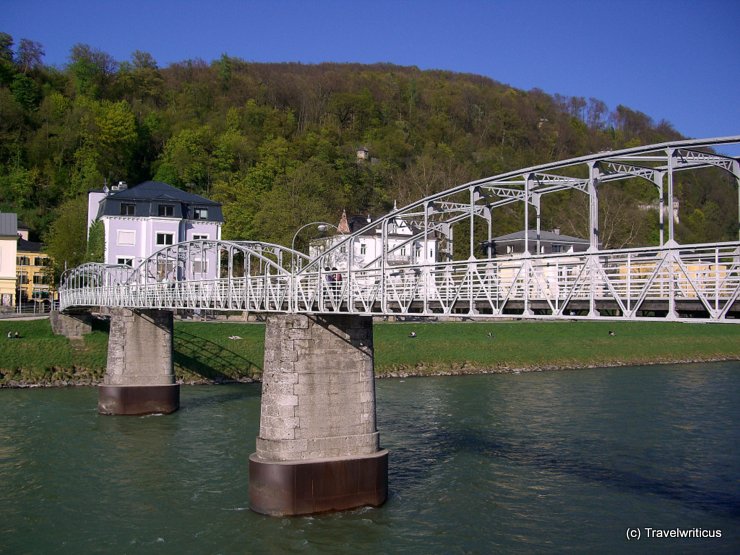
The Mozartsteg in Salzburg is a footbridge named after Wolfgang Amadeus Mozart. It saw its construction in 1903 as a toll bridge. The toll booth still exists and houses a small shop now.
Browse through your travel destination!
The Mozartsteg in Salzburg is a footbridge named after Wolfgang Amadeus Mozart. It saw its construction in 1903 as a toll bridge. The toll booth still exists and houses a small shop now.
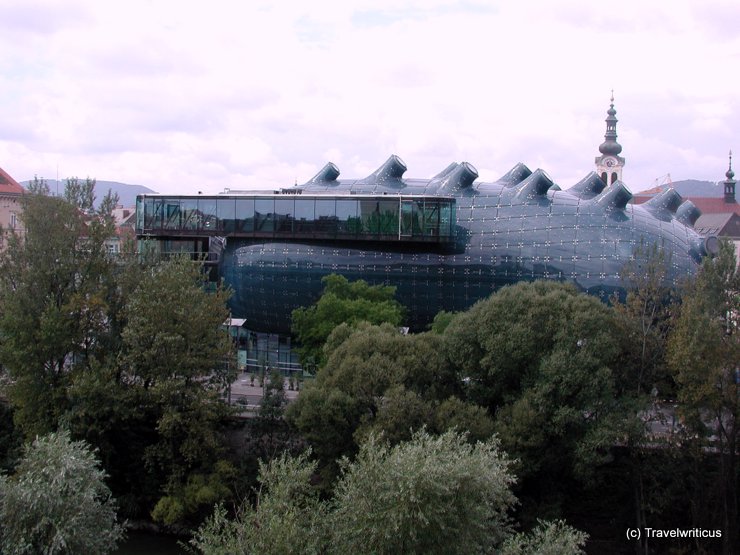
The Kunsthaus, dating back to 2003, shows exhibitions of contemporary art. Because of its architecture, it is generally known as the “Friendly Alien”. The form of an irregular bubble offers the possibility to enjoy bulky sculptures in an appropriate space.
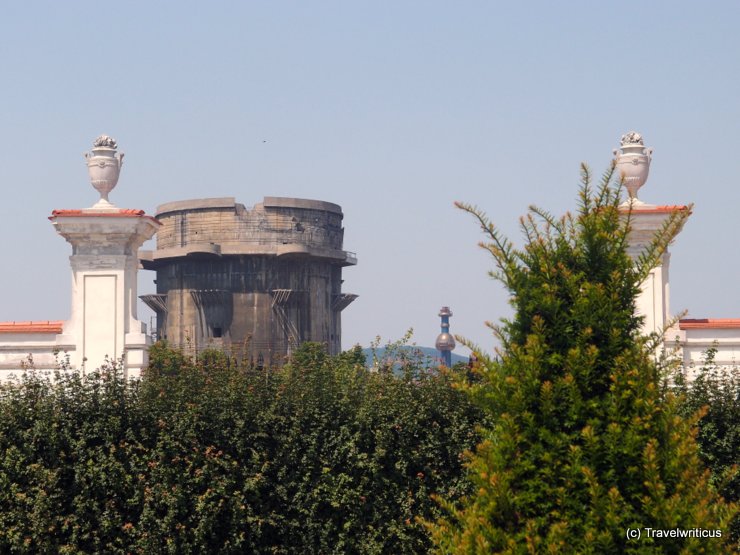
The pic shows three architectural periods in Vienna. In the foreground, you see Baroque walls. The background forms an air defence tower of WW II and the chimney of a garbage incineration plant (1992) designed by Friedensreich Hundertwasser.
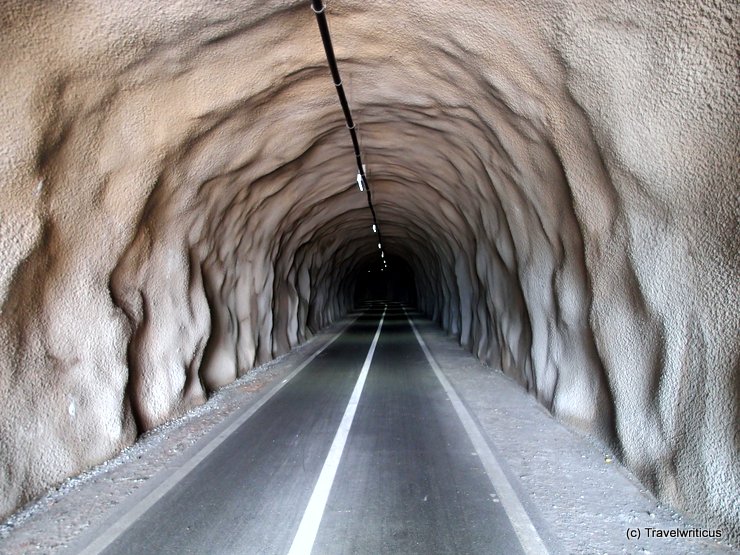
Below Klammstein Castle (Burg Klammstein) in Dorfgastein, you’ll find a tunnel for bikers and walkers. The structure is part of a cycle route along the Gastein Valley (Gasteinertal), which connects places like Bad Gastein, Bad Hofgastein, and Dorfgastein.
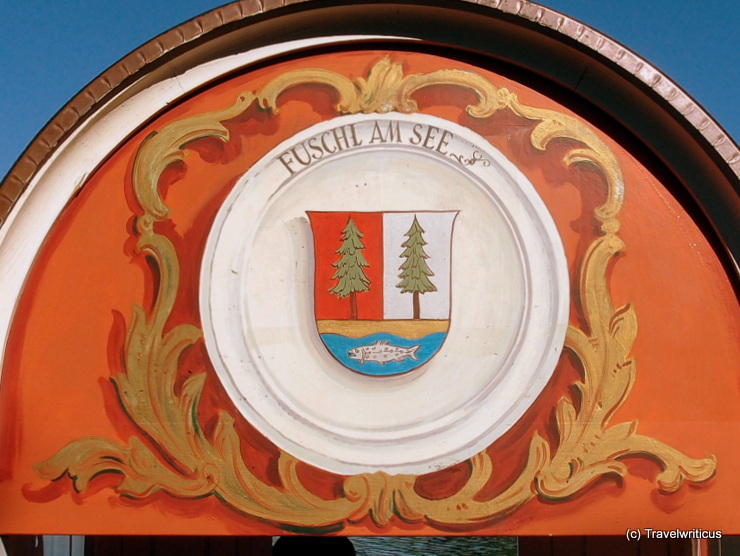
Fuschl am See in the Austrian region of Flachau is known for a lake which provided the court of the Archbishops in Salzburg with fresh fish. Its coat of arms display two trees and a fish.
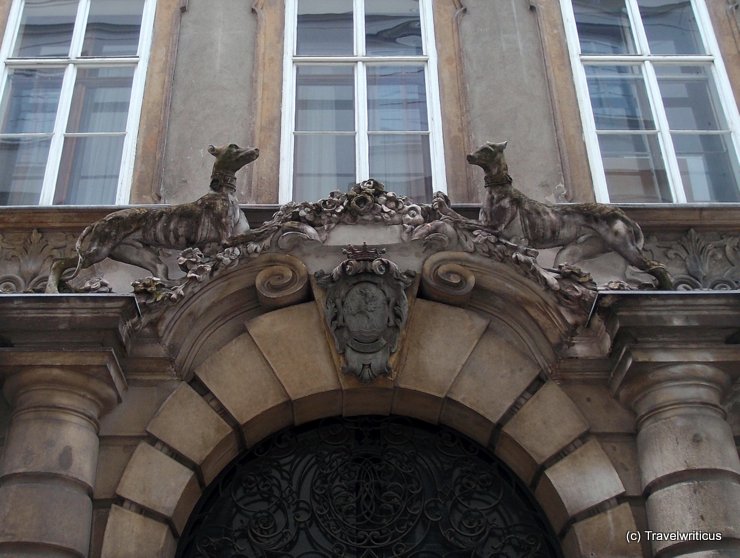
The Palais Fürstenberg, located on the Grünangergasse, was finished by Antonio Beduzzi from Bologna in 1720. I was especially impressed by those sculptures of two classy dogs who guarded the palace portal.
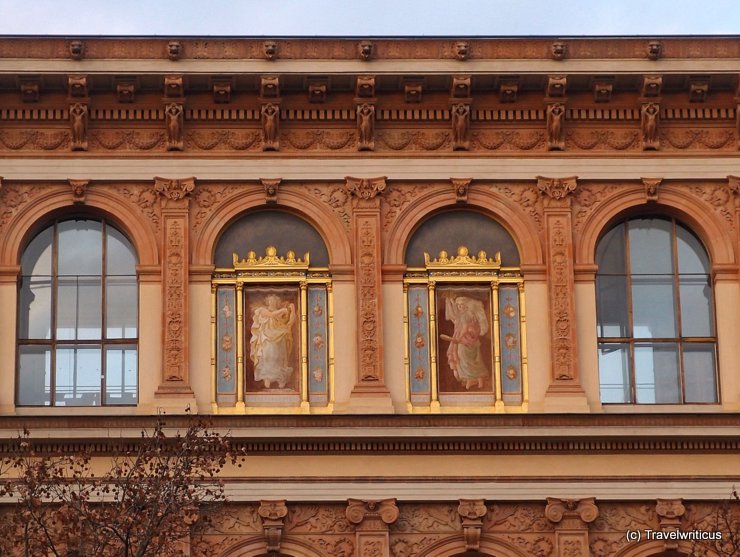
The Academy of Fine Arts Vienna (Akademie der Bildenden Künste Wien) offers a collection of old masters worth a visit. Looking up to the highest floor of the building you will discover fine wall paintings below the roof.
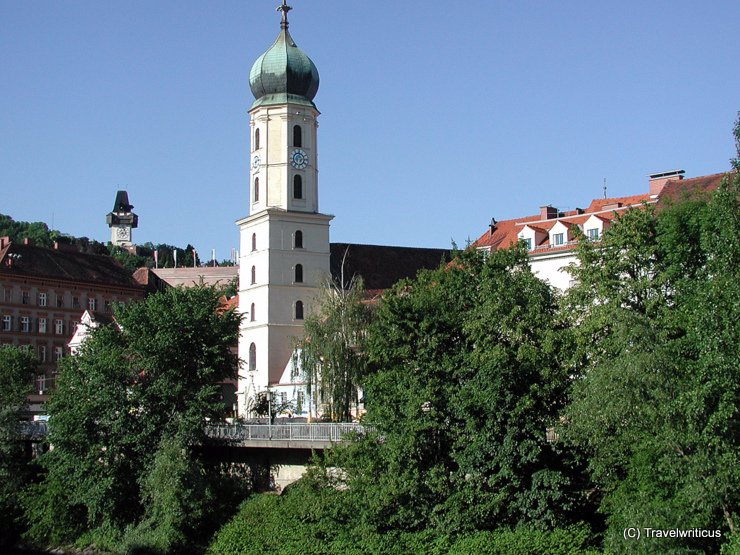
Two beauties of Graz: The landmark of Graz named Uhrturm in the background and the Franciscan Church (Franziskanerkirche) in the foreground. The church, with its remarkable tower, is part of the oldest monastery in the city.
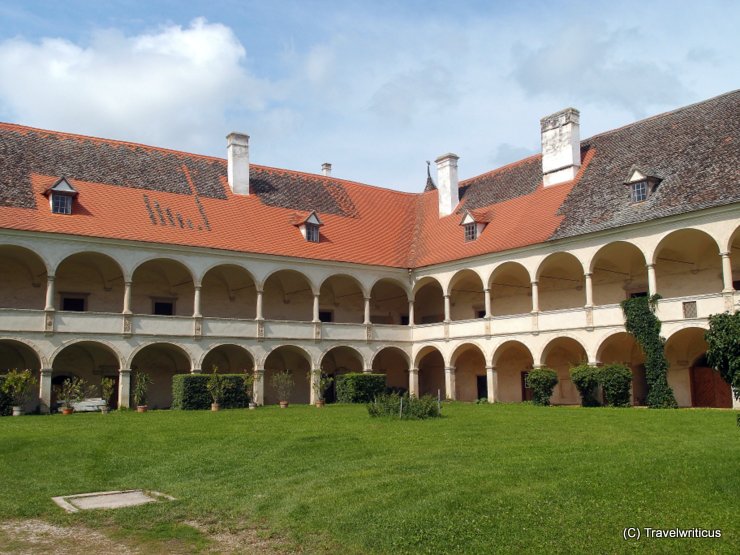
Deutschkreutz Castle (Schloss Deutschkreutz) was the home of Anton Lehmden for many years. He was member of the Vienna School of Fantastic Realism and gave painting classes in the rooms of this castle.
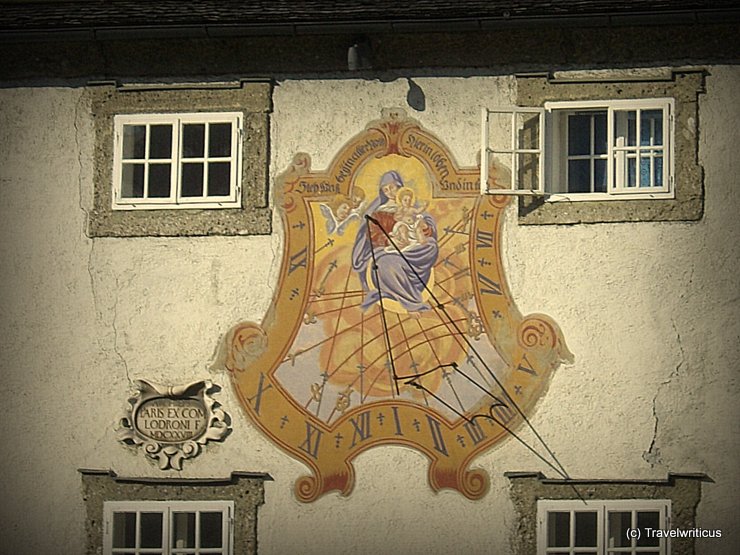
The Zeugwartstöckl in Salzburg is the surviving guardhouse of the demolished Michaelstor (Michael Gate). It stands between Mozartplatz and Rudolfskai. Salzburg visitors see this sundial, dating back to 1628, on the facade facing Mozartplatz.
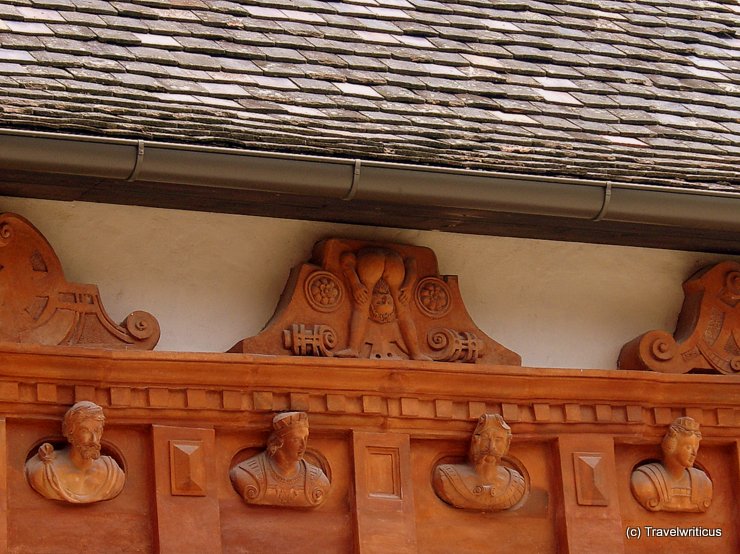
You find this peculiar detail at Schallaburg Castle (Schallaburg): A sculpture of a man showing his bottom. Such sculptures served as a defence against harm and evil spirits. Together with the Dog Lady, it is one of the most fascinating sculptures in this palace.
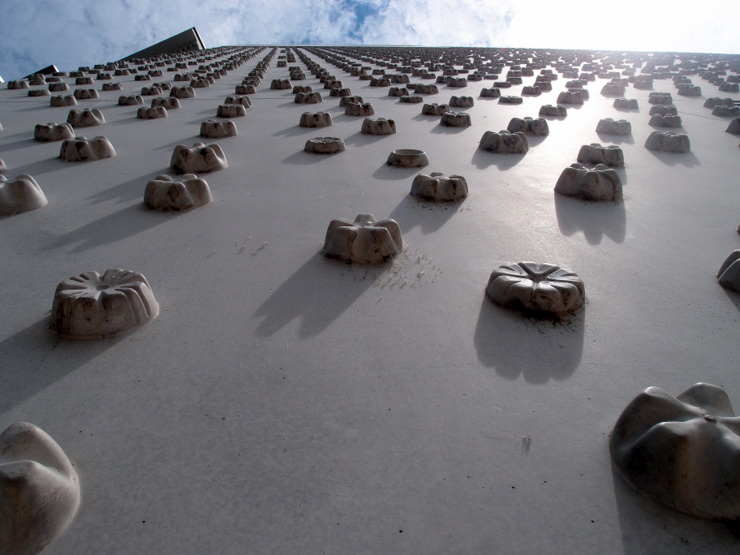
The facade of the Vorarlberg Museum in Bregenz is decorated with 16,656 concrete blossoms. The blossoms were formed by the bottoms of simple PET bottles. But this is not the only architectural peculiarity of this museum in the Vorarlberg capital.