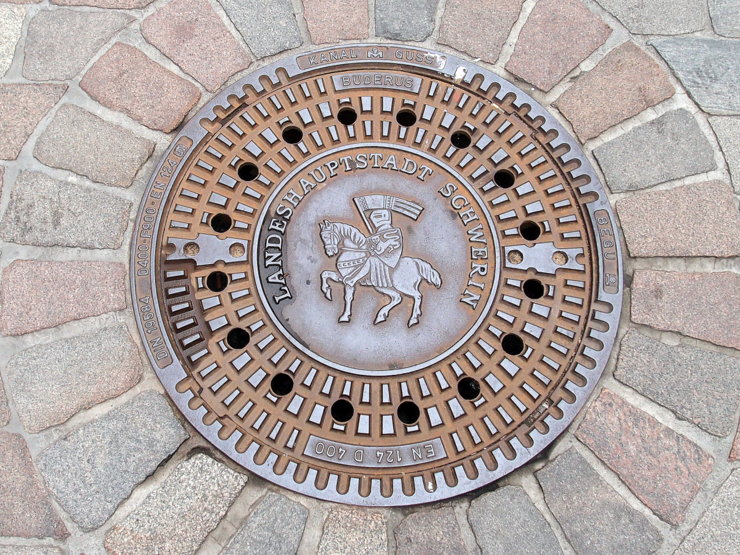
The capital city (LANDESHAUPTSTADT) of Mecklenburg-Vorpommern is SCHWERIN. The manhole covers in Schwerin show the city arms in the version of 1991. The depicted knight represents Henry the Lion (Heinrich der Löwe).
Browse through your travel destination!
The capital city (LANDESHAUPTSTADT) of Mecklenburg-Vorpommern is SCHWERIN. The manhole covers in Schwerin show the city arms in the version of 1991. The depicted knight represents Henry the Lion (Heinrich der Löwe).
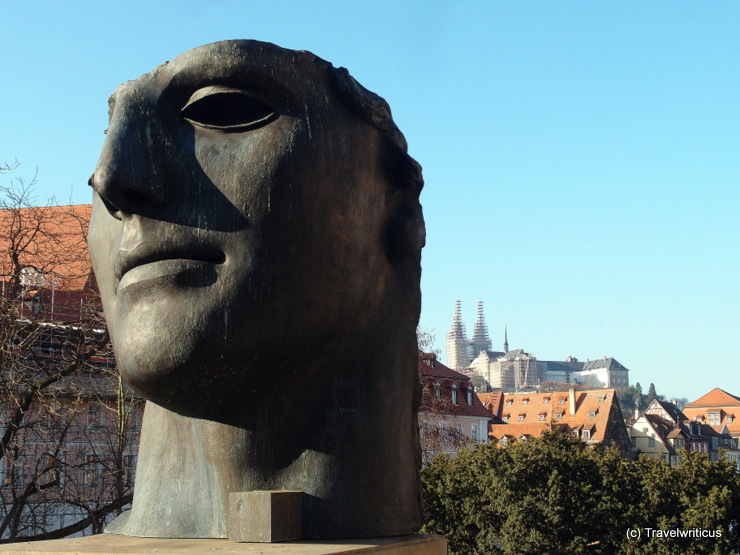
Polish artist Igor Mitoraj created this sculpture named Centurione I in 1987. It stands near the Old Town Hall on the Lower Bridge in Bamberg. In the background, you see Michelsberg Abbey.
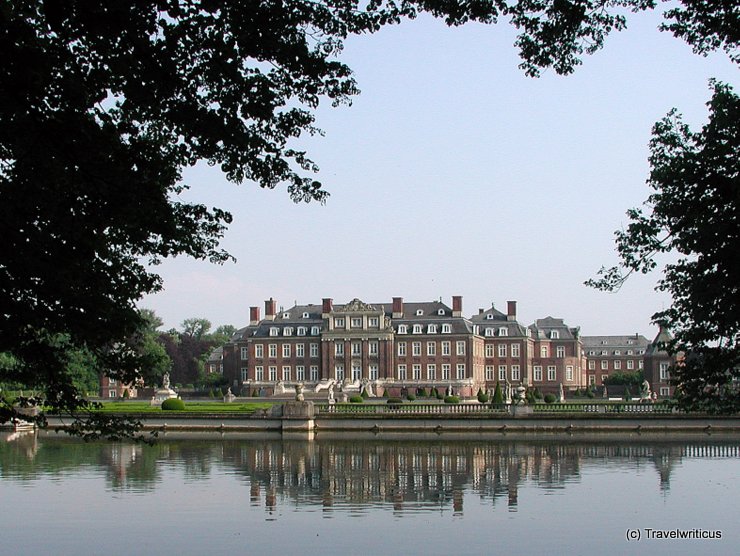
Nordkirchen Castle (Schloss Nordkirchen) is the largest palace with a moat in the region of Westphalia. The present palace, also known as “Versailles of Westphalia”, dates back to the 18th century.
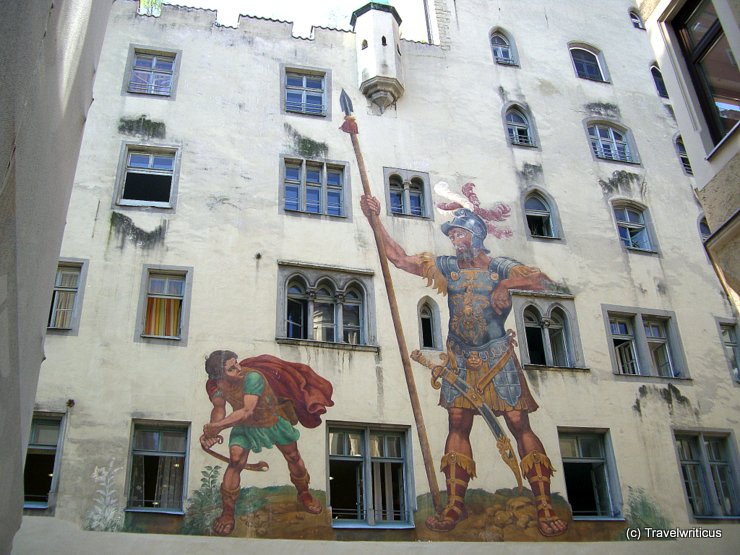
The painting on the Goliath House (Goliathhaus) in Regensburg illustrates the legend of David and Goliath. The mural was created by Melchior Bocksberger in the year 1573.
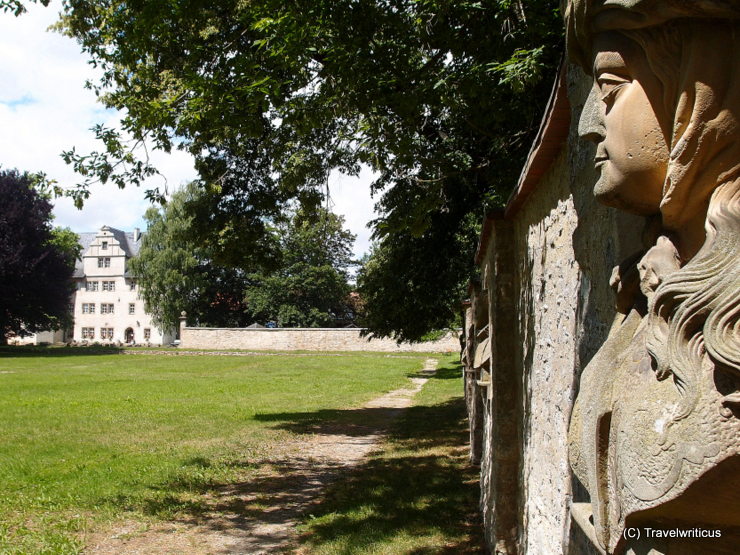
Cycling the Ilm Valley Cycle Path you may visit the Kromsdorf Renaissance Palace. Visiting the castle grounds you will be awarded with 64 stone busts decorating the garden wall. There meaning is still disputed.
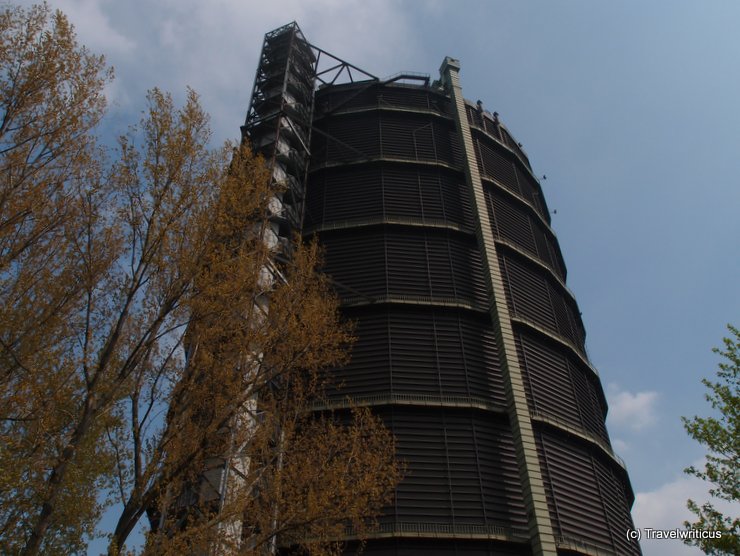
The Gasometer in Oberhausen is the largest disc-type gasholder in Europe. Today, it serves as an exhibition hall. Visitors enjoy an excellent view after reaching the top by an elevator or a staircase outside the building.
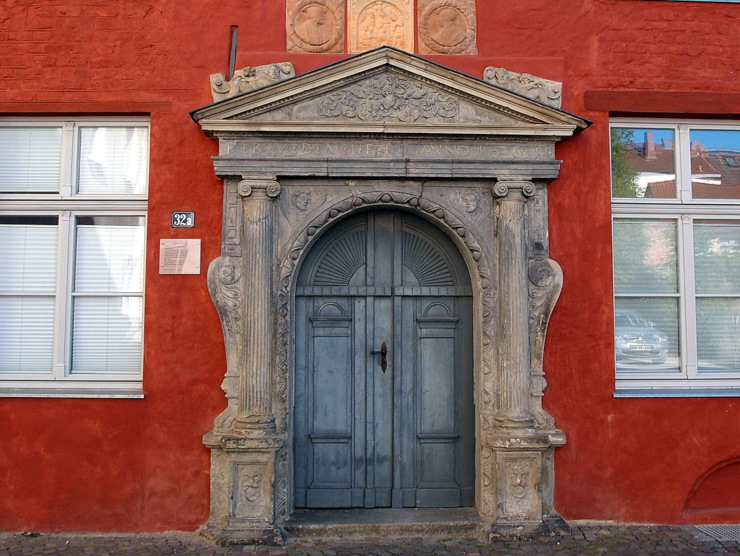
This Renaissance portal, dating back to 1568, can be found at Jacobiturmstraße 32 in the German World Heritage Site of Stralsund. The three terracotta panels are considered to have been created by sculptor Statius von Düren.
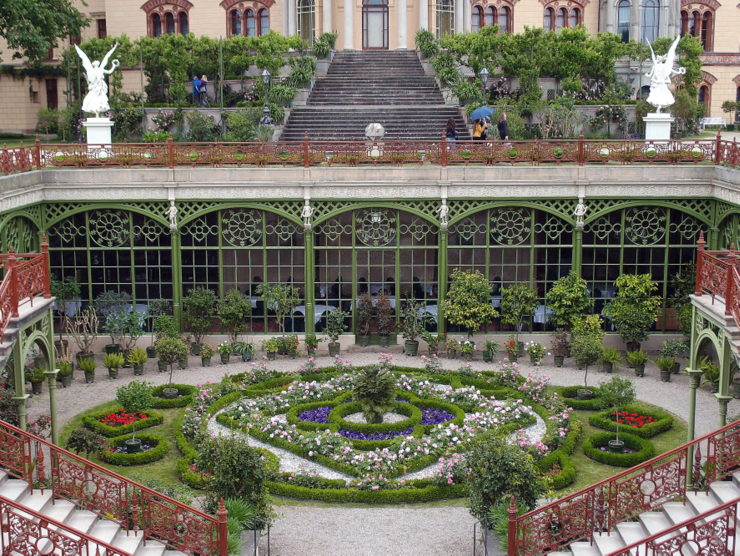
The Orangery of Schwerin Castle (Schloss Schwerin) dates back to 1853. During the German Democratic Republic, the building housed a Polytechnic Museum for a few years. Today, during the warm seasons, visitors to the Orangerie Café enjoy cakes and coffee.
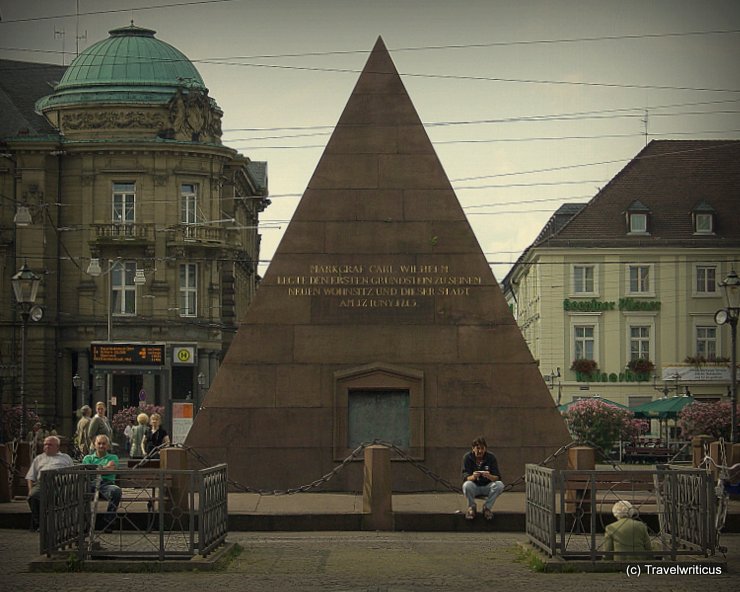
The Karlsruhe Pyramid was constructed between 1823 and 1825 according to plans by architect Friedrich Weinbrenner. It commemorates Karl III Wilhelm Margrave of Baden-Durlach, the founder of the planned city of Karlsruhe.
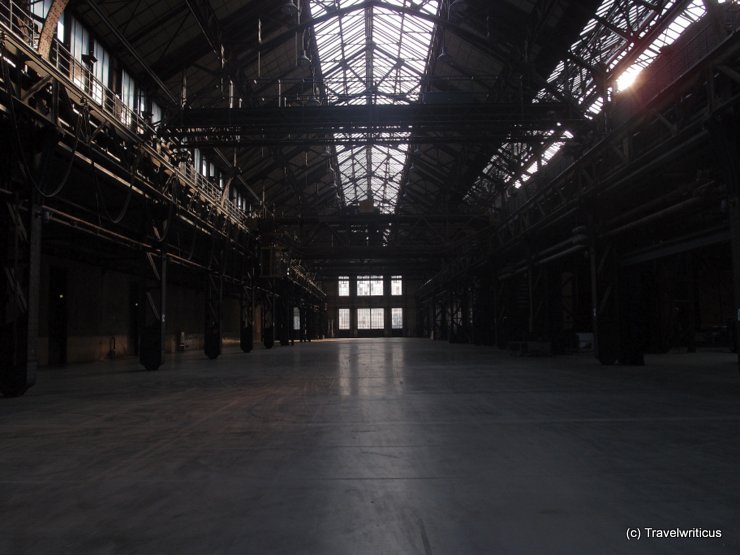
The Jahrhunderthalle is a venue for such famous events like the Ruhrtriennale. Interesting detail: The hall was constructed on top of an existing plant. After that, the soil was risen up to the level of the hall. So the first plant became part of the basement.
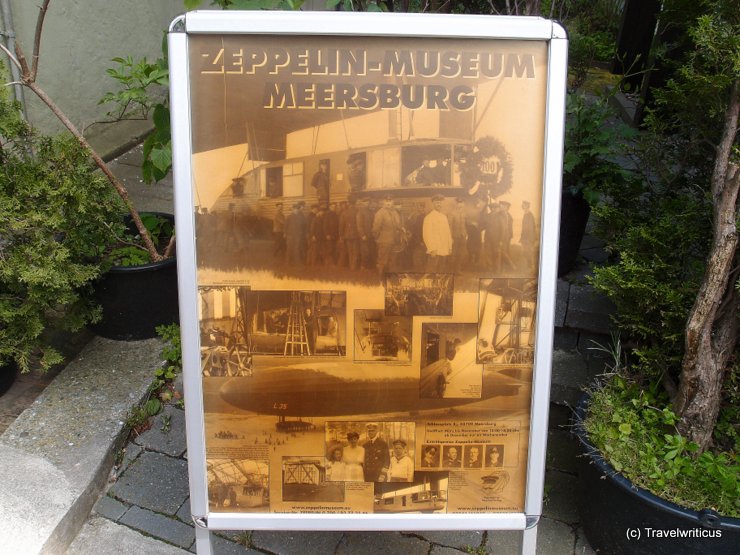
Meersburg, a place on the shore of Lake Constance, offers in one of its houses a Zeppelin Museum. This private collection and the large Zeppelin Museum in nearby Friedrichshafen would be a good combination for friends of the big airships.
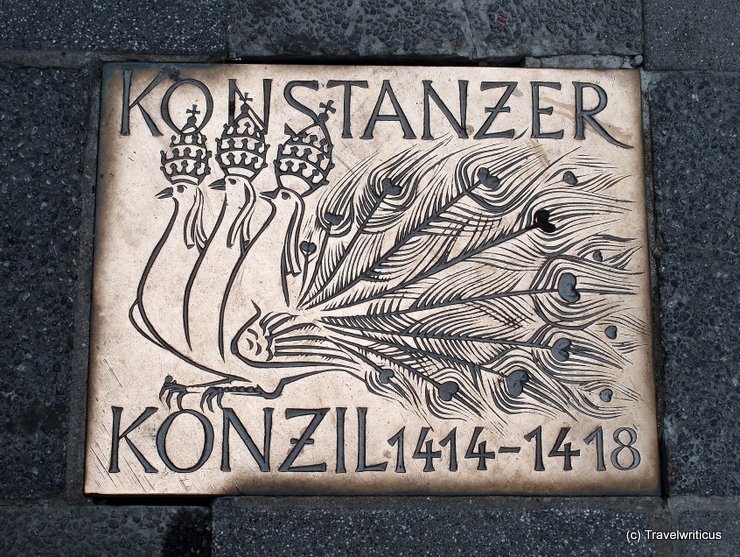
In the streets of Constance (Konstanz), you may see this depiction of a three-headed peacock. Each head wore a tiara. What is the meaning of this strange combination? It is an allusion to the Three Popes Controversy.