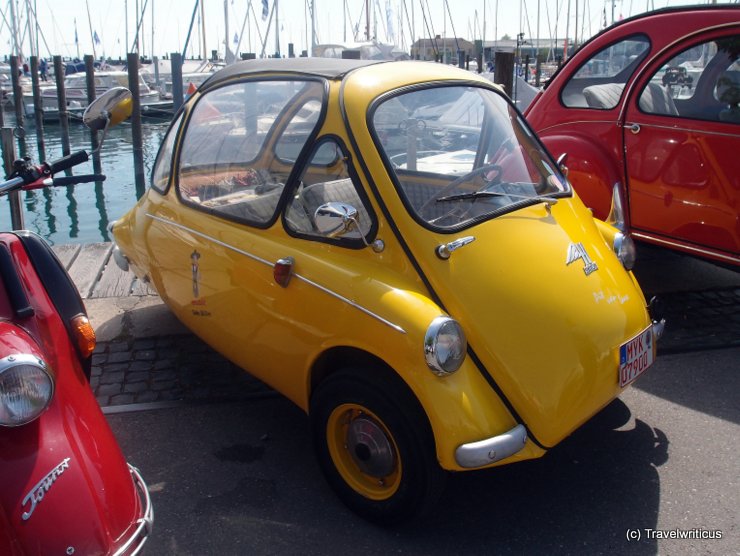
The former aircraft manufacturing company Heinkel produced the Heinkel Kabine from 1956 to 1958. It is an example of how the German aircraft industry dealt with the prohibition of manufacturing planes after WWII.
Browse through your travel destination!
The former aircraft manufacturing company Heinkel produced the Heinkel Kabine from 1956 to 1958. It is an example of how the German aircraft industry dealt with the prohibition of manufacturing planes after WWII.
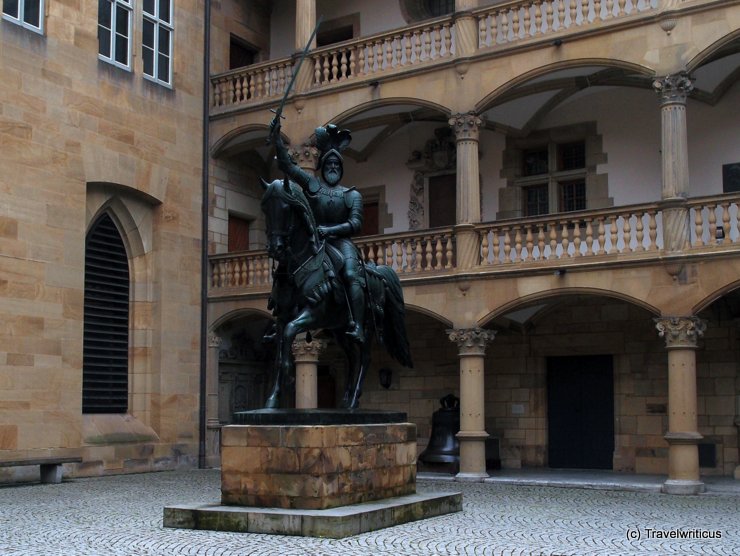
This monument to Eberhard I, Duke of Württemberg, stands in a court of the Old Palace (Altes Schloss) in Stuttgart. Eberhard (1445-1496) was the first Duke of Württemberg. He was also known as Eberhard im Bart (Eberhard the Bearded).
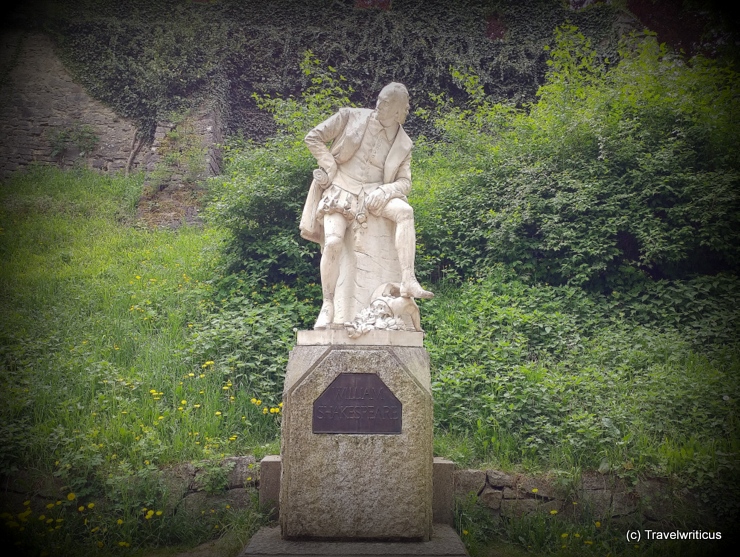
Walking through Ilm Park (Park an der Ilm), I came across this monument to William Shakespeare. What a surprise. I knew that Weimar is famous for Goethe, Schiller, and Herder. What is the link to Shakespeare? In fact, Goethe played a role in this question.
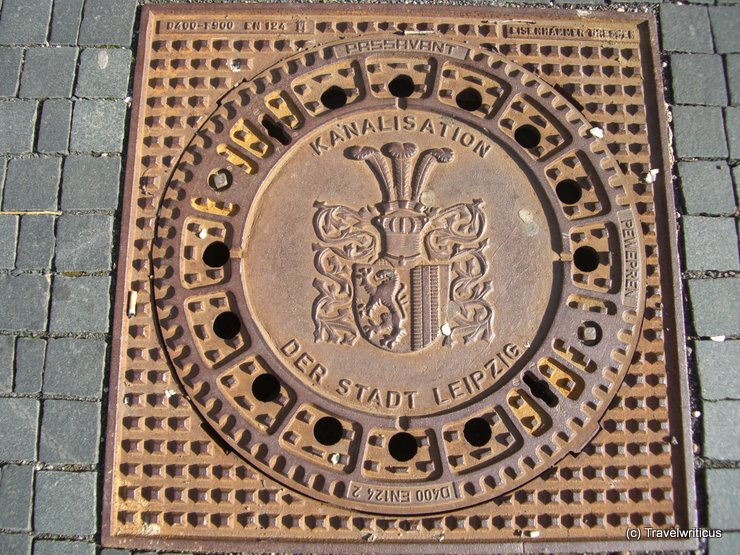
The manhole cover of Leipzig show its city arms. Similar to the city arms of Dresden, the emblem combines the Meissen Lion and the Landsberg Pales. The depiction looks pretty beautiful as it displays the complete heraldic achievement.
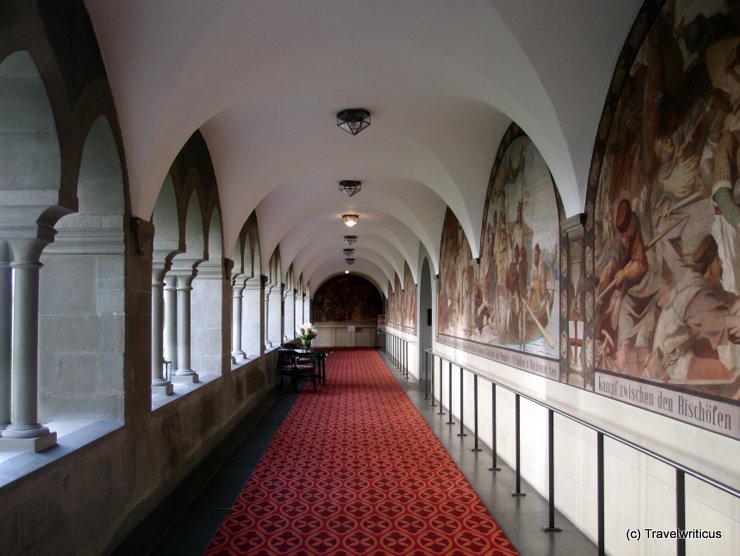
The former monastery of the Dominicans situated on the tiny Dominican Island in front of Constance (Konstanz) accommodates a hotel now. Guests of this hotel and its restaurant have the chance to walk along this nicely painted cloister.
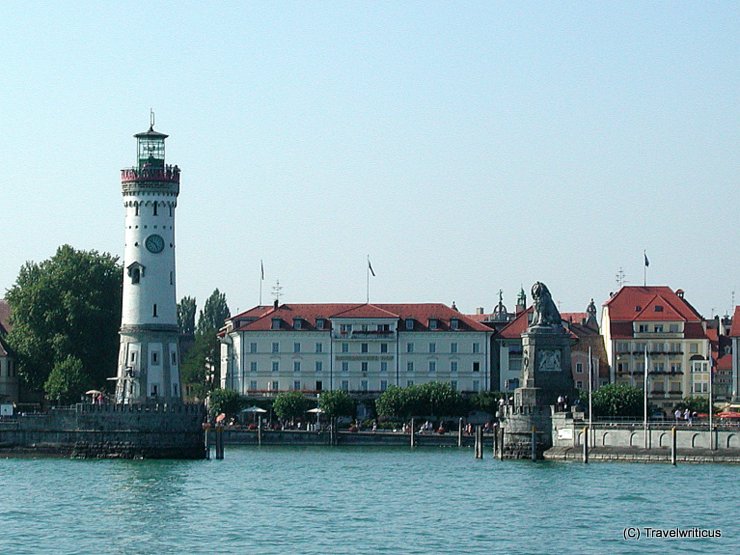
The Lindau Lighthouse stands at the port of Lindau, a city in the German state of Bavaria. Opposite the lighthouse, you see a sculpture presenting the Bavarian lion. The port is a starting point for cruises on Lake Constance (Bodensee).
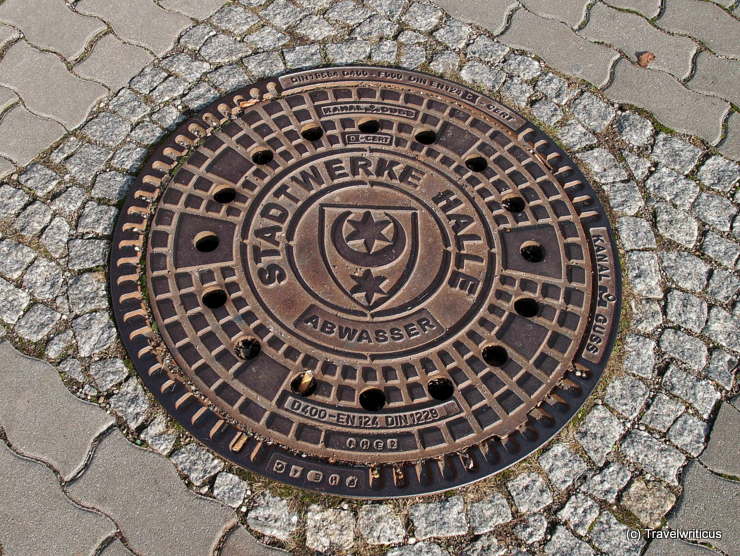
This manhole cover in Halle (Saale) displays the coat of arms of the city. The city arms of Halle consist of a moon between two stars of different size. The colour of these symbols is red, the ground is silver.
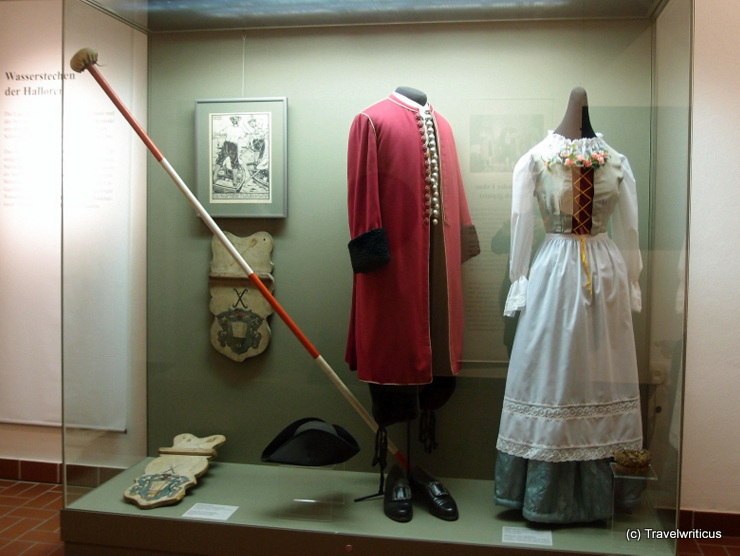
This showcase at the Hallors and Saline Museum in Halle (Saale) displays the costume of a Hallor with its typical 18 buttons and a lance. Such lances are still in use for the traditional water joustings one can experience e.g. during the lantern festival of Halle (Hallesches Laternenfest).
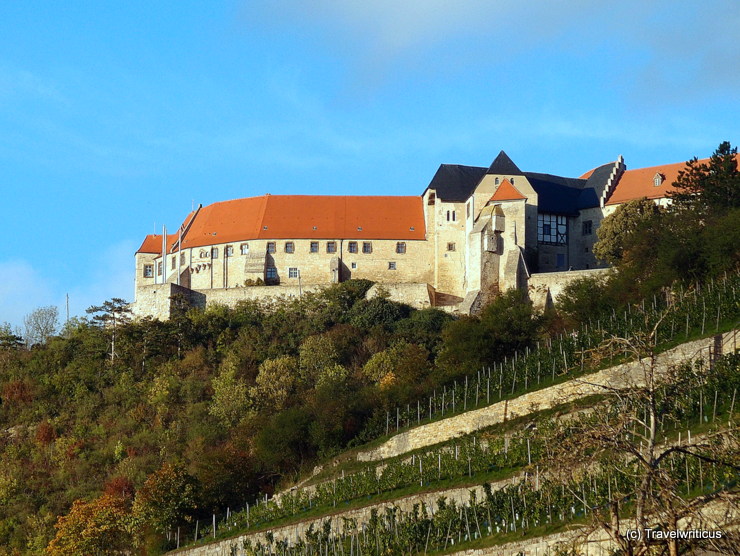 Neuenburg Castle (Schloss Neuenburg) located in the wine-growing area of Saale-Unstrut houses among others a wine museum. This photo was taken while enjoying a boat trip on the river Unstrut.
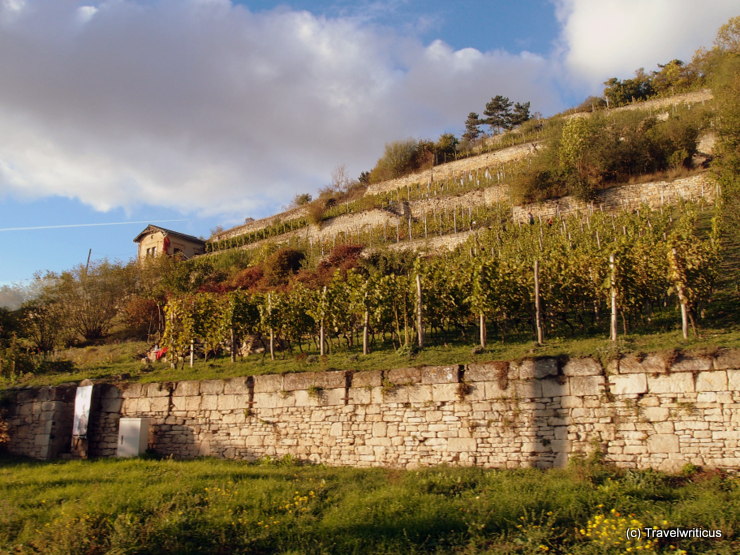
While travelling through the wine-growing area of Saale-Unstrut one can see a lot of steep terraces with centuries-old dry walls and romantic vineyard cottages. The region is open for many kinds of movement: Hiking, cycling and even canoeing.
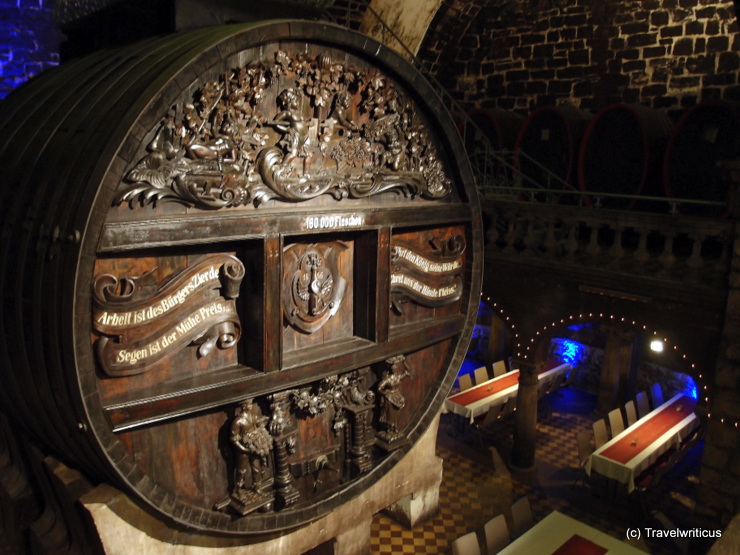
In the historic sparkling wine cellars of the Rotkäppchen winery in Freyburg (Unstrut) there is a huge wine cask for the cuvée. The barrel was built in 1897 and has a capacity of 120,000 litres.
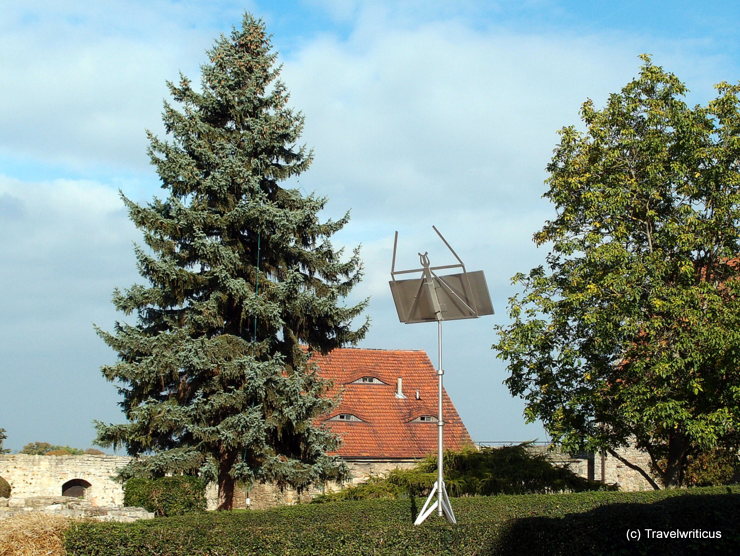
Three music stands (Notenständer) with a height of four metres remind me that Querfurt Castle (Burg Querfurt) houses a music school. Artist Ingo Güttler created these music stands that play music and form a sound installation. During festivals, the music stands will be removed.