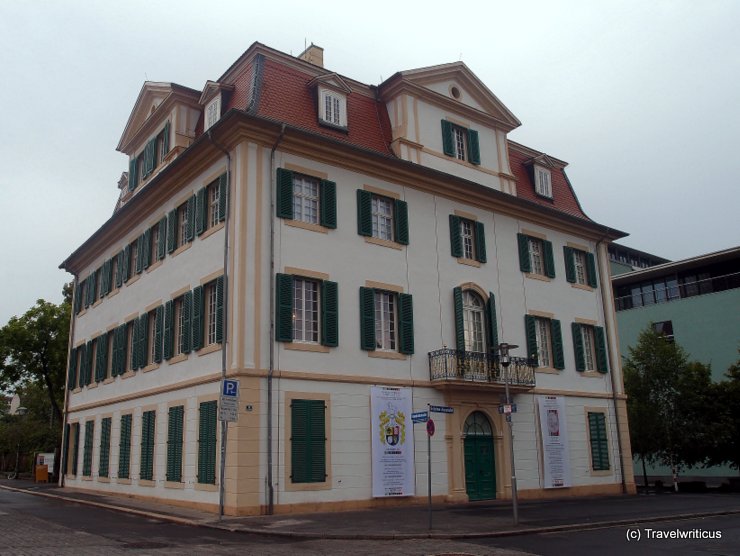
Another interesting venue of the dOCUMENTA (13) I visited today: The Brüder-Grimm-Museum in Kassel.
Browse through your travel destination!
Another interesting venue of the dOCUMENTA (13) I visited today: The Brüder-Grimm-Museum in Kassel.
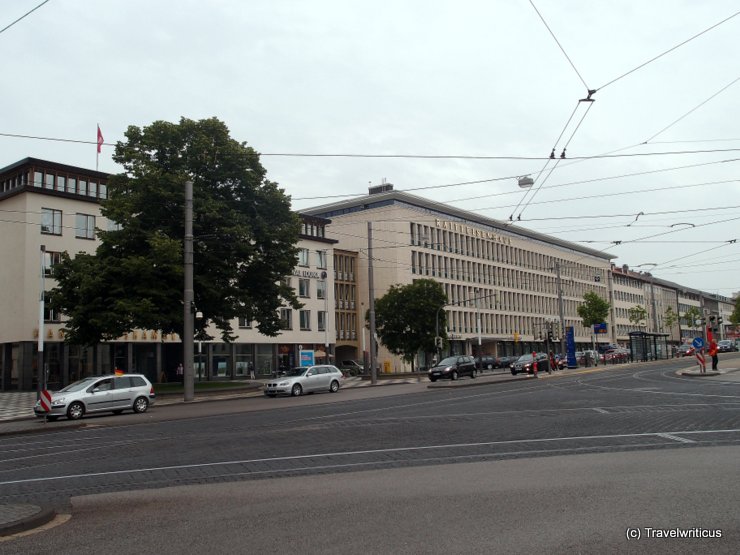
After World War II a large part of Kassel was rebuilt in the style of the 50ties. So if you are interested in the architecture of this period a walk through Kassel is a good way to learn more about it.
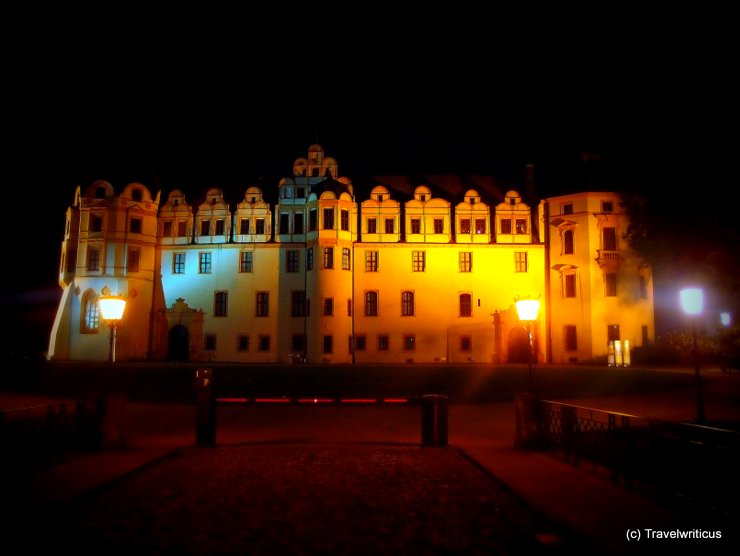
On the way back to my hotel I passed the palace of Celle (Schloss Celle) again. Sometimes a walk around a castle at night is even more exciting than in the dayligt. Especially if you are alone in the streets. What about your experiences?
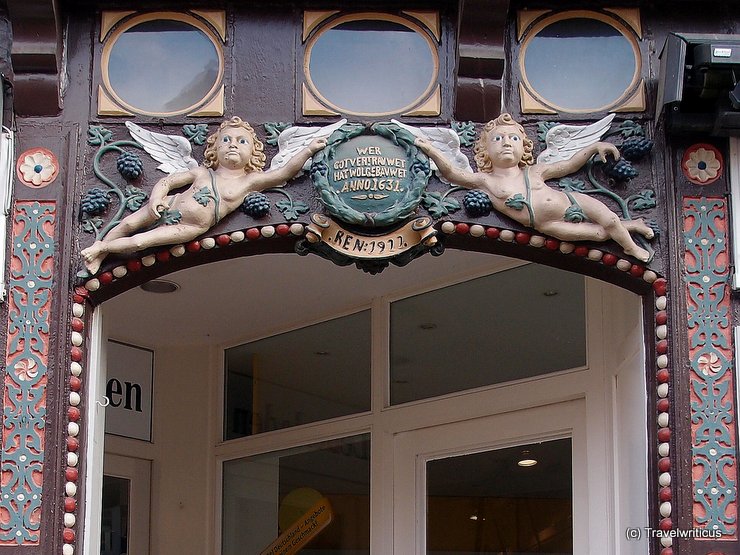
Another different style of portal. The inscription dated with 1631 gives me an interesting insight in the German of the 17th century: ‘Wer Got vetrauwet hat wolgebauwet’. Today we would write: ‘Wer Gott vertraut hat wohl gebaut’.
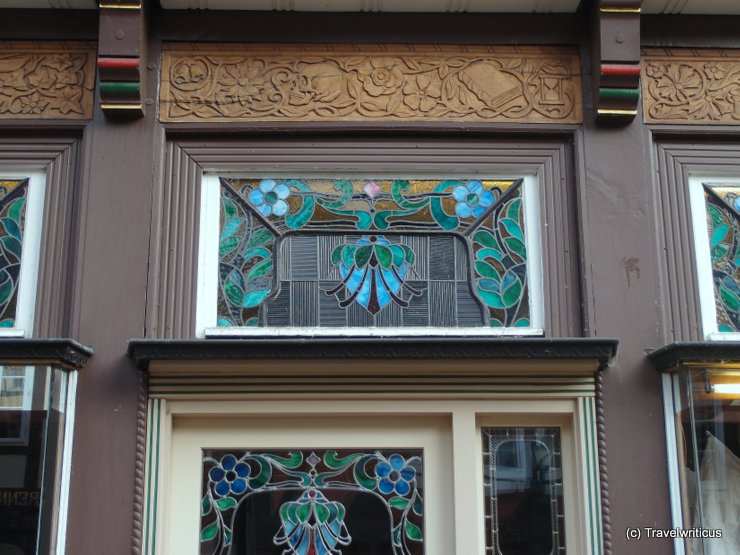
Nice decorated fanlight seen at a half-timbered house in Celle. I am not sure about the style. It seems to be not much older than 100 year? What do you think?
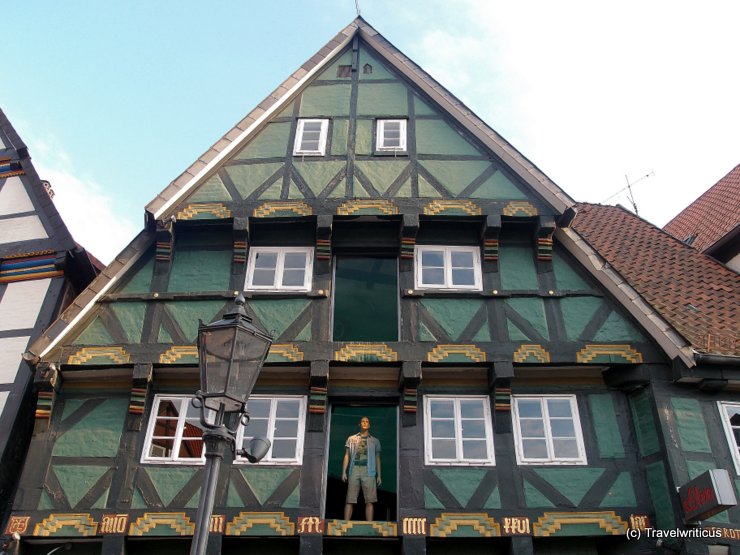
This building is supposed to be the oldest dated house (1522) in Celle. The mannequin indicates that some parts of the building are used for a fashion shop now.
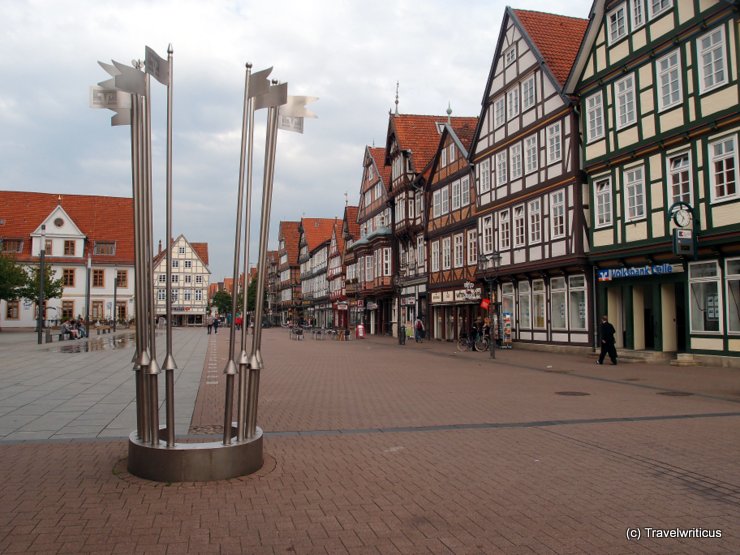
At the ‘Stechbahn’ of Celle. The former jousting field of the city was placed here. Though the sculpture is a kind of advertisement for a local bank I love the idea to portray the former use of this place by lances.
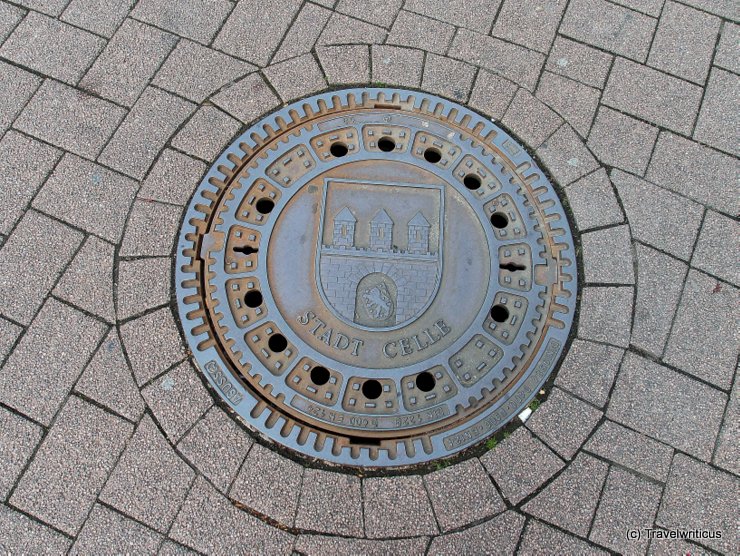
The manhole cover of Celle shows the emblem of the city: A wall with three towers. In the gate there is a blue lion surrounded by seven red hearts.
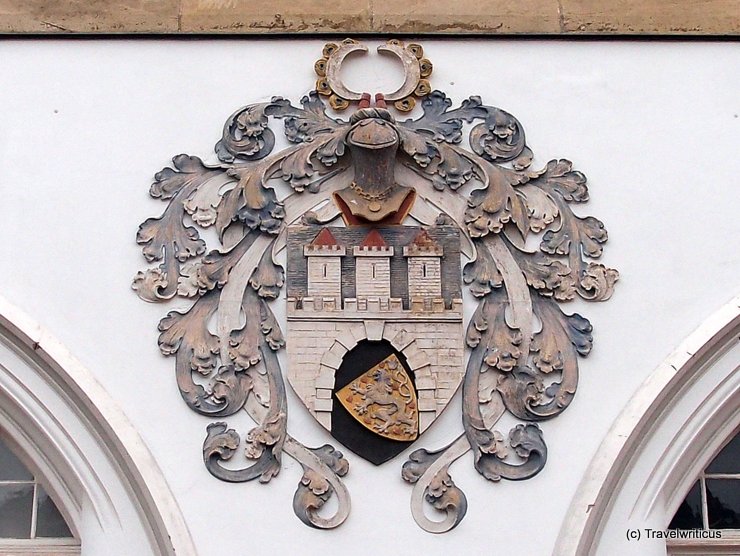
The emblem of Celle seen at the wall of the Bomann-Museum. Well, who of you can ‘read’ this emblem?
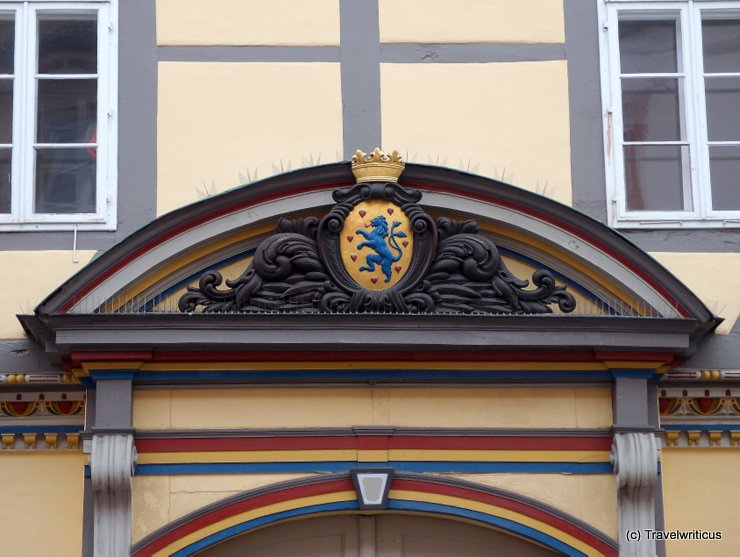
Interesting detail seen at a gate in Celle. The colours of the decorations are the same like those one in the emblem of Celle: A blue lion in a golden field surrounded by red hearts.
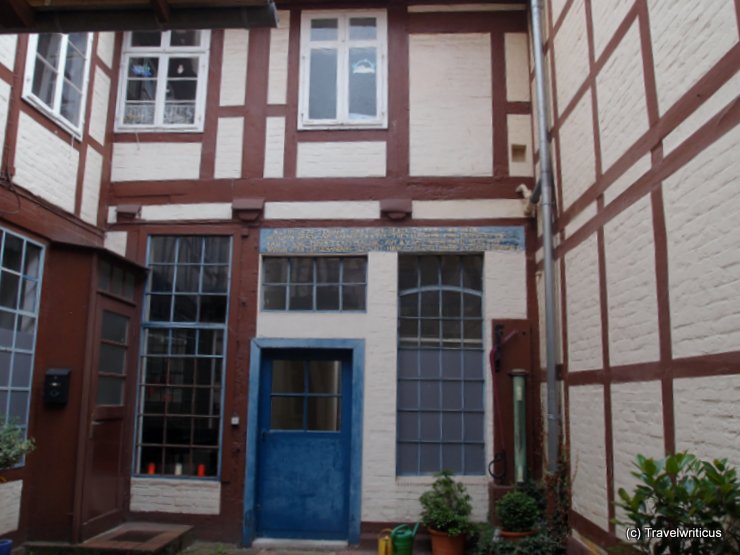
After walking along so many nice decorated houses I was curious how the backyards of them looked like.
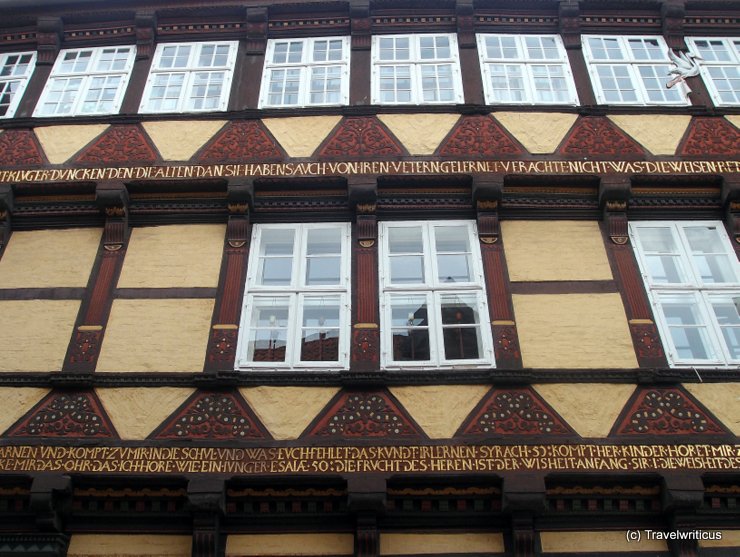
Walking through Celle is like reading a book. Sometimes the lines are benedictions, sometimes they describe the purpose of the building. I wonder if there is a guide book listing all these inscriptions?