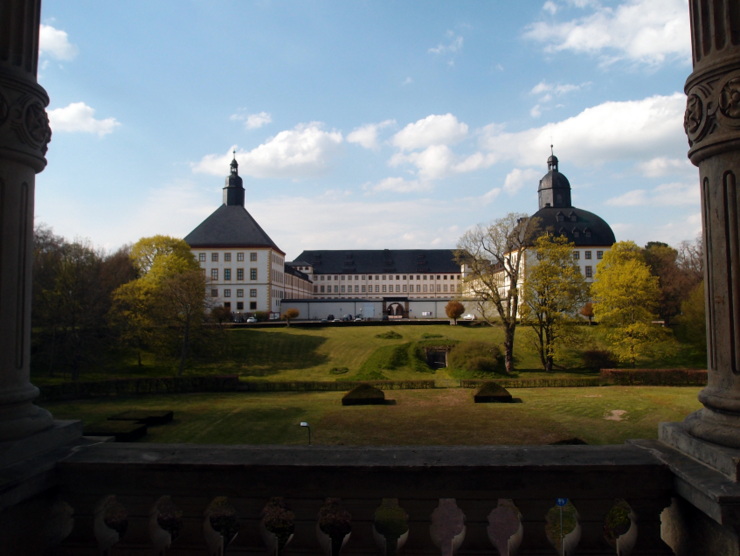
The Gallery of Old & New Masters (Galerie Alte & Neue Meister) in Schwerin is part of the State Museum Schwerin (Staatliches Museum Schwerin). The building, designed by architect Hermann Willebrand, opened in 1882.
Browse through your travel destination!

The Gallery of Old & New Masters (Galerie Alte & Neue Meister) in Schwerin is part of the State Museum Schwerin (Staatliches Museum Schwerin). The building, designed by architect Hermann Willebrand, opened in 1882.

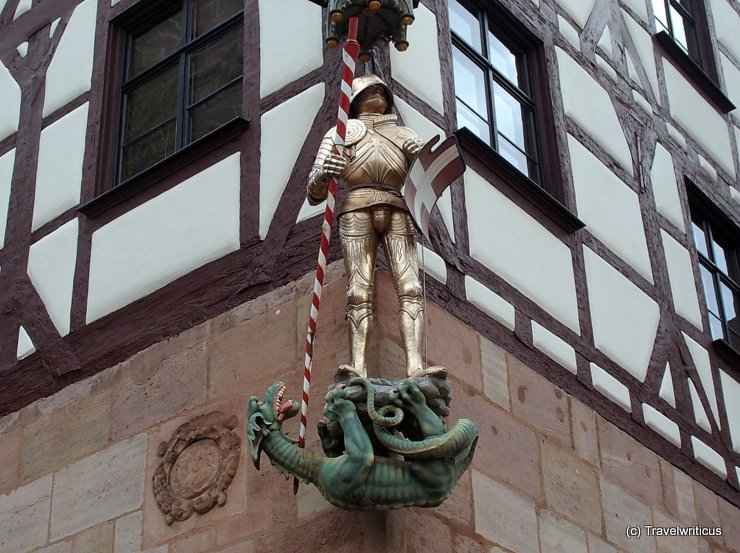
The Heilig-Geist-Spital is one of Nuremberg’s most iconic sights. The associated hospital church housed the Imperial Regalia for several centuries. Today, the depicted part of the spital accommodates a restaurant.

In this building, Pope Martin V saw its election in 1417. This event was significant during the Council of Constance (1414-1418). The name of this building still reminds us of this event: Council Building (Konzilgebäude).

After leaving Kassel Central Station, you may see this odd diving platform on a hotel roof. The explanation for this strange view: It’s a piece of public art. The title of the artwork is “Arschbombe”. Its creator was Ralph Raabe.

On my way from the railway station to the centre of Regensburg, I discovered the city’s emblem at an oriel window: Two white keys in a red field. The keys are the attribute of Saint Peter, the patron of Regensburg Cathedral.

Near the Roman Museum, pedestrians see this reconstruction of an ancient street. The lane is known as Harbour Road, though it doesn’t lead to a port anymore. It isn’t an exact reconstruction of the former street, but the basalt stones are from Roman times.

Wilhelm Rottermondt created this statue of the “Regina Pacis”. In English, this title translates to Our Lady Queen of Peace. You find this sculpture in a niche on the facade of the University of Bonn, also known as Rhenish Friedrich Wilhelm University of Bonn.

Right next to the site of the Francke Foundations in Halle (Saale), visitors find this fascinating piece of architecture. It’s the headquarters of the German Federal Cultural Foundation (Kulturstiftung des Bundes).

The Hessenpark forms an open-air museum featuring around 100 buildings from the German state of Hesse. Besides farmhouses, barns and windmills, you also see a marketplace with urban structures.

Schloss Falkenlust (Falkenlust Palace) was built from 1729 to 1740 as a hunting lodge. It is part of an ensemble with Schloss Augustusburg connected by a big garden. Both of them are part of the UNESCO World Heritage list.

Visitors experience this view of Oberhaus Fortress (Veste Oberhaus) from the main square in Passau. The fortress itself offers an even more intriguing view: You see the three rivers of Passau in their different colours: Danube (Blue), Inn (Green) and Ilz (Black).

This is a view of the Bavarian city of Regensburg taken from the steeple of the Holy Trinity Church (Dreieinigkeitskirche). Regensburg is known for several family towers (Geschlechtertürme), similar to those in San Gimignano, Italy.