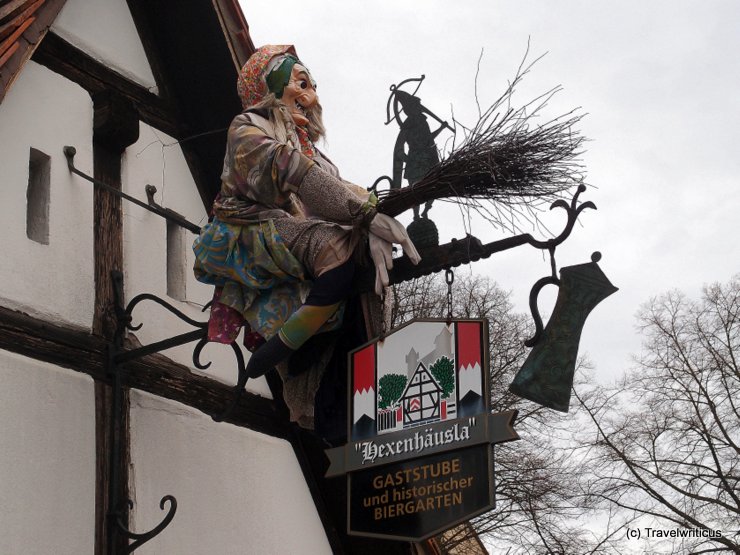
The small inn sign represents a honey hunter. People with this profession used to collect honey from wild bees around Nuremberg. With the crossbow they fight the bears in the woods.
Browse through your travel destination!
The small inn sign represents a honey hunter. People with this profession used to collect honey from wild bees around Nuremberg. With the crossbow they fight the bears in the woods.
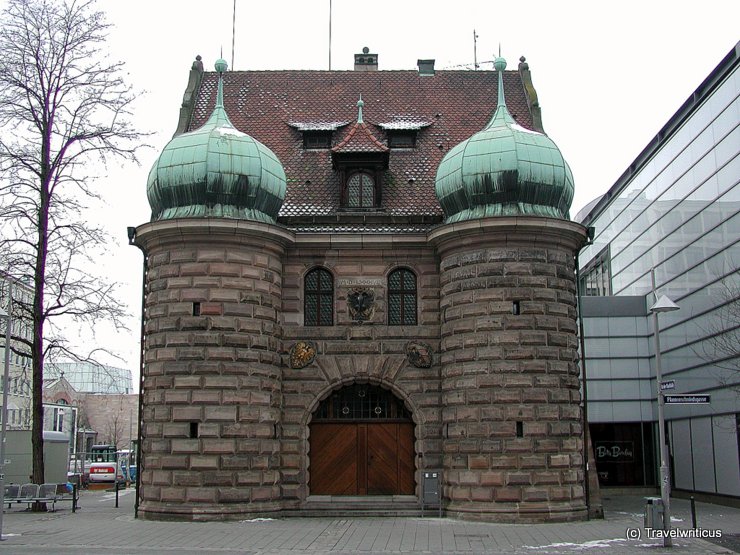
The former armoury (Zeughaus) of Nuremberg saw its construction by Hans Dietmayer in 1588/89. After bomb damage during World War II, a reconstruction finished in 1954/55.
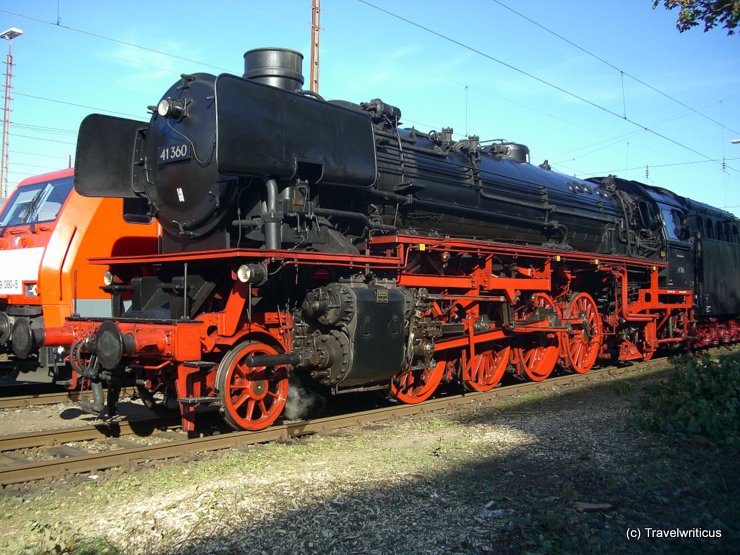
On a historic locomotives parade in Fürth, this engine of the German Class 41 was one of the stars. Despite being built in 1940, the freight locomotive 41 360 seemed particularly juvenile and elegant.
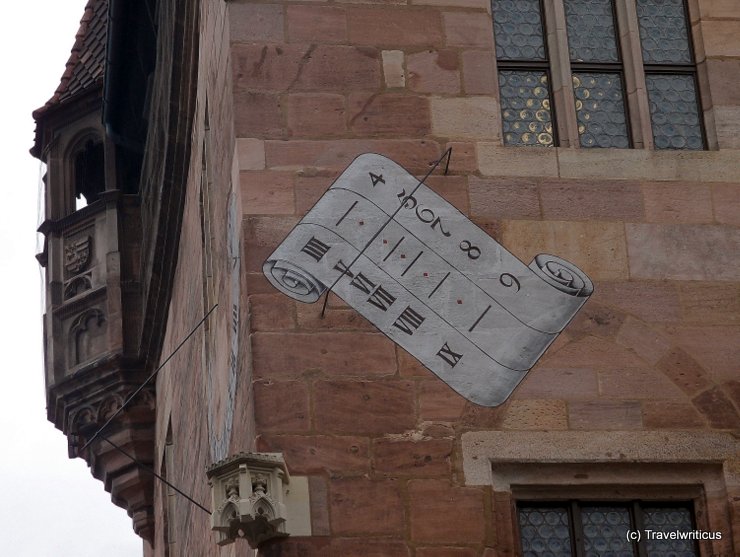
This sundial is a decoration on the Nassauer Haus in Nuremberg, a medieval residential tower in the city centre. I love the sundial’s design, which reminds me of a scroll. Around the corner, there is another sundial with a commonplace design.
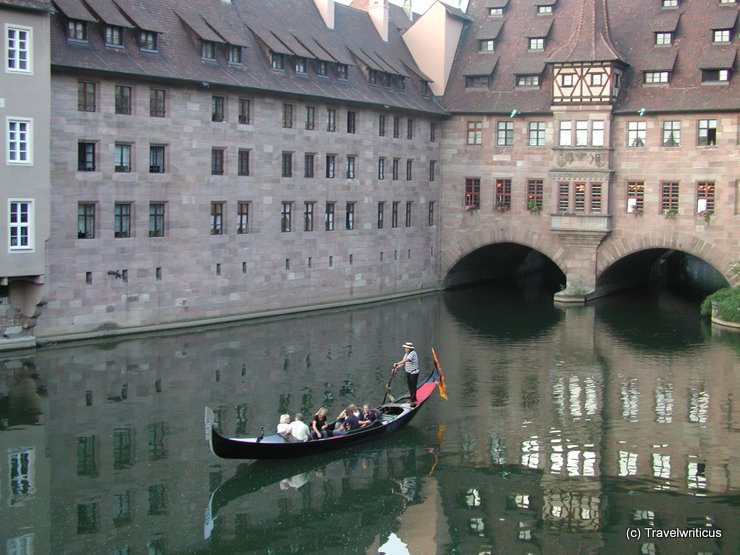
During my visit to Nuremberg, locals told me there was a guy with a gondola licence. After some hours watching the river in the middle of the city, I was able to catch him in a photo. The building in the background is named Heilig-Geist-Spital.
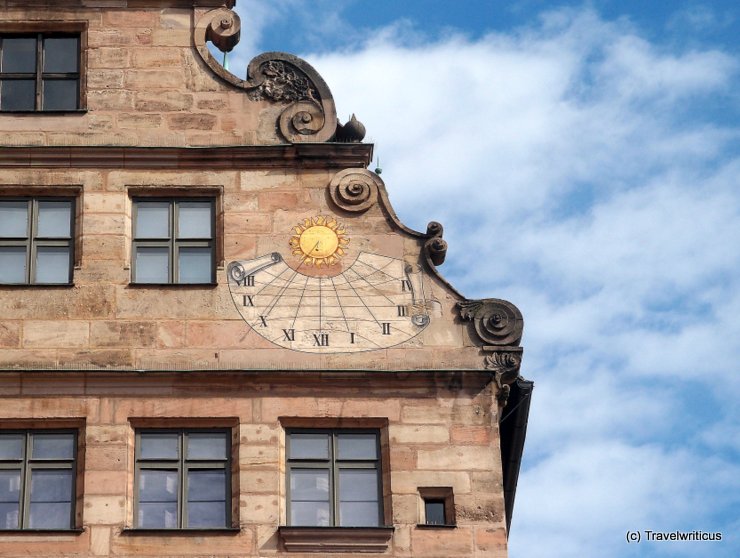
You find this sundial on the facade of the Fembohaus in Nuremberg. The Fembohaus is the home of the Nuremberg City Museum. Inside, you see a city model of Nuremberg before World War II.
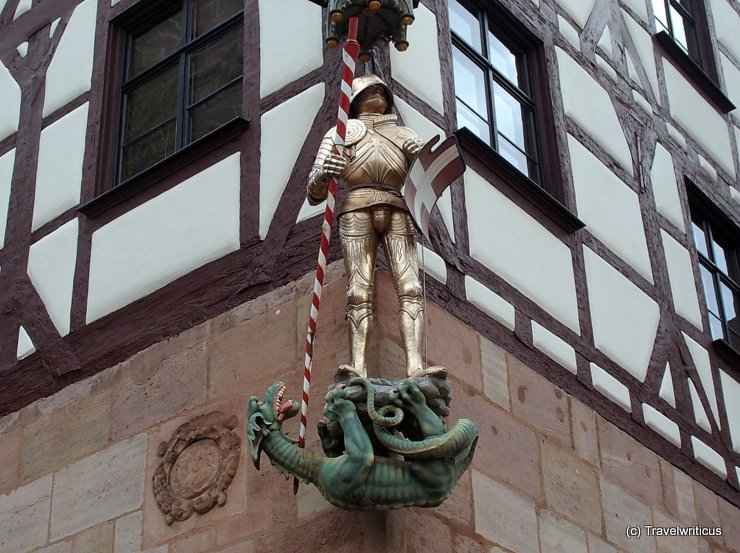
The house sign of the Pilatushaus in Nuremberg shows Saint George fighting the dragon. The motif fits well. The owner of this home was a Plattner (amorer), and George was the Saint of his craft guild.
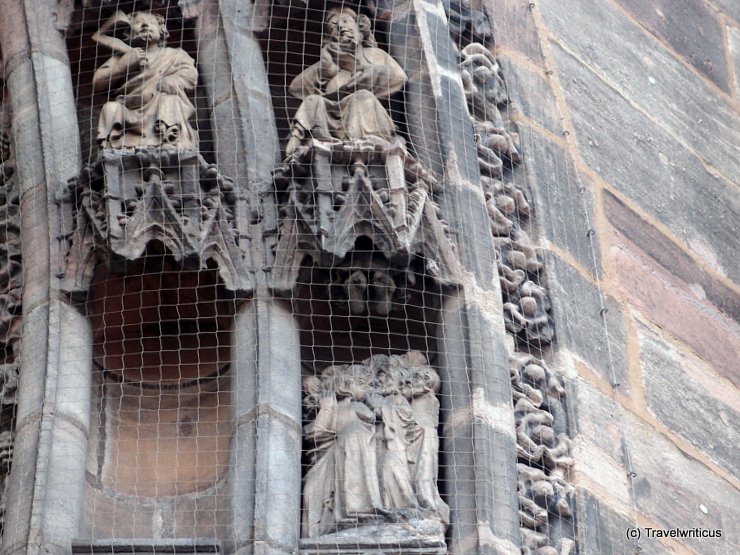
I was told this part at the tympanum of St. Lorenz is showing the ‘Ascension of Jesus’. For me this is really an odd illustration as one can see only the feet of Jesus. What do you think?