
The Donkey Fountain (Eselsbrunnen) on the Old Market (Alter Markt) in Halle (Saale) dates back to 1913. Its motiv – a man with a donkey walks over a rug of roses – refers to an old but fun legend. The story goes back to the time of Emperor Otto I.
Browse through your travel destination!
The Donkey Fountain (Eselsbrunnen) on the Old Market (Alter Markt) in Halle (Saale) dates back to 1913. Its motiv – a man with a donkey walks over a rug of roses – refers to an old but fun legend. The story goes back to the time of Emperor Otto I.
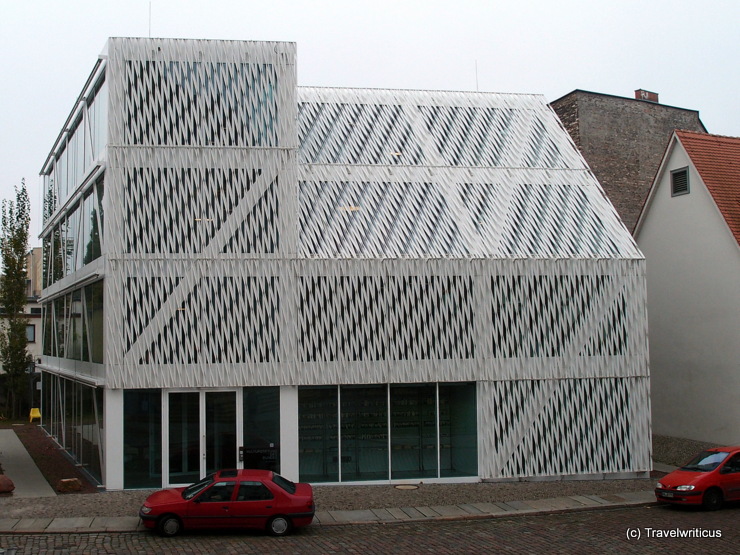
Right next to the site of the Francke Foundations in Halle (Saale), visitors find this fascinating piece of architecture. It’s the headquarters of the German Federal Cultural Foundation (Kulturstiftung des Bundes).
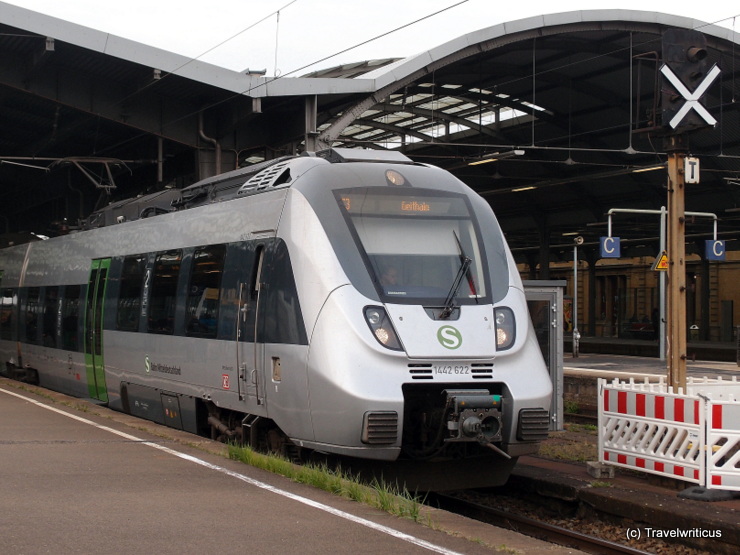
The Talent 2 is a multiple-unit railcar manufactured by Bombardier Transportation. The first trains have been operating since 2008. Its particular cab design led to the German nickname Hamsterbacke (hamster cheek). The depicted train runs for the S-Bahn Mitteldeutschland.
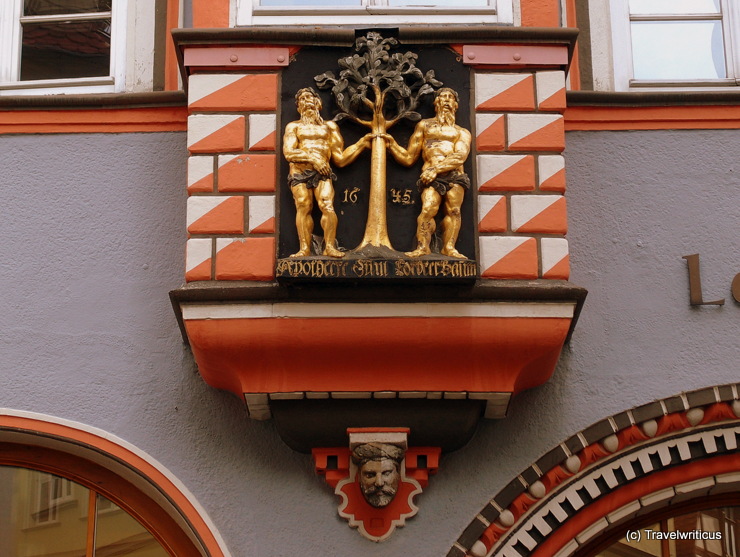
This relief displaying a laurel tree and two men is fixed at a 16th-century building with the address Herrenstraße 2 in Naumburg (Saale). The building houses a pharmacy named Lorbeerbaum Apotheke (Laurel Tree Pharmacy).
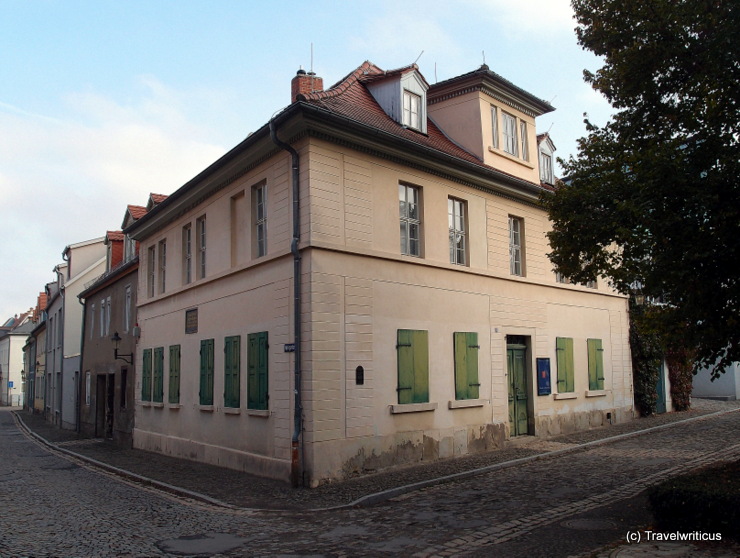
The Nietzsche-Haus museum opened in 1994. A permanent exhibition is devoted to the life and work of the philosopher Friedrich Nietzsche. The Nietzsche Documentation Centre, also housed here, is concerned with researching the reception of Nietzsche’s works.
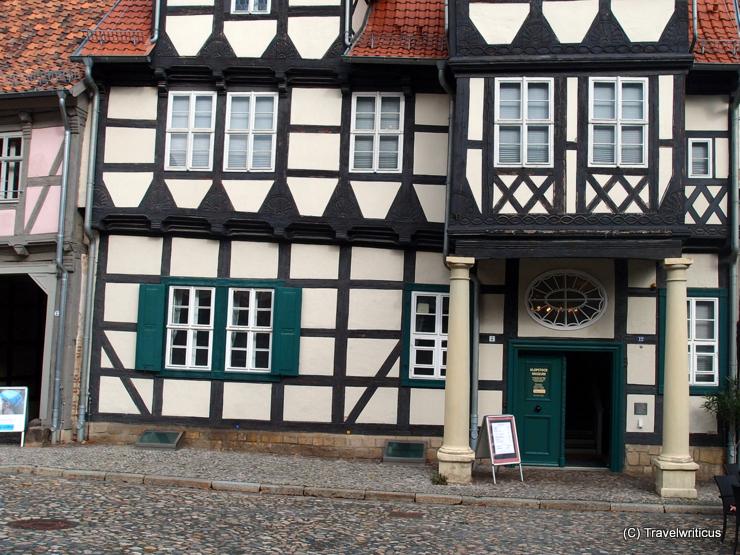
German writer Friedrich Gottlieb Klopstock was born in this building on July 2nd, 1724. Today it houses a museum about his works, e.g. the epic poem ‘The Messiah’ (Der Messias). Biographies of several additional local personalities complete the exhibition.
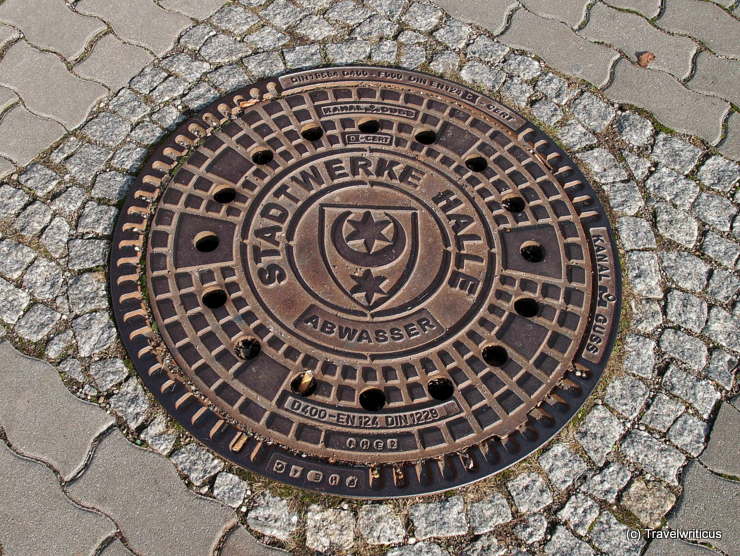
This manhole cover in Halle (Saale) displays the coat of arms of the city. The city arms of Halle consist of a moon between two stars of different size. The colour of these symbols is red, the ground is silver.
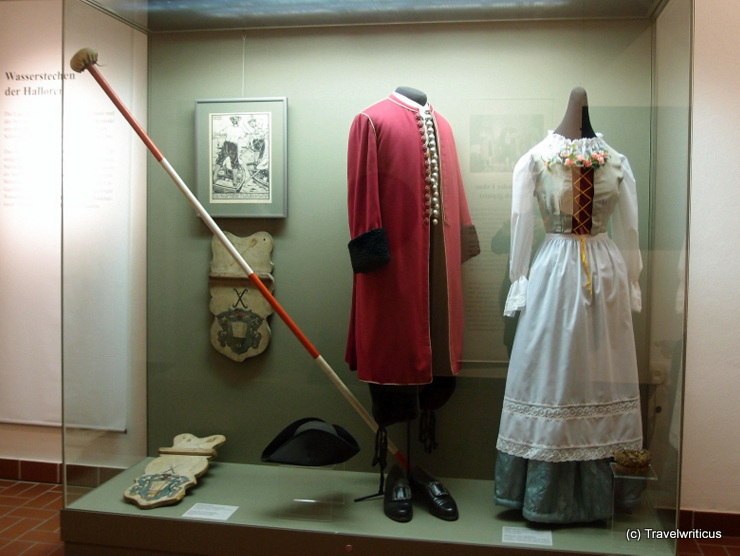
This showcase at the Hallors and Saline Museum in Halle (Saale) displays the costume of a Hallor with its typical 18 buttons and a lance. Such lances are still in use for the traditional water joustings one can experience e.g. during the lantern festival of Halle (Hallesches Laternenfest).
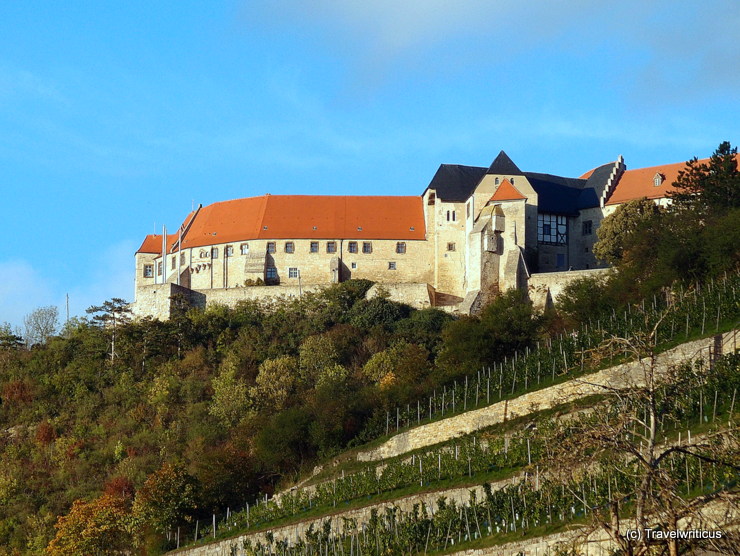 Neuenburg Castle (Schloss Neuenburg) located in the wine-growing area of Saale-Unstrut houses among others a wine museum. This photo was taken while enjoying a boat trip on the river Unstrut.
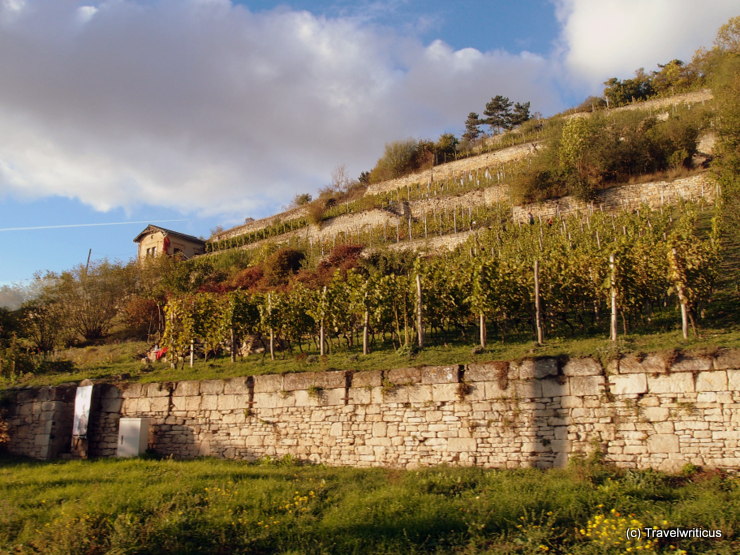
While travelling through the wine-growing area of Saale-Unstrut one can see a lot of steep terraces with centuries-old dry walls and romantic vineyard cottages. The region is open for many kinds of movement: Hiking, cycling and even canoeing.
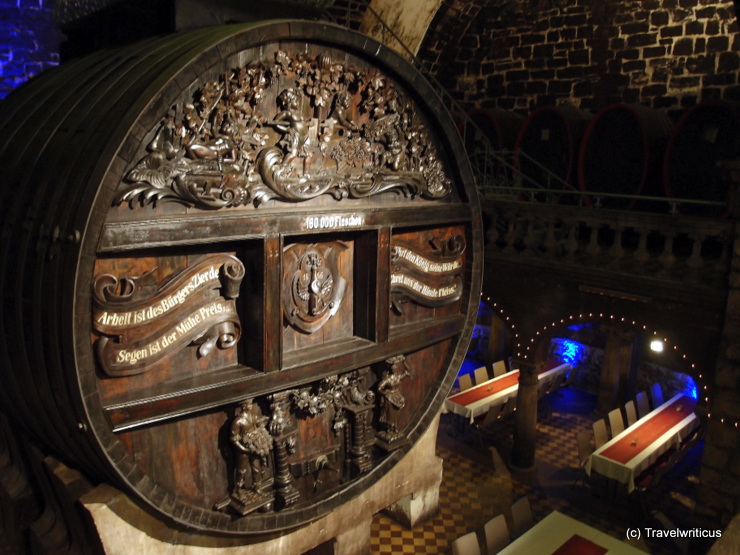
In the historic sparkling wine cellars of the Rotkäppchen winery in Freyburg (Unstrut) there is a huge wine cask for the cuvée. The barrel was built in 1897 and has a capacity of 120,000 litres.
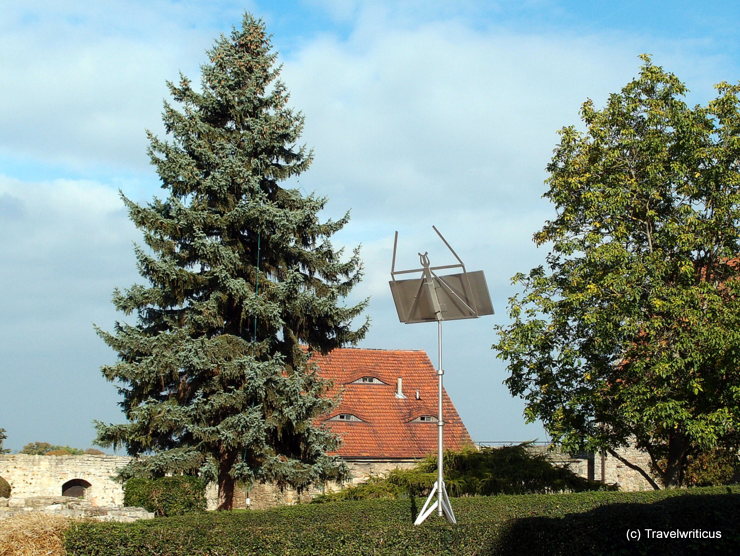
Three music stands (Notenständer) with a height of four metres remind me that Querfurt Castle (Burg Querfurt) houses a music school. Artist Ingo Güttler created these music stands that play music and form a sound installation. During festivals, the music stands will be removed.