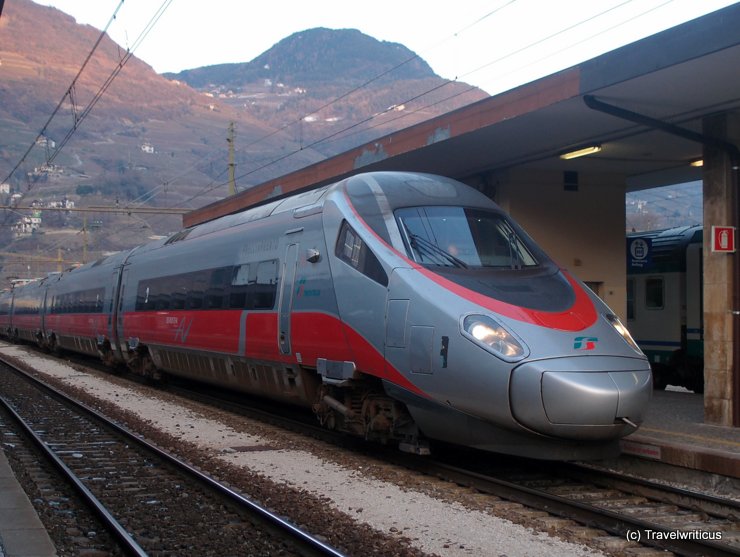
At the Central Station Bolzano, the Italian Frecciargento high-speed train is waiting for the start of its journey. It will reach Roma within 5 hours, running with a top speed of 160 mph.
Browse through your travel destination!

At the Central Station Bolzano, the Italian Frecciargento high-speed train is waiting for the start of its journey. It will reach Roma within 5 hours, running with a top speed of 160 mph.

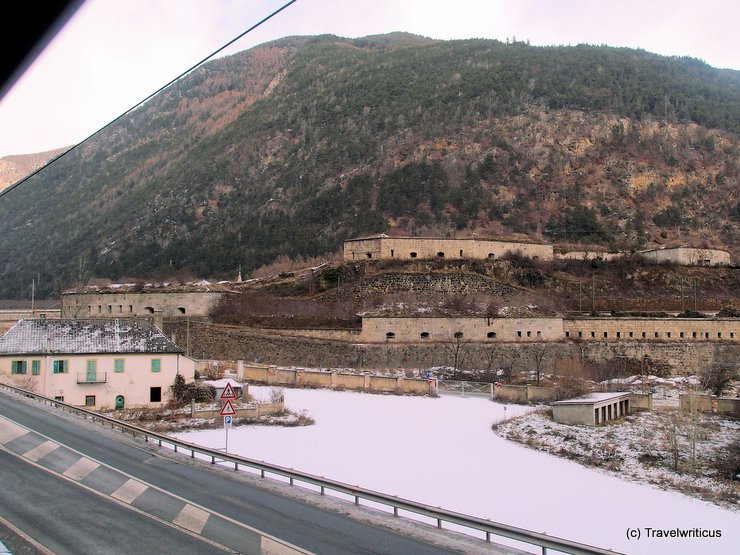
During a train journey from the Brenner Pass to Bolzano, passengers pass the former Austrian fort Franzensfeste (Forte di Fortezza). Its name originates from the Austrian Emperor Franz I. The fortress saw its completion in the first half of the 19th century.

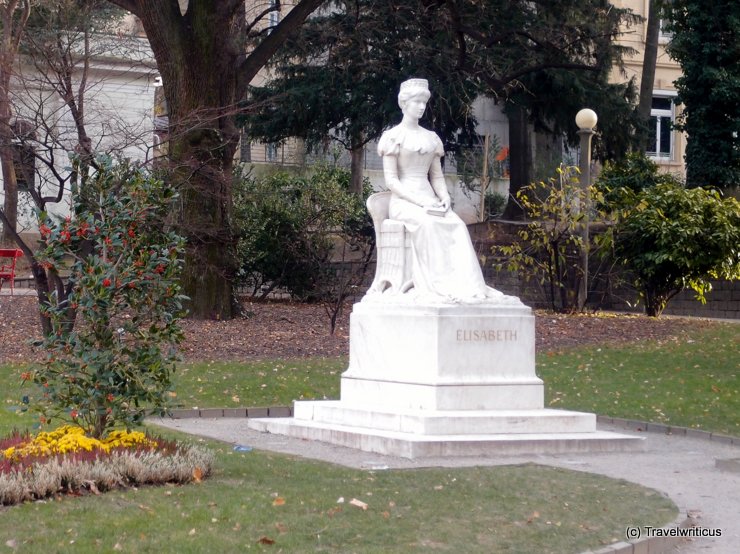
Empress Elisabeth “Sisi” of Austria stayed in Merano for several times. A monument to her still reminds us of her visits. If you want to learn more about her, you can find additional info at Trauttmansdorff Castle on the outskirts of Merano.

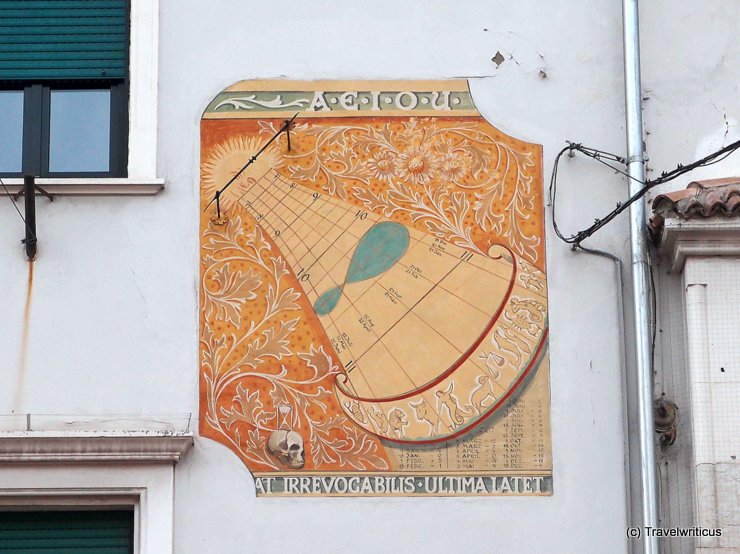
This sundial in Merano impresses with a lot of details and codes. For example, you see the motto of Frederick III (A.E.I.O.U.). There is also a memento mori formed by a skull and an hourglass on top of it.

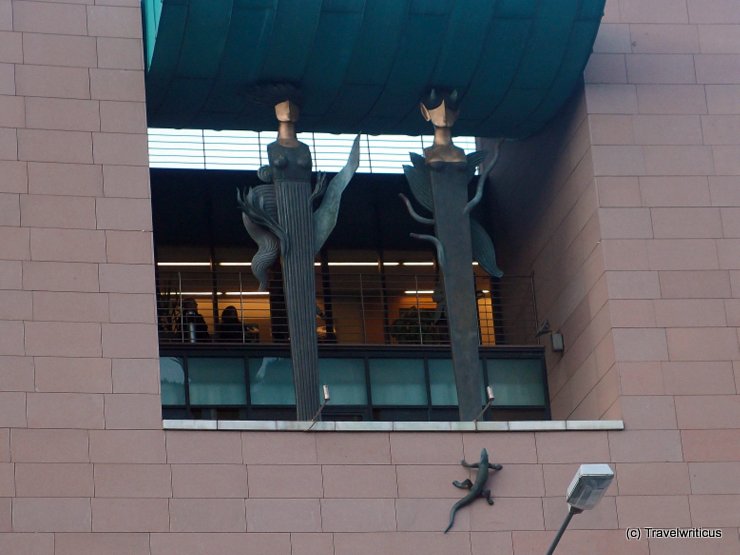
One of the most peculiar architectural impressions outside the station hall of Bolzano Main Station is this lizard climbing a wall. Above the sporty creature, you see two different designed elements similar to ancient herms.

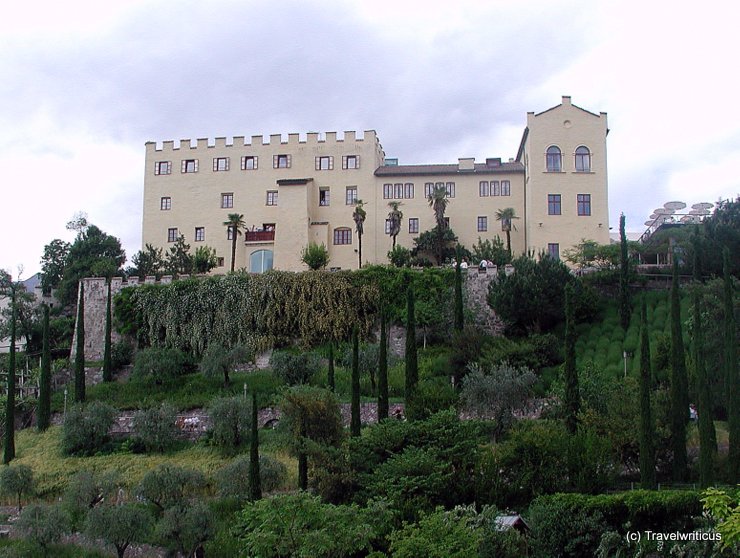
Trauttmansdorff Castle (Schloss Trauttmansdorff) in Merano offers a lush garden with about 80 different areas and a view of the Alps. Inside the castle, a museum tells about tourism in the alpine region of South Tyrol.

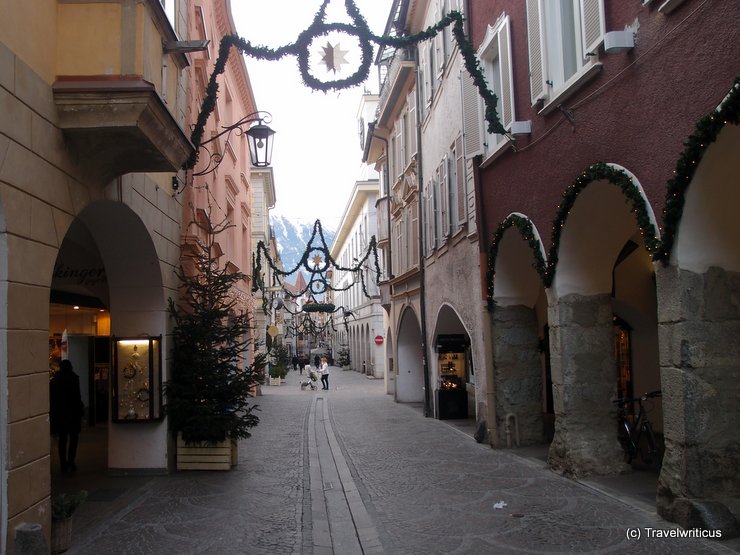
The Laubengasse in Merano saw its construction around 1200 at the request of Meinhard II. Since then, this arcaded alley has been considered the longest lane of its kind in Tyrol. Today, the Merano arcades are widely known for their shopping opportunities.
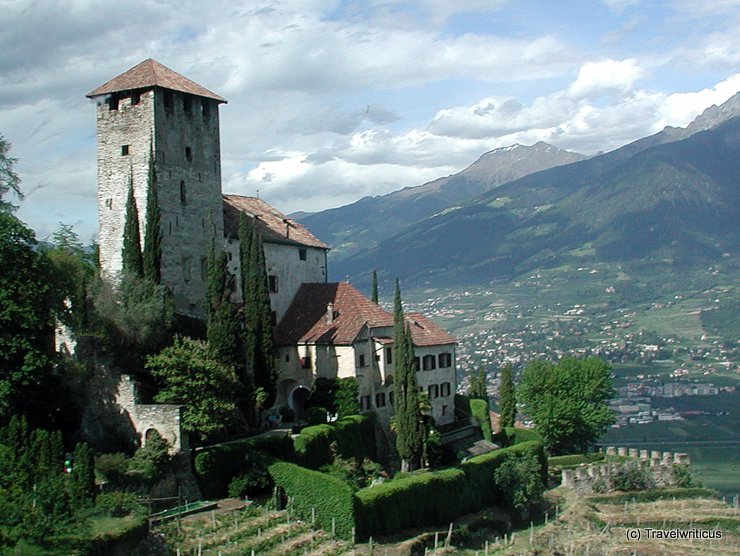
Lebenberg Castle (Castel Monteleone) is a 13th-century castle in Tscherms, a place in the region of Merano. During a guided tour, you experience a fully furnished castle with a Rococo-style hall of mirrors and a three-floor high chapel of the 14th century.

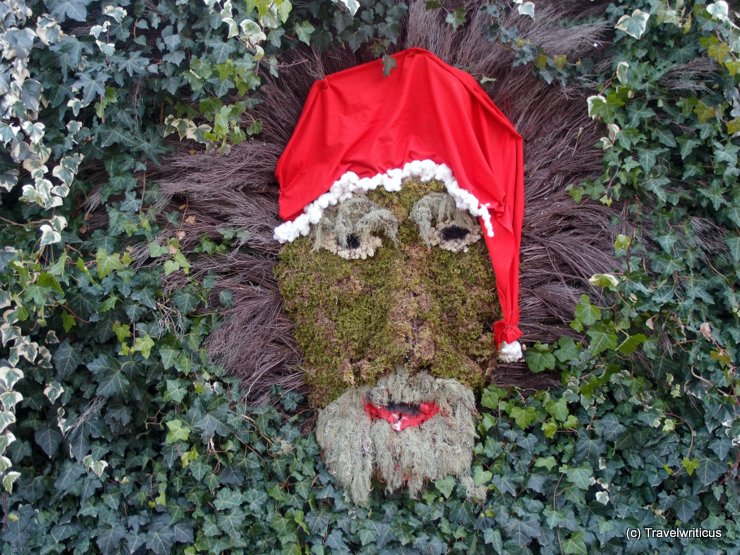
The face of Santa Claus made of kinds of mosses found at the Christmas market of Merano.