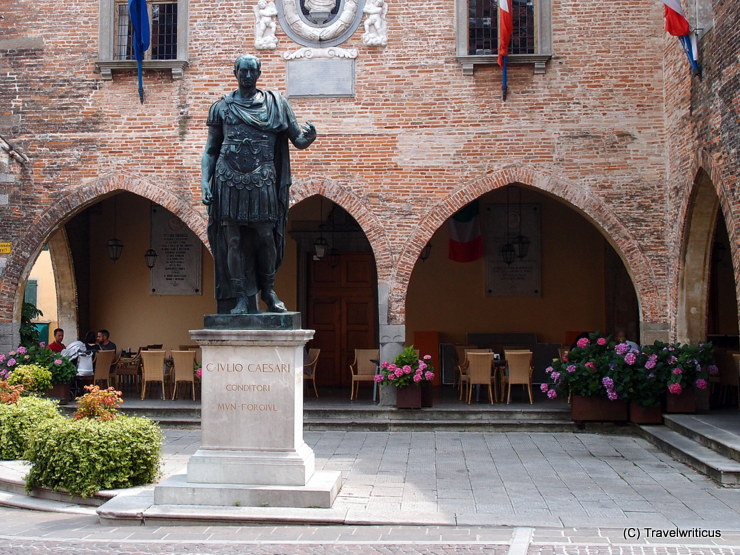
This monument in Cividale del Friuli commemorates Julius Caesar, who founded the city in 50 BC. Its founding name was Forum Iulli. The name of the area of modern Friuli originates from this ancient city name.
Browse through your travel destination!
This monument in Cividale del Friuli commemorates Julius Caesar, who founded the city in 50 BC. Its founding name was Forum Iulli. The name of the area of modern Friuli originates from this ancient city name.
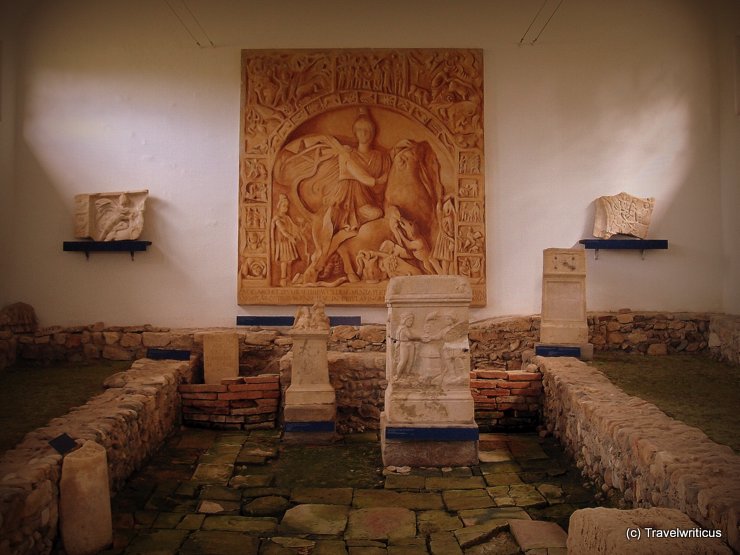
A protective building in the style of an ancient Roman sanctuary shelters the remains of the Mithras Shrine III in Ptuj. The shrine was erected in the sixties of the 3rd century by soldiers of the Legio XIII Gemina.
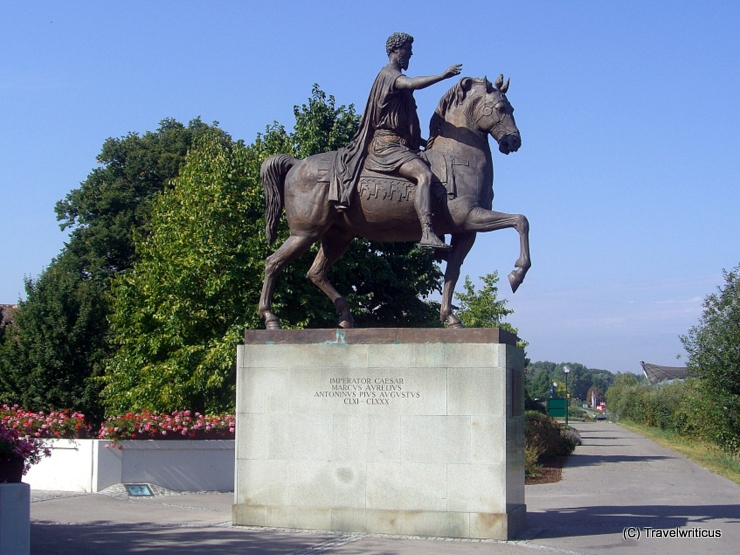
This monument to Marcus Aurelius is a replica of an equestrian statue on Capitols Square (Piazza del Campidoglio) in Rome. The sculpture in Tulln commemorates a Roman camp named Comagena, which was the predecessor of the modern city.
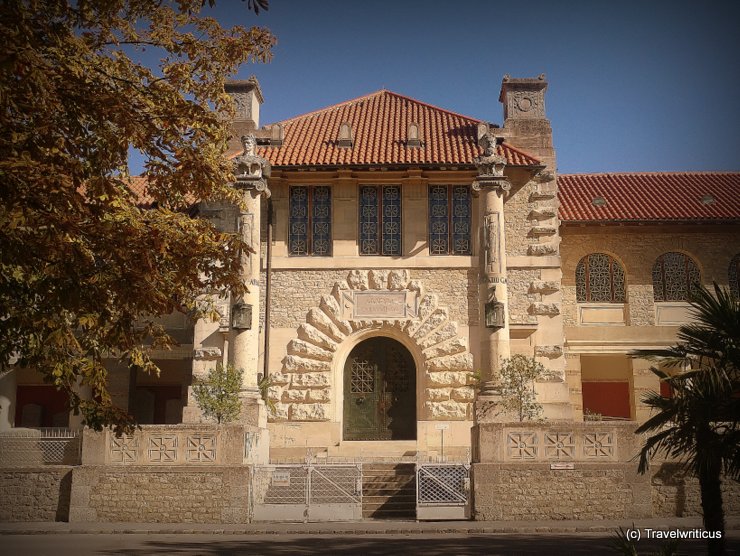
At first glance, the Carnuntinum Roman Museum in Bad Deutsch-Altenburg looks like a villa rustica. In fact, it was only opened in 1904. It houses artefacts from the Roman town of Carnuntum and is considered the biggest Roman museum in Austria.
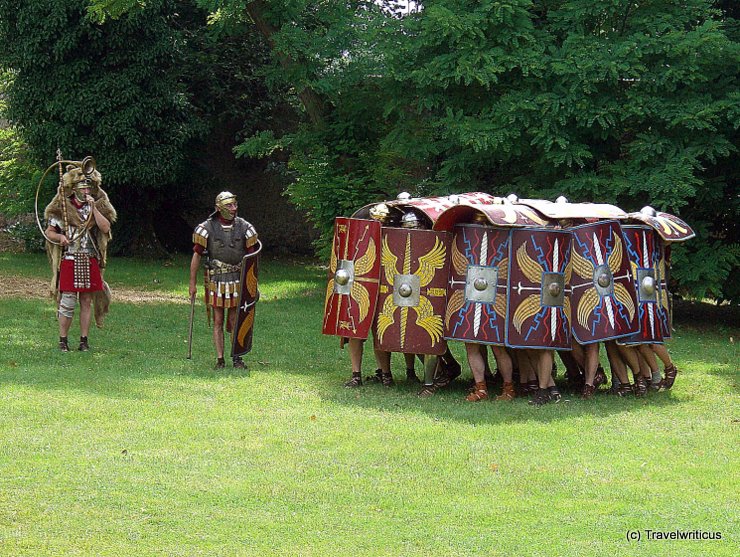
Probably the most iconic Roman military tactic is the tortoise (testudo) formation. At least, if you are a fan of the Asterix comic album series. In this part of a show at a Carnuntum festival, a reenactment group presents how such a formation develops.
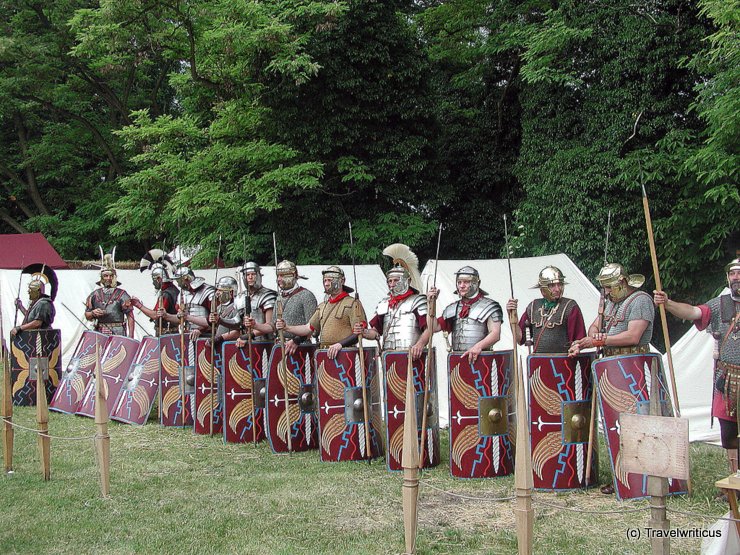
The Carnuntum Archeology Park hosts reenactment festivals with shows about Roman military routines and civic customs several times yearly. Numerous friend societies of Roman history provide visitors with parades of Roman legionaries.
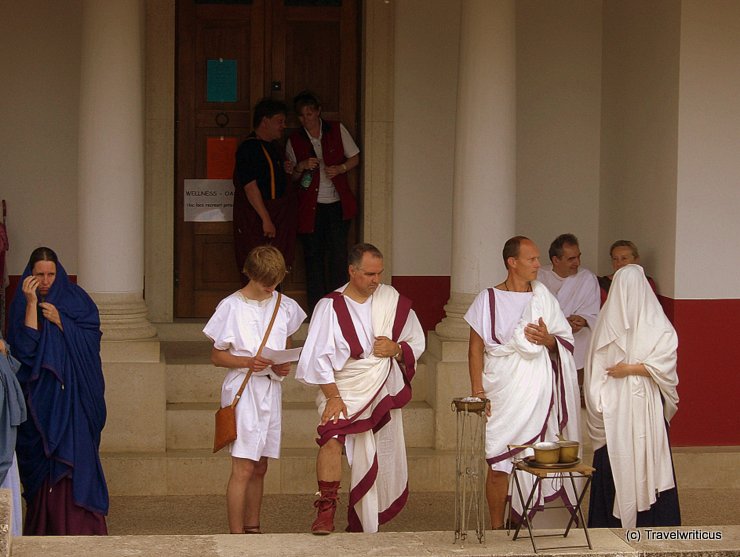
The Archeological Park of Carnuntum entertains visitors with reenactments like this Roman wedding. That way, people learn the bride used to be veiled during the celebration. Besides civic traditions, Carnuntum also presents military routines.
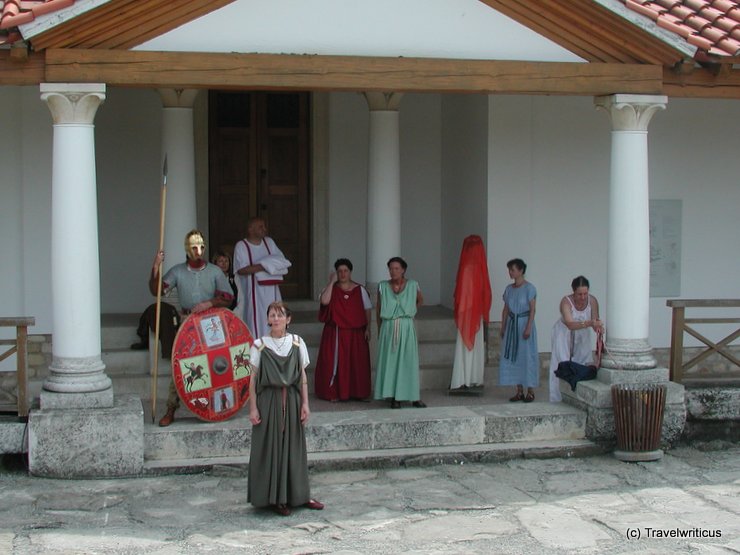
Fashion shows are another appreciated event during Carnuntum festivals. During such presentations, people hear about different dresses in Roman history. That way, the audience also learns how many steps are needed to put on a traditional toga.
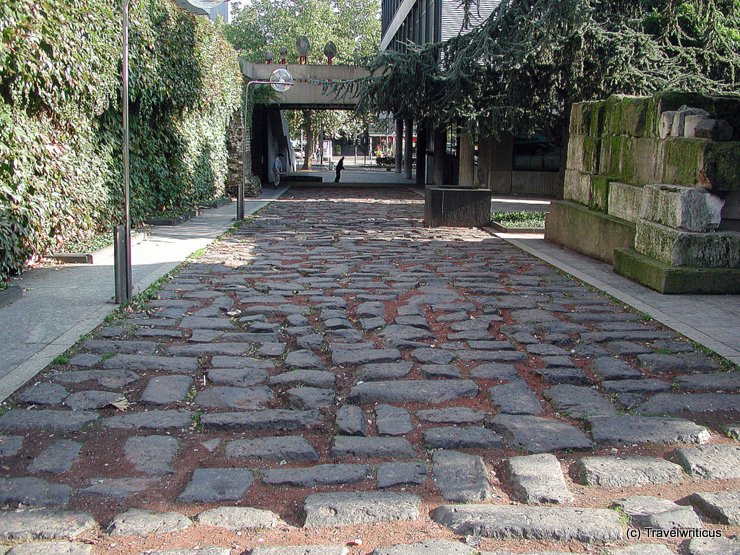
Near the Roman Museum, pedestrians see this reconstruction of an ancient street. The lane is known as Harbour Road, though it doesn’t lead to a port anymore. It isn’t an exact reconstruction of the former street, but the basalt stones are from Roman times.
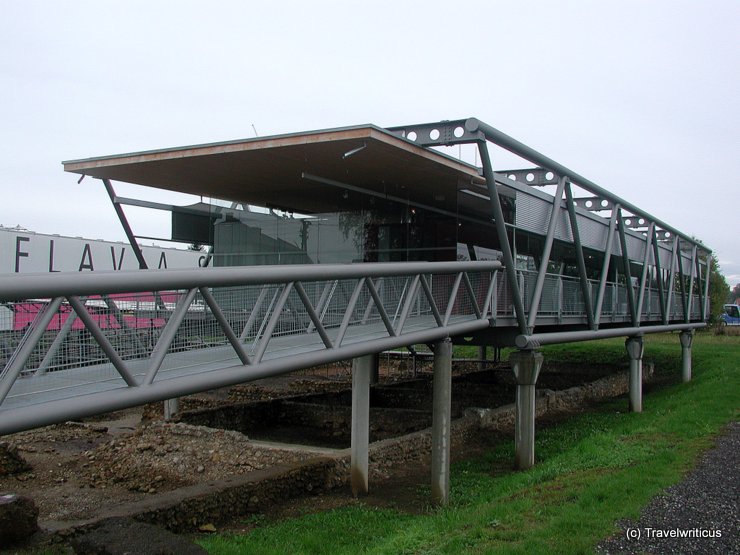
The Roman Museum of Wagna is located right above the remains of the former Roman settlement Flavia Solva. Thus, you can simultaneously look at the ancient walls below your feet and some Roman pieces that have been found there.
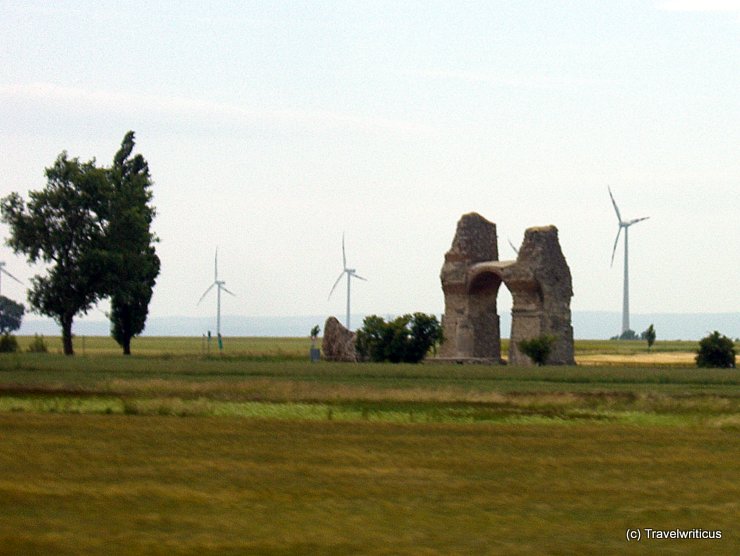
On a train journey from Vienna to Carntuntum-Petronell, travellers have this photo of an ancient Roman monument. The structure is part of the archaeology park Carnuntum. Local people call this monument Heidentor (Pagans’ Gate).
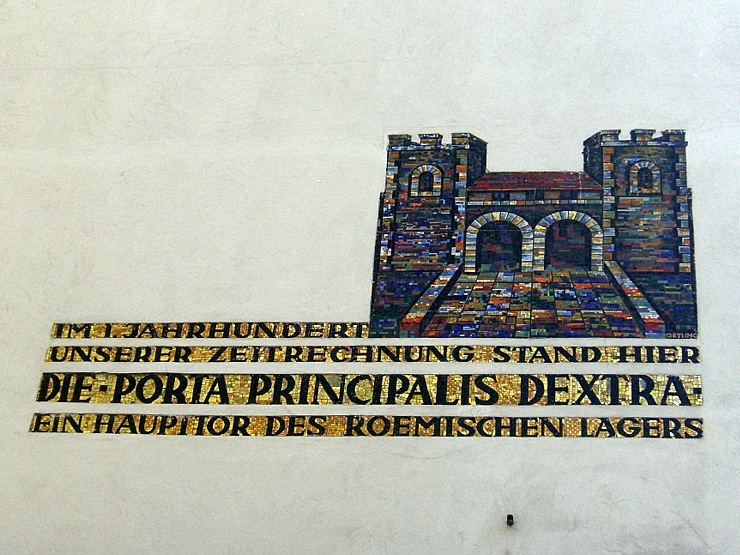
This mosaic on a building in Vienna reminds pedestrians of an ancient gate (porta principalis dextra) that stood here in the 1st century. It was part of the Roman fort Vindobona, the nucleus of modern Vienna.