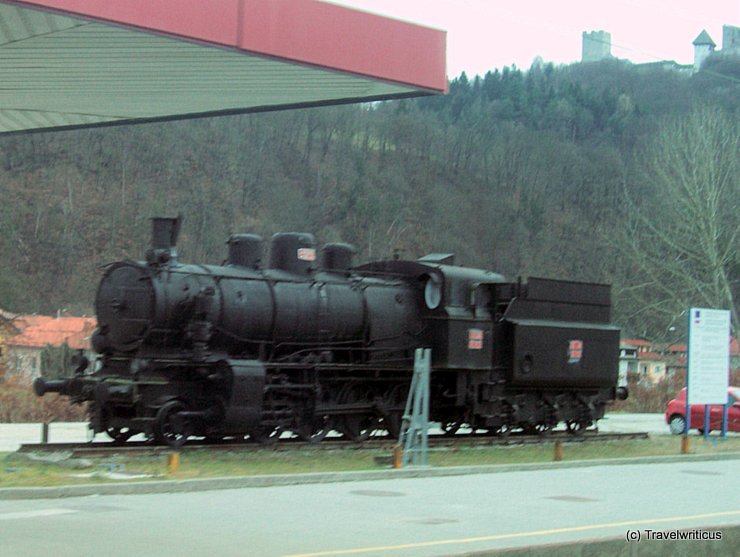
At Celje Railway Station, you’ll find this locomotive as an exhibit. The locomotive with the number JŽ 25-002 saw its construction in the Austrian city of Wiener Neustadt in 1922. In the background, you discover the medieval Celje Castle.
Browse through your travel destination!
At Celje Railway Station, you’ll find this locomotive as an exhibit. The locomotive with the number JŽ 25-002 saw its construction in the Austrian city of Wiener Neustadt in 1922. In the background, you discover the medieval Celje Castle.
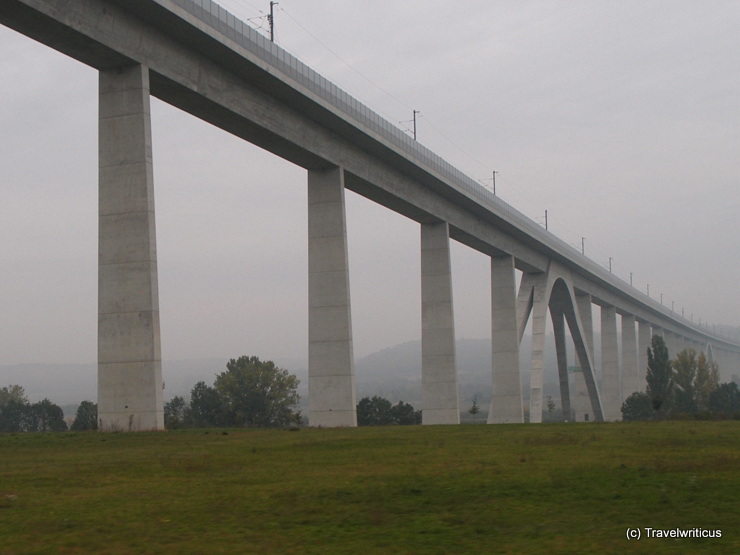
While travelling from Naumburg (Saale) to the visitor centre of the Nebra Sky Disk by bus, I got this view of the newly built Unstrut Viaduct. With a length of 2,688 m, it crosses the spacious Unstrut Valley.
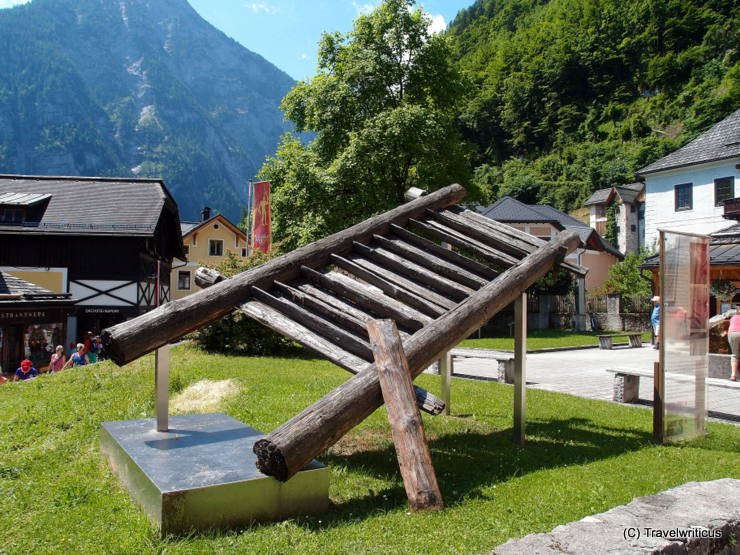
This replica of a wooden staircase in front of the Museum Hallstatt reminds us that archaeologists found such a piece dating back to the Bronze Age in the nearby salt mines.
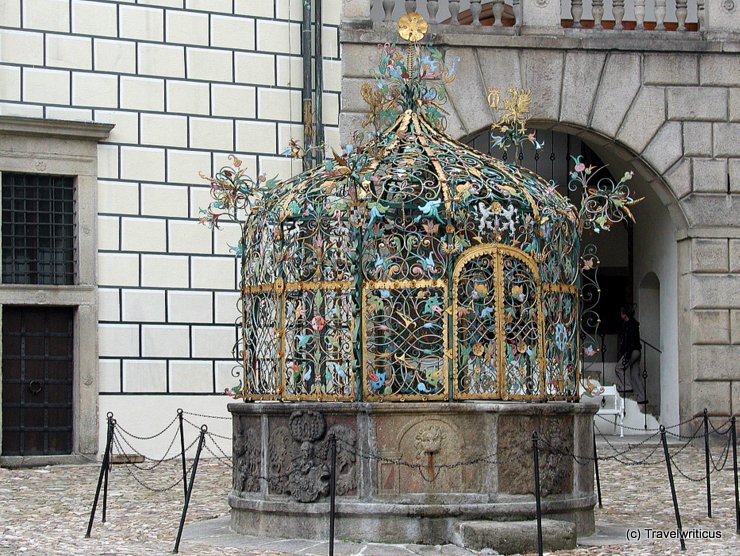
On my tour through the palace of Jindřichův Hradec, I came across this well. It looks like a piece from a fairy tale, doesn’t it? The castle is notable for a roundel, which is one of the principal works of the Bohemian Renaissance.
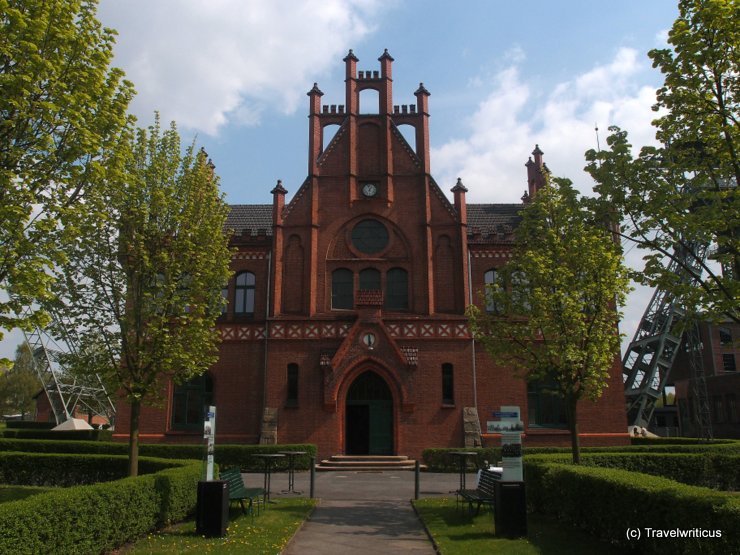
This building, generally known as Alte Verwaltung, was a work by architect Paul Knobbe. It served as the director’s office and administration building of the Zeche Zollern. Today, the building serves as a venue for events and weddings.
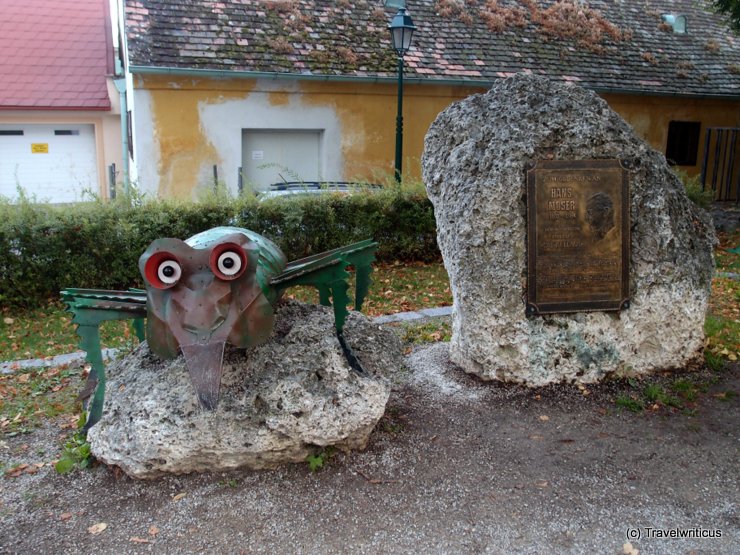
You find this fun sculpture in Gumpoldskirchen next to a memorial plaque to the Austrian actor Hans Moser. Besides his movies and plays, Moser became famous for performing a song about the Reblaus (Pyhlloxera). The Reblaus is a pest for grapevines.
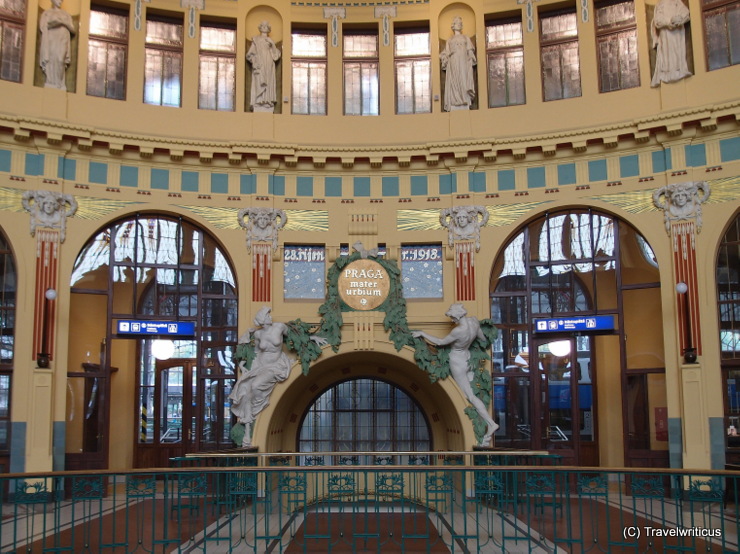
Following the signs to the old entrance hall of Prague Central Station leads to a gem of Art Nouveau. The nearby Fantova kavárna (Fanta Café) reminds visitors of the architect of this hall: Josef Fanta (1856-1954).
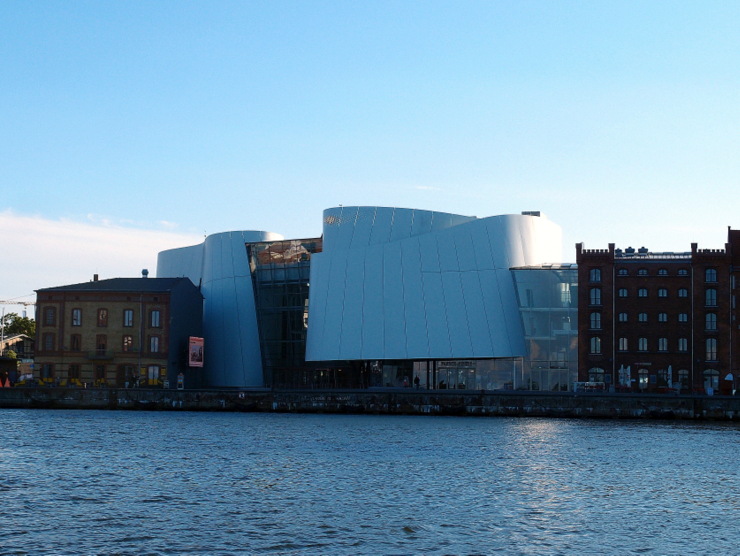
The Ozeanum is a public aquarium located in the historical harbour of Stralsund. It is part of the German Oceanographic Museum (Deutsches Meeresmuseum) and displays primarily sea life of the North Sea and the Baltic Sea.
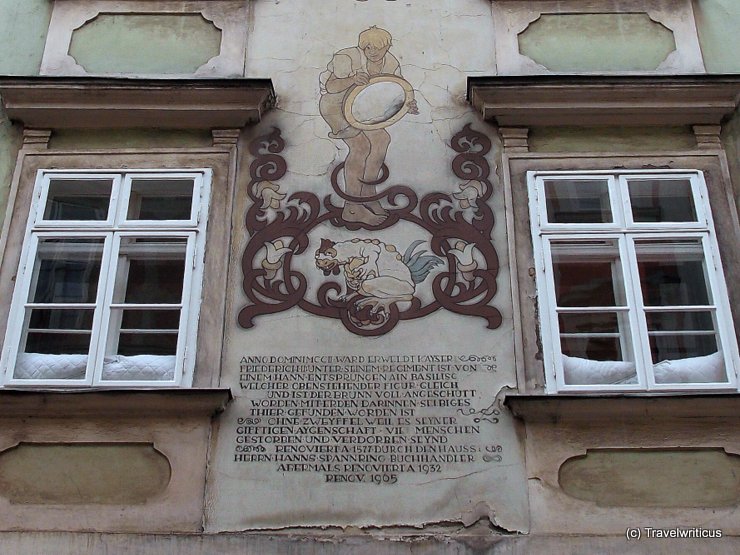
You’ll find the Basiliskenhaus at the address Schönlaterngasse 7. The mural at this house shows a myth about a basilisk living in the local well. A servant of a baker defeated this dangerous creature by mirroring its face.
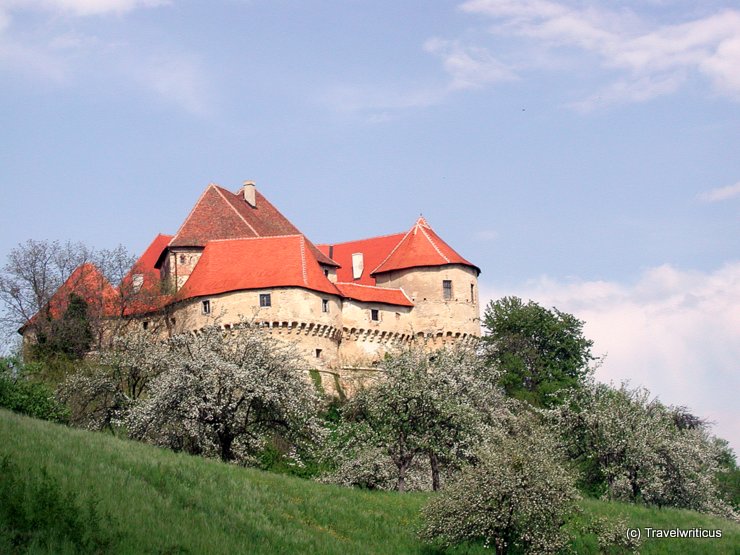
Veliki Tabor Castle (Grad Veliki Tabor) on a sunny spring day. The oldest part of this castle is a five-cornered tower which dates back to the 12th century. The Croatian painter Oton Iveković owned the building from 1927 to 1935.

The Tempelherrenhaus was never a residence of the mysterious templar knights. Instead, the 18th-century building served as venue for celebrations on the Ducal court. Later it housed a well-visited café in the lovely atmosphere of the Ilm park.
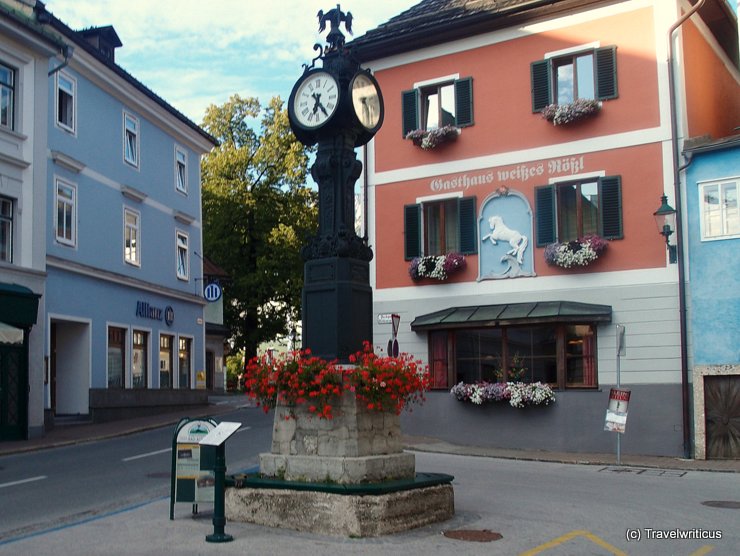
The Lössl-Uhr (Lössl-Clock) is a technical gem in Bad Aussee. The public clock designed by Friedrich von Lössl was originally powered by changes in atmospheric pressure and temperature.