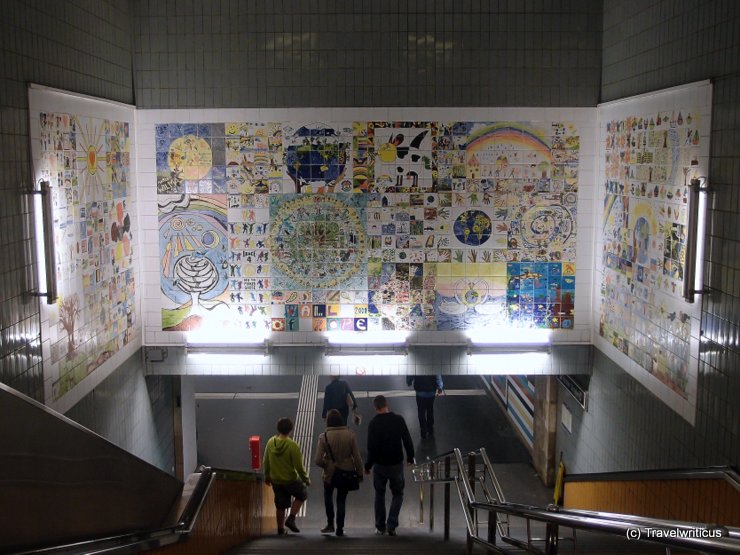
At the railway station Matzleinsdorferplatz one can see this artwork made of ceramic tiles. Students of about 20 Viennese schools put down their dreams and hopes for the 21st century in this artwork.
Browse through your travel destination!
At the railway station Matzleinsdorferplatz one can see this artwork made of ceramic tiles. Students of about 20 Viennese schools put down their dreams and hopes for the 21st century in this artwork.
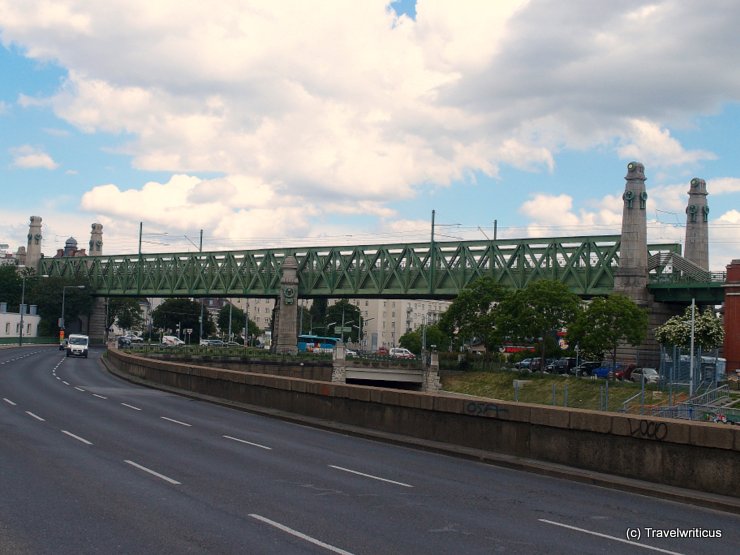
This bridge designed by Otto Wagner was built in 1894/1895 and is still in use by the subway line U6 which is obviously an elevated railway at this part of the line. There are several names for this bridge, e.g. Otto-Wagner-Brücke, Wientalbrücke or Brücke über die Zeile.
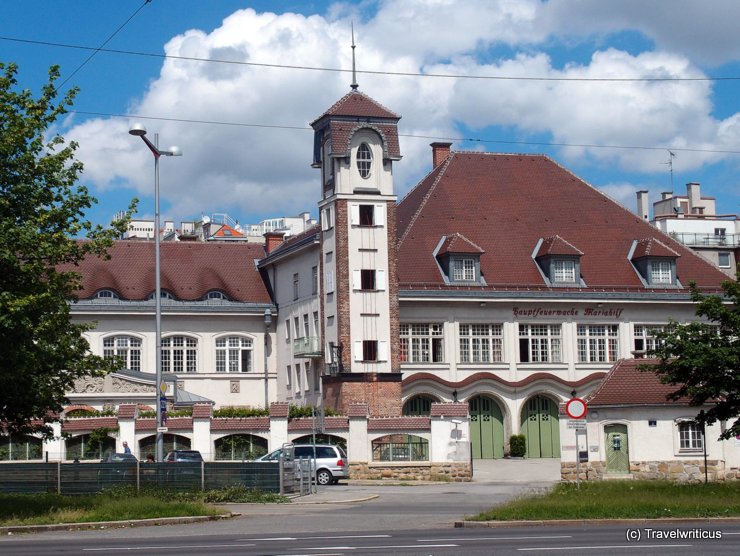
The Hauptfeuerwache Mariahilf (Primary fire station Mariahilf) was built in the years 1912/14. The style is called Heimatstil, the windows are designed in the style of the Wiener Werkstätte. The building is protected as a historic monument.
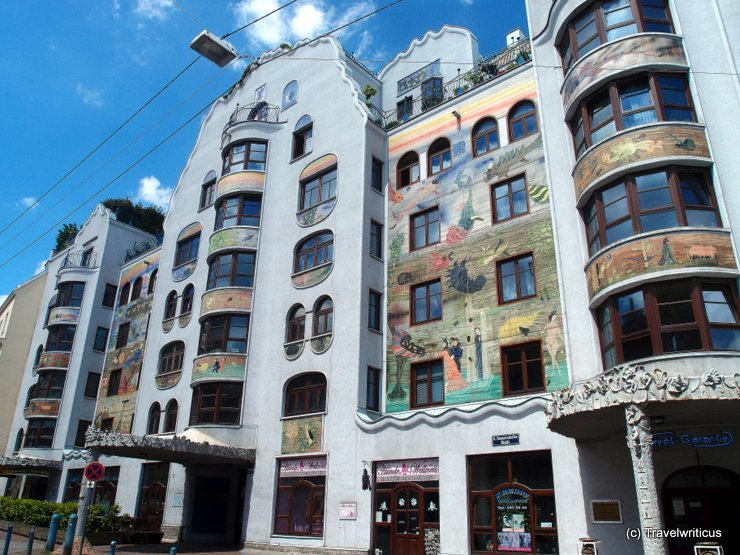
The Arik-Brauer-Haus was built in the years 1991-1994. It was designed in the style of fantastic Realism by the Austrian artist Arik Brauer.
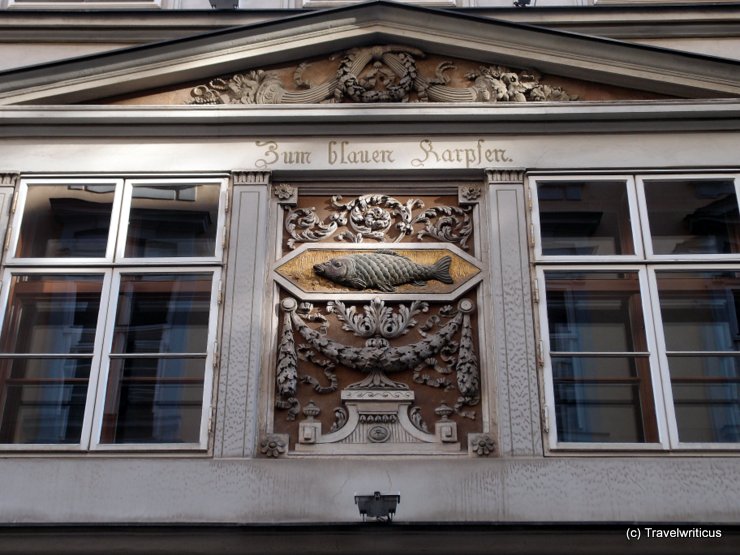
The ‘Haus zum Blauen Karpfen’ (Blue Carp House) is located in Annagasse N° 14 at the 1st district of Vienna. The façade of the building was converted into the style of Empire in the year 1824.
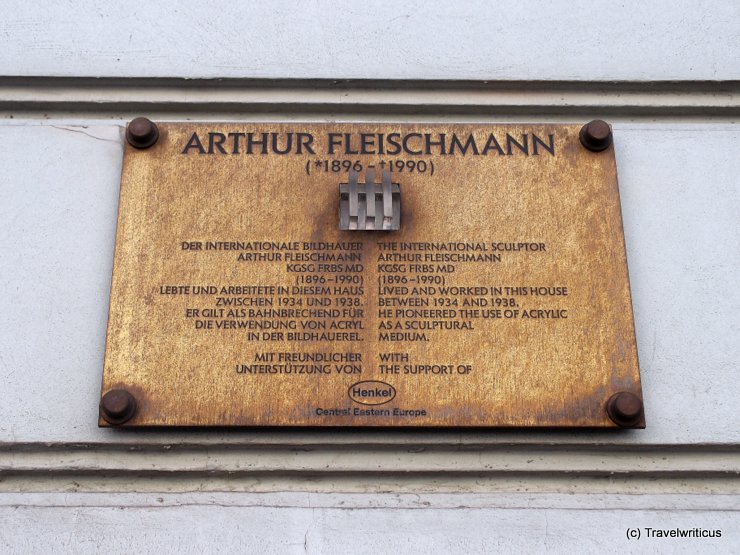
This memorial plaque seen at the Favoritenstraße 12 is dedicated to the sculptor Arthur Fleischmann. The design is pretty special. It has a piece of Perspex included. So it reminds of the fact that the artist used this material in his works many times.
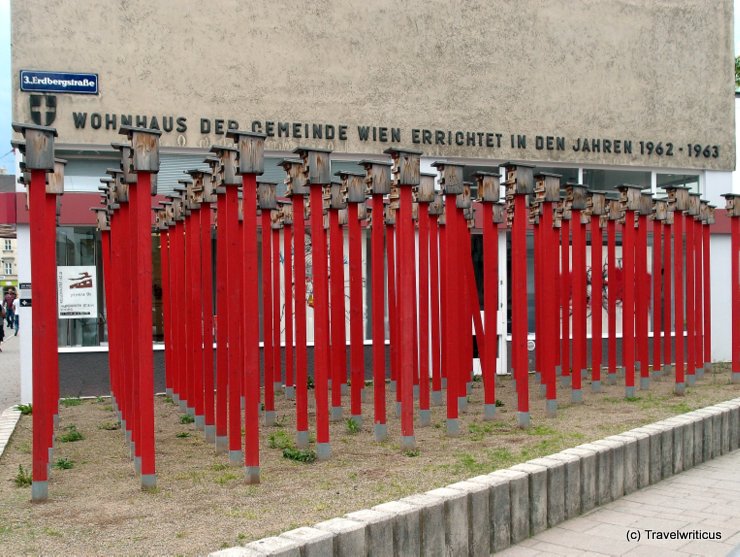
This installation created by the artist Josef Bernhardt is called ‘Warten auf Vögel IV’ (‘Waiting for Birds IV’). It is part of the project ‘Kunst im Öffentlichen Raum’ (Art in Public Spaces) in Vienna.
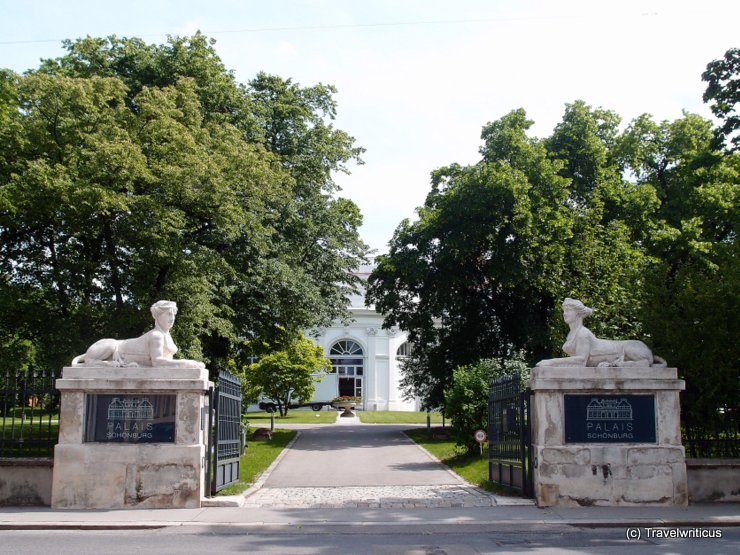 Palais Schönburg was built by Johann Lucas von Hildebrandt in the years 1705/1706. It is also known as Palais Schönburg-Hartenstein and Palais Starhemberg-Schönburg. Today it serves as an event location.
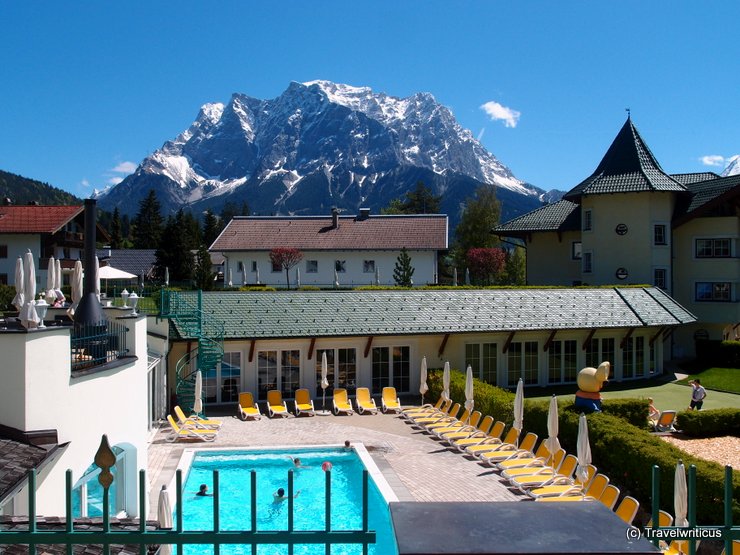
In May 2013 I got an invitation to stay at Leading Family Hotel & Resort Alpenrose in Lermoos. That was an interesting invitation because I generally travel alone. I was curious to learn what this 4 stars superior hotel had to offer for families though.
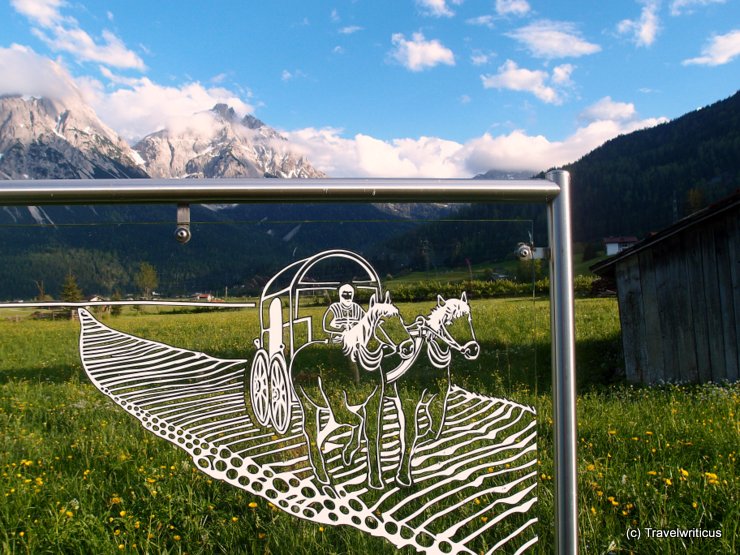
Lermoos is situated at a historic route which was even used by the ancient Romans. This clever example of offline ‘augmented reality’ reminds of the fact that there was a Roman path made of trunks leading through the swamp between Lermoos, Ehrwald and Biberwier.
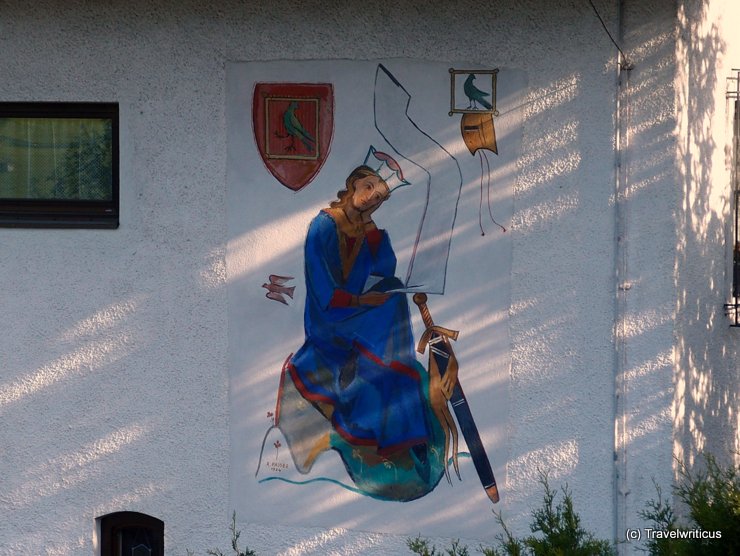
This mural on a private home in Lermoos (Tyrol) shows a replica of the probably most famous portrait of the singer Walther von der Vogelweide.
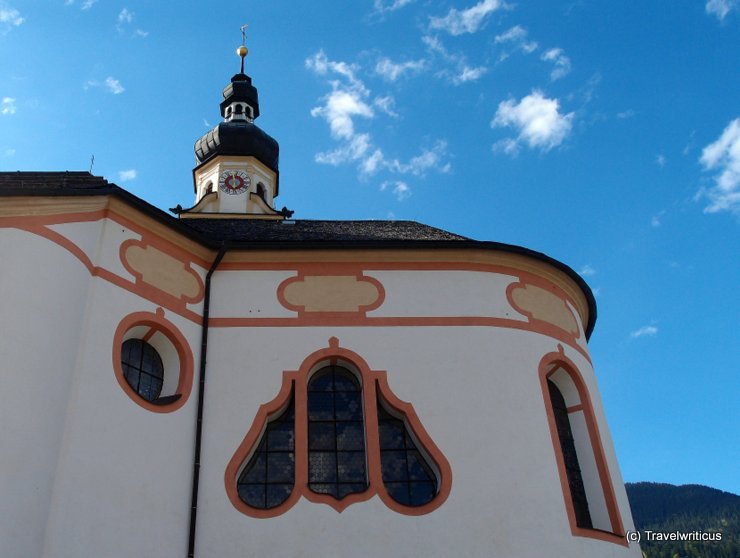
The parish church Hl. Katharina (St. Catherine) is a baroque church dating back to 18th century. Inside there are works by Martin Falbesoner from Nassereith and Giuseppe Gru from Verona. I was especially impressed by the shape of this window which reminded me of a bee.