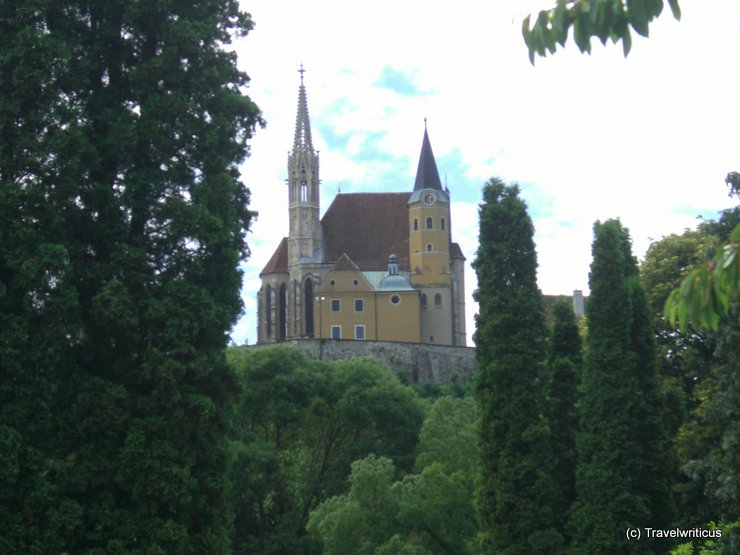
The pilgrimage church Maria Straßengel stands in Judendorf-Straßengel, a site in the Austrian municipality of Gratwein-Straßengel. A famous exhibit in this church is a fir root in the shape of a crucifix. Visitors can see this piece on request only.
Browse through your travel destination!
The pilgrimage church Maria Straßengel stands in Judendorf-Straßengel, a site in the Austrian municipality of Gratwein-Straßengel. A famous exhibit in this church is a fir root in the shape of a crucifix. Visitors can see this piece on request only.
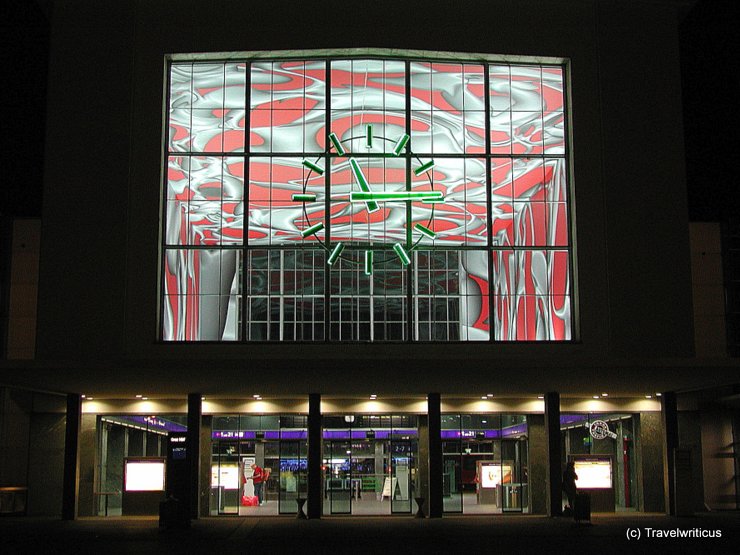
In 2003, the capital city of Styria got the title “European Capital of Culture”. In the same year, Graz Central Station saw a major renovation. Artist Peter Kogler was elected to decorate the entrance hall of the railway station.
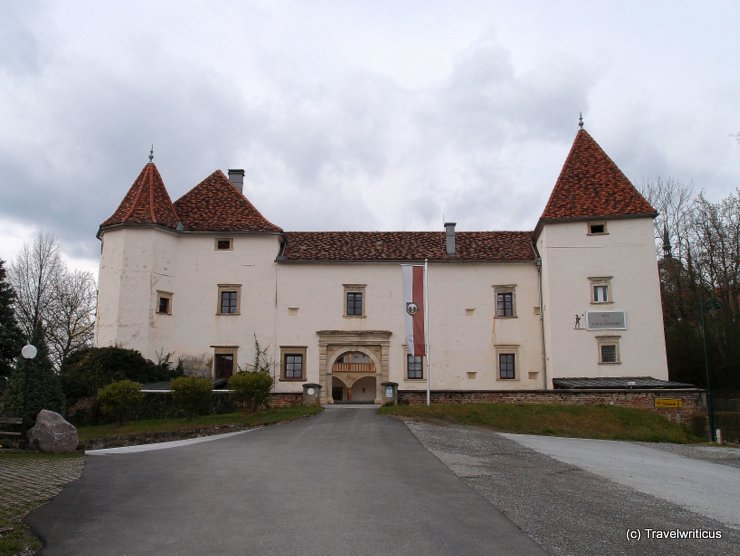
The name of the castle originates from the powerful Stubenberg family. Five members of this house occupied the office of governor (Landeshauptmann) in the Duchy of Styria.
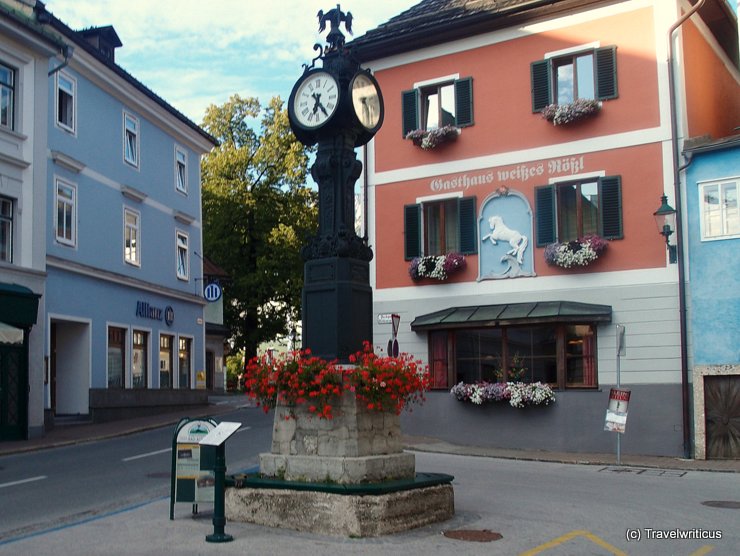
The Lössl-Uhr (Lössl-Clock) is a technical gem in Bad Aussee. The public clock designed by Friedrich von Lössl was originally powered by changes in atmospheric pressure and temperature.
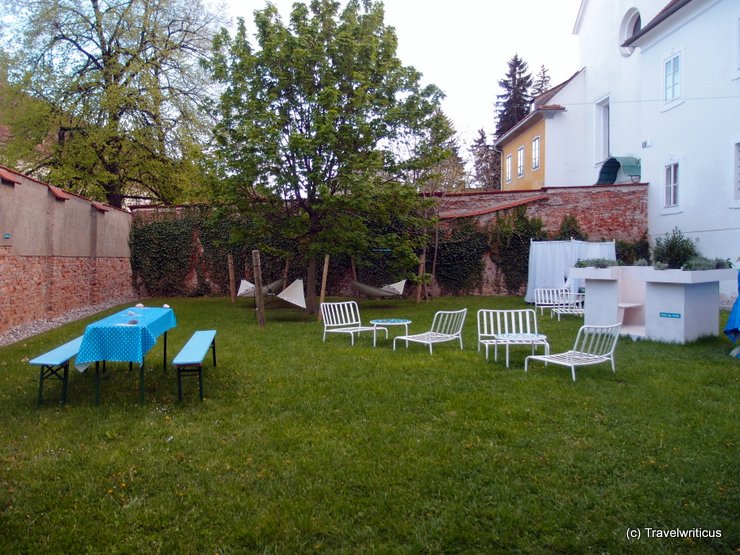
Now that I call a cosy museum. The photo shows the garden of the Folk Life Museum in Graz. Yes, there are hammocks below the trees! The museum tells about social and cultural changes up to the present.
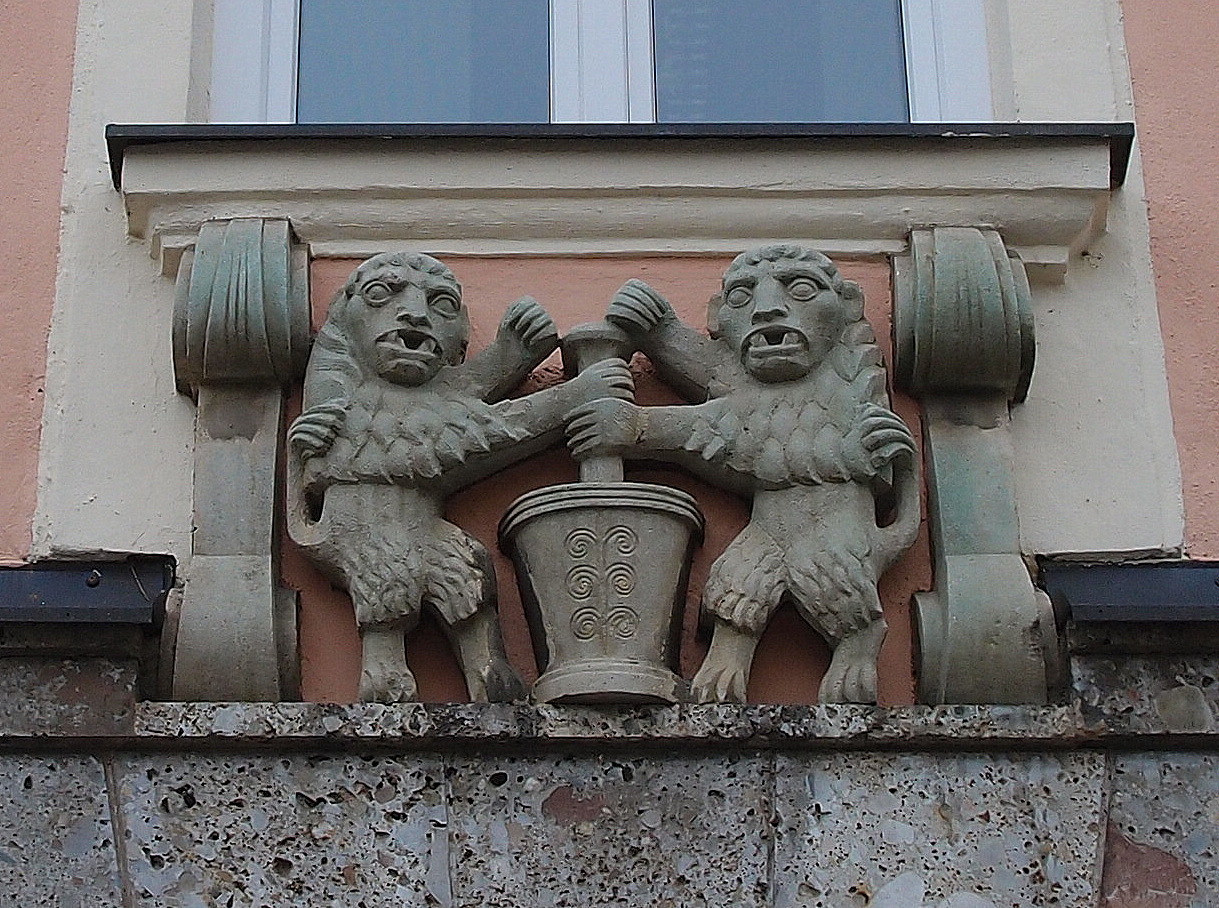
This house sign was created by two Italian migrant workers and renewed in 1957 by Alfred Kala. You can see it at the town pharmacy in Knittelfeld. I love the combination of lions with a mortar and pestle.
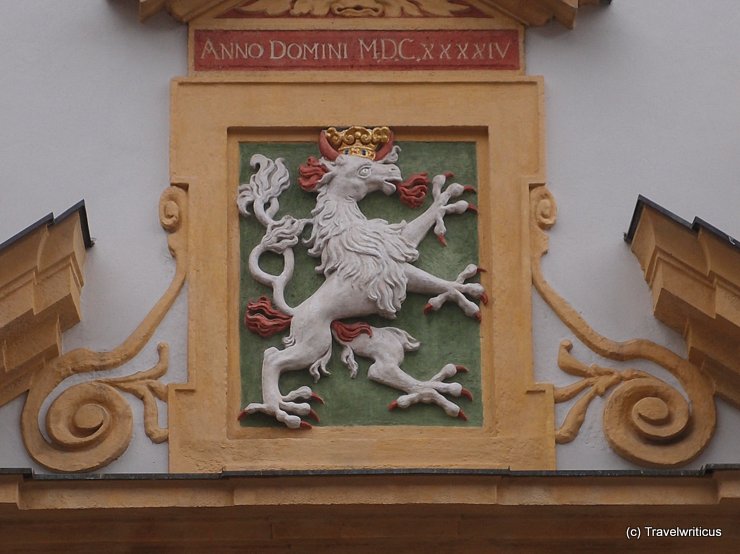
The coat of arms above the gate of the Styrian Armory raises questions. It looks like a Styrian Panther mixed with the detail of a Graz Panther. The red horns make it Styrian. The crown, on the other hand, makes it look like a Graz coat of arms.
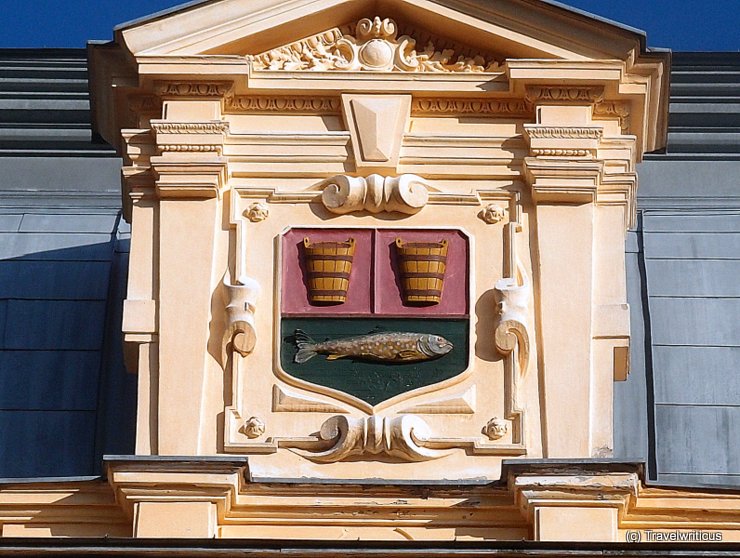
The emblem of Bad Aussee is showing two vats for transporting salt (German: ‘Kufen’) and a char (German: ‘Saibling’). The vats refer to the salt production in Bad Aussee. The char is a tasty food fish which is featured by the Austrian ‘Genussregion Ausseerland Seesaibling’.
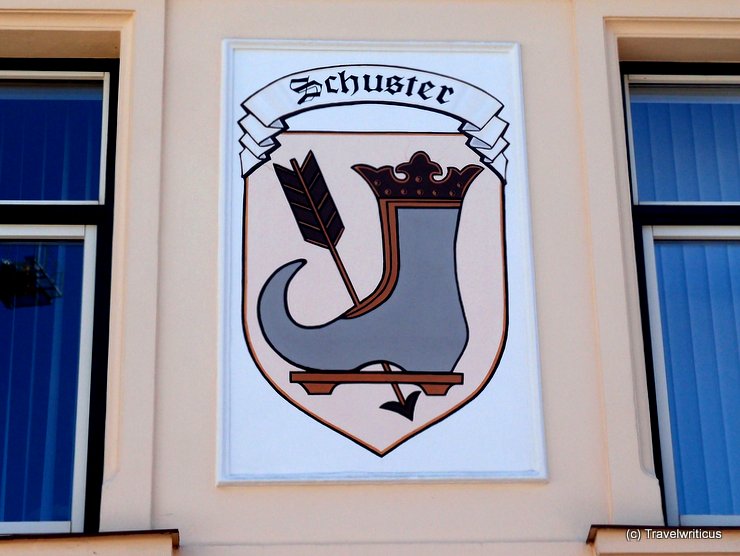
Shop sign of a shoemaker ([German]: Schuster) seen in Bad Aussee, Austria. I wonder what is the meaning of the arrow?
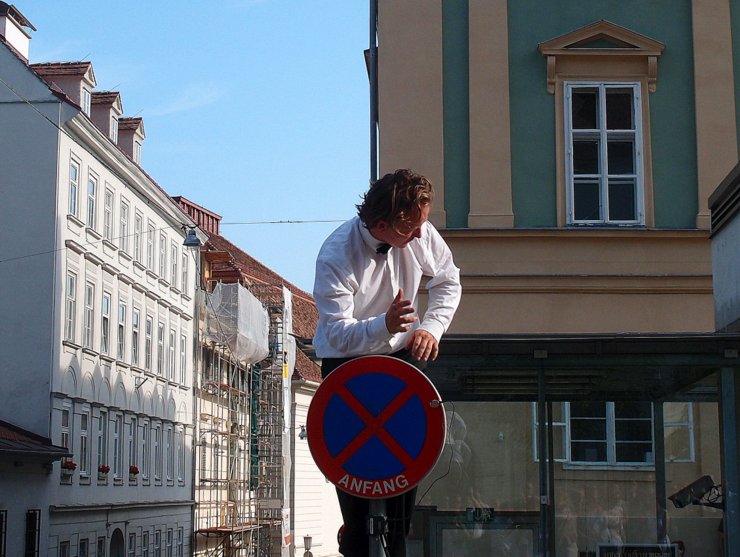
At the beginning of the festival La Strada, I watched the French group Décor Sonore playing in the streets of the city using handrails, barriers, traffic signs and even balcony rails as instruments. By the way, the German word for beginning is ‘Anfang’.
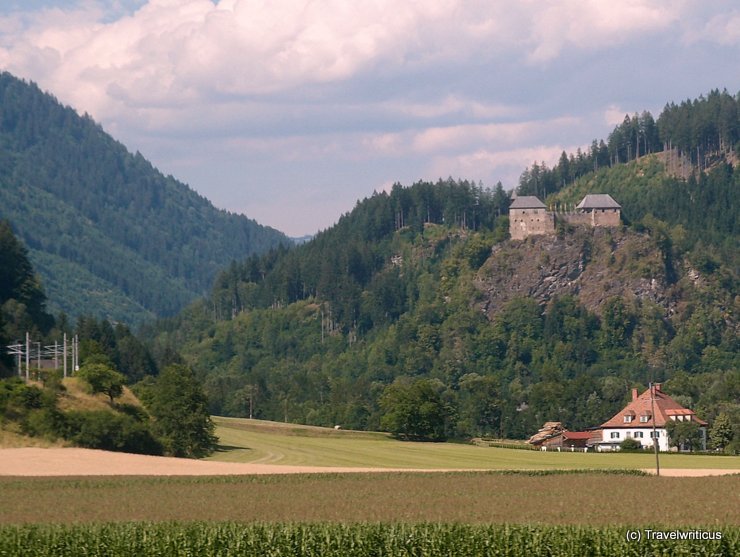
Dürnstein Castle (Burgruine Dürnstein) was first mentioned as castrum Dierenstein in 1144. The castle is placed right at the border between Styria and Carinthia. I took this photo while riding a train between Friesach and Unzmarkt. One can see the catenary of the railroad on the left side of the picture.
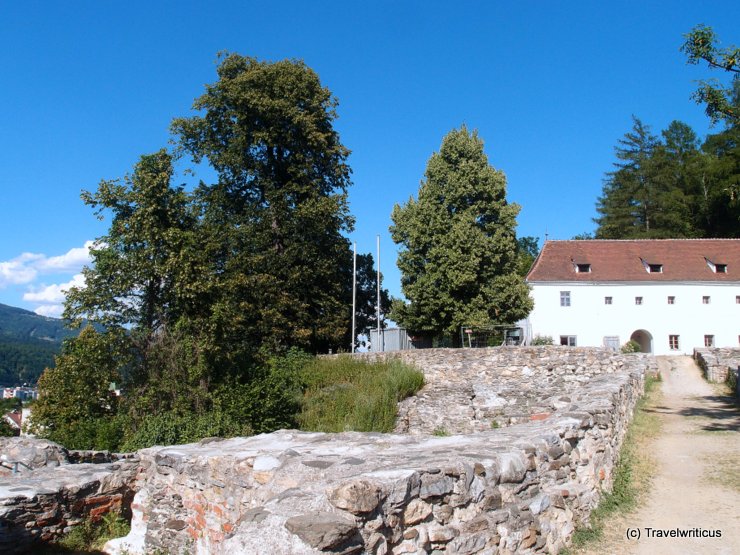
The Maßenburg is a castle ruin on a hill high over Leoben. It was probably first built in the 13th century. Today hikers have there a great view of Leoben from a viewing tower built on the ruins of a former watch tower.