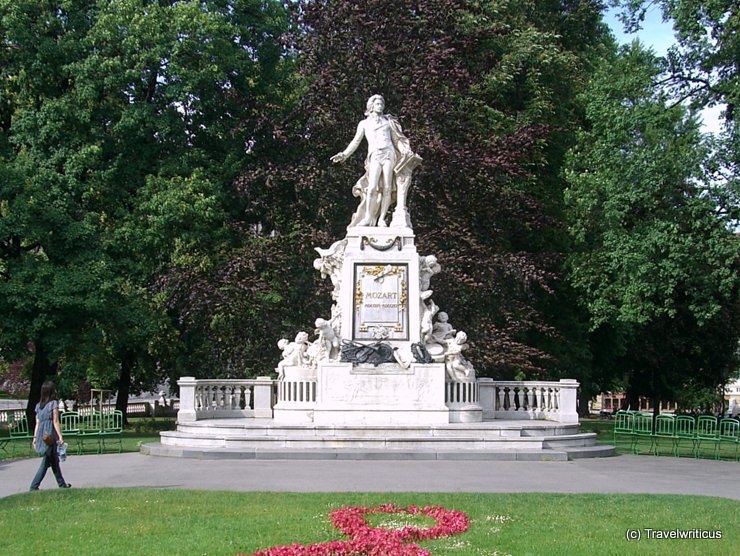
This monument to Wolfgang Amadeus Mozart stands in the Burggarten in Vienna. The Burggarten is a public park at the rear of the New Hofburg (Neue Hofburg). The monument, made of Laas marble, was created by Viktor Oskar Tilgner.
Browse through your travel destination!
This monument to Wolfgang Amadeus Mozart stands in the Burggarten in Vienna. The Burggarten is a public park at the rear of the New Hofburg (Neue Hofburg). The monument, made of Laas marble, was created by Viktor Oskar Tilgner.
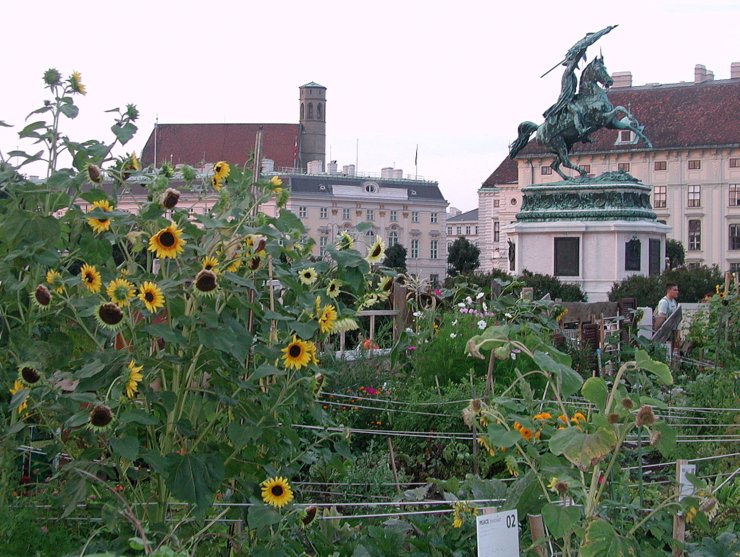
In 2005, many events marked the 60th anniversary of the end of WWII. For example, the Heldenplatz – a central square in Vienna – was covered with vegetables and sunflowers. This reminded us that the citizens used every free space to produce food around 1945.
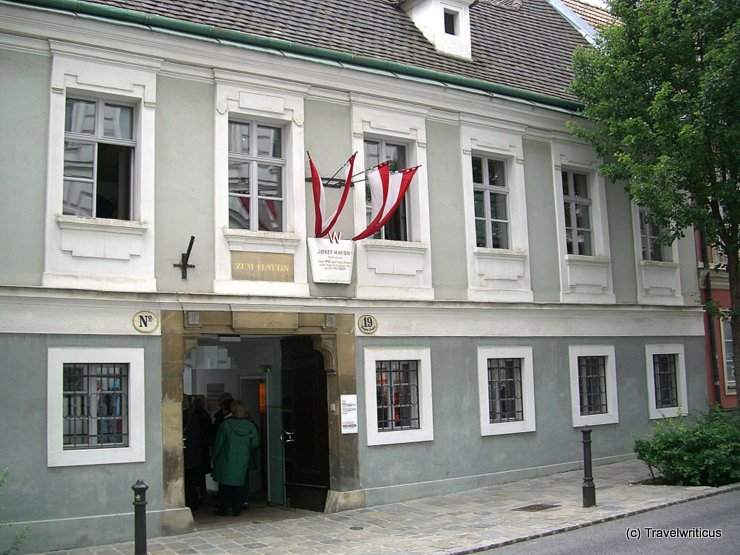
The Haydnhaus in Vienna is where the Austrian composer Joseph Haydn spent his last years. The museum inside explains how Haydn lived in this period and shows several pieces of his former household. A reconstructed garden completes the offer.
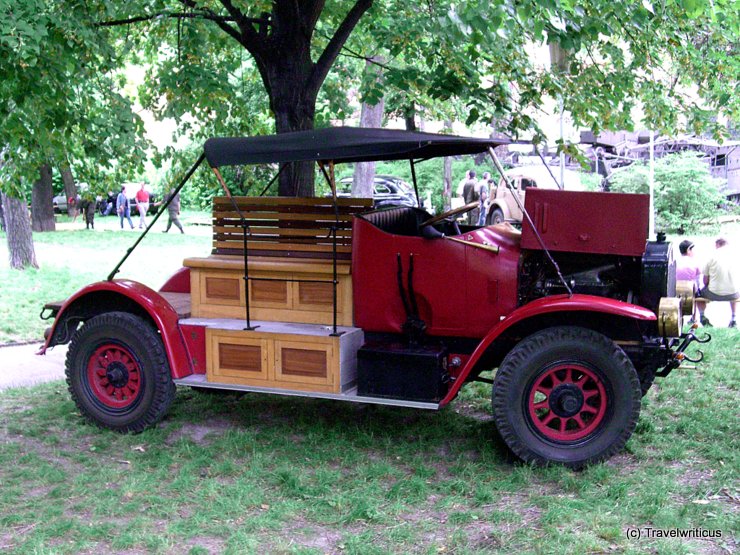
This pic shows an automobile built by the Czech company Praga in 1914. The truck was an exhibit at a classic car festival of the Museum of Military History in Vienna. It is considered to carry a floodlight of the Austro-Hungarian army during World War I.
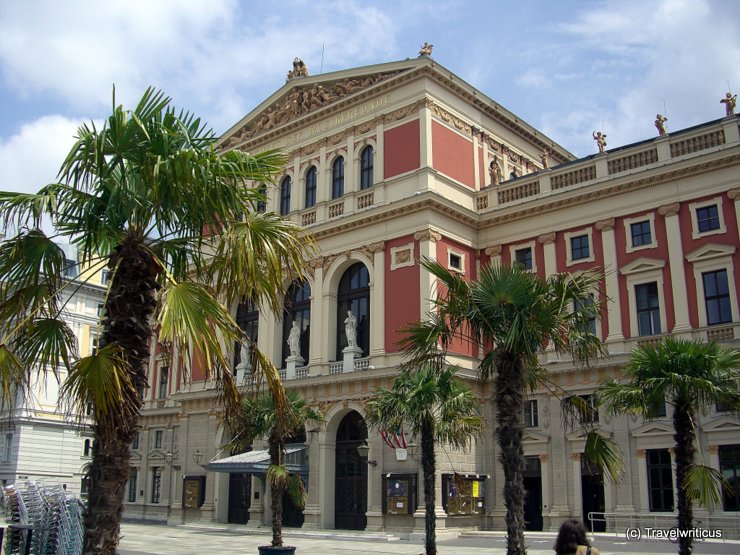
The Vienna New Year’s Concert occurs in the Musikverein Building every year. Probably the whole world knows this building and its Golden Hall by the annual TV broadcast of this concert.
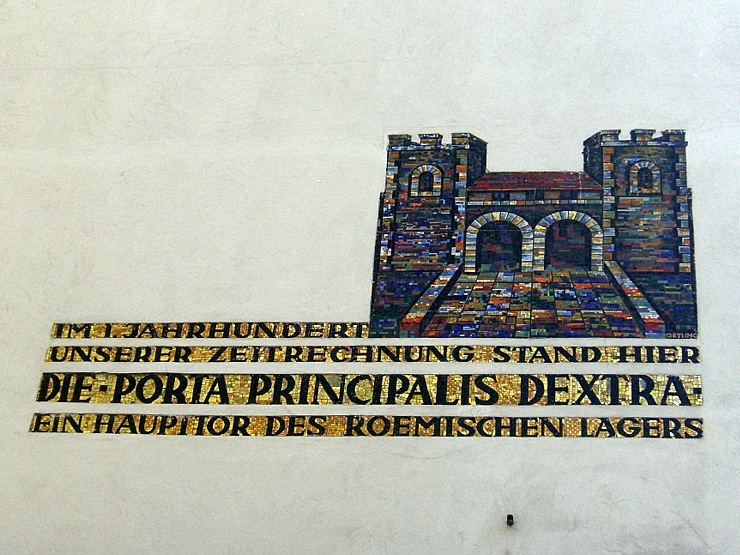
This mosaic on a building in Vienna reminds pedestrians of an ancient gate (porta principalis dextra) that stood here in the 1st century. It was part of the Roman fort Vindobona, the nucleus of modern Vienna.
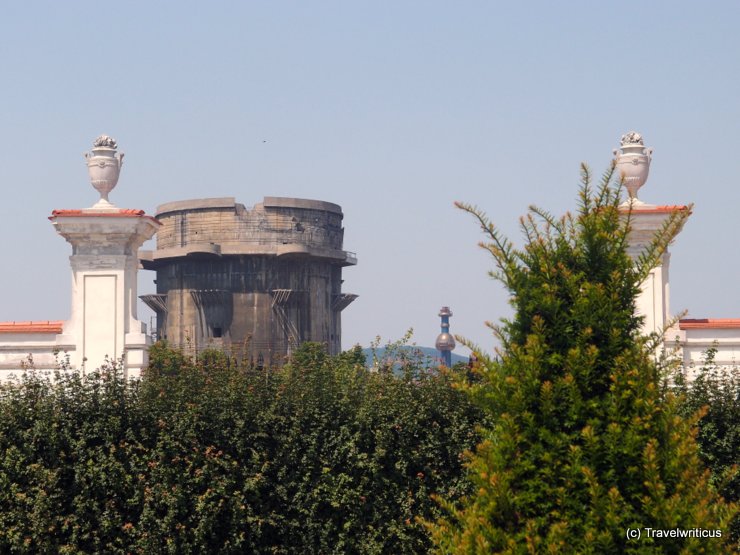
The pic shows three architectural periods in Vienna. In the foreground, you see Baroque walls. The background forms an air defence tower of WW II and the chimney of a garbage incineration plant (1992) designed by Friedensreich Hundertwasser.
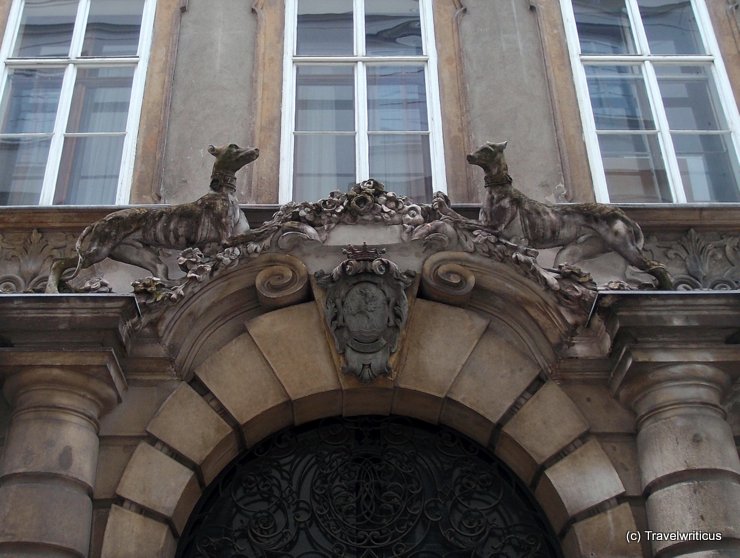
The Palais Fürstenberg, located on the Grünangergasse, was finished by Antonio Beduzzi from Bologna in 1720. I was especially impressed by those sculptures of two classy dogs who guarded the palace portal.
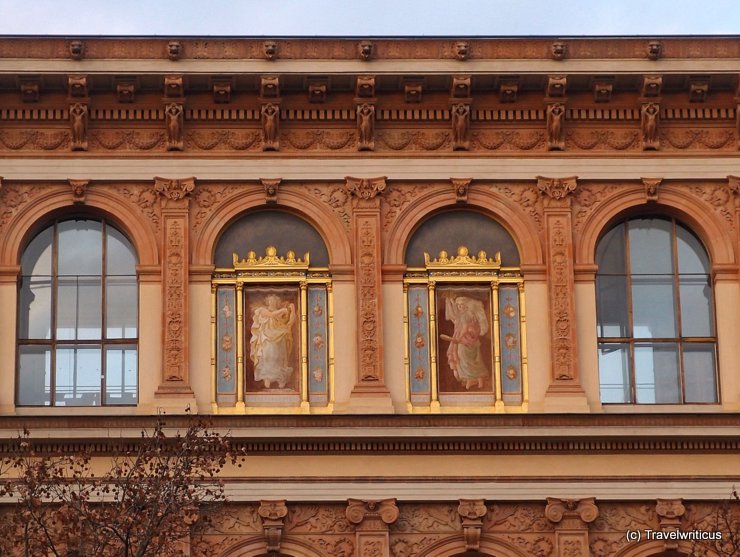
The Academy of Fine Arts Vienna (Akademie der Bildenden Künste Wien) offers a collection of old masters worth a visit. Looking up to the highest floor of the building you will discover fine wall paintings below the roof.
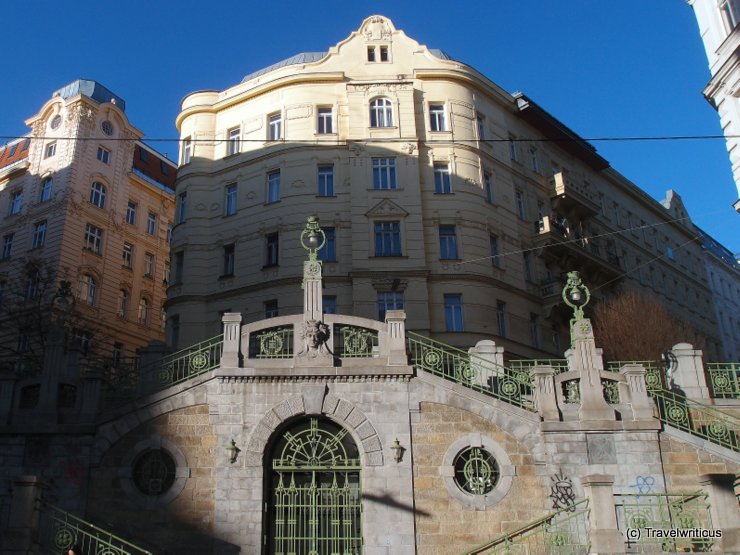
The Fillgraderstiege is a public staircase in Vienna. It was built in the years 1905/1907 in Art Nouveau style. The designer of the staircase was Max Hegele. In a poll of art professors, it was named the fourth most beautiful staircase in Europe.
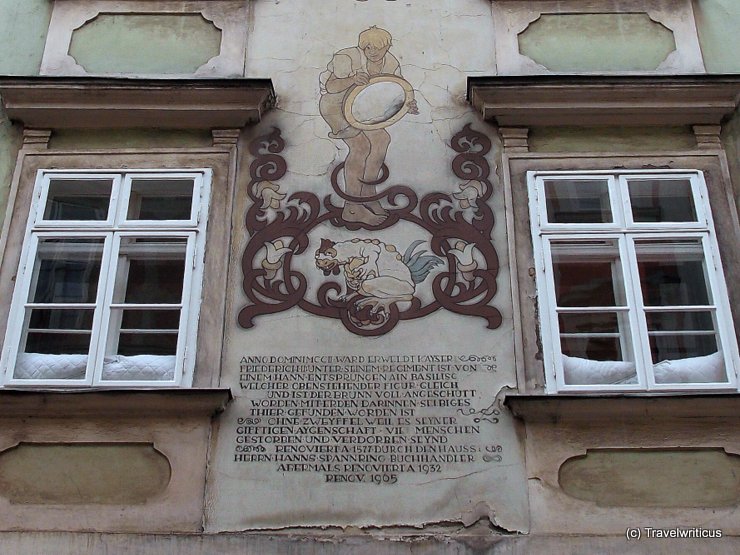
You’ll find the Basiliskenhaus at the address Schönlaterngasse 7. The mural at this house shows a myth about a basilisk living in the local well. A servant of a baker defeated this dangerous creature by mirroring its face.
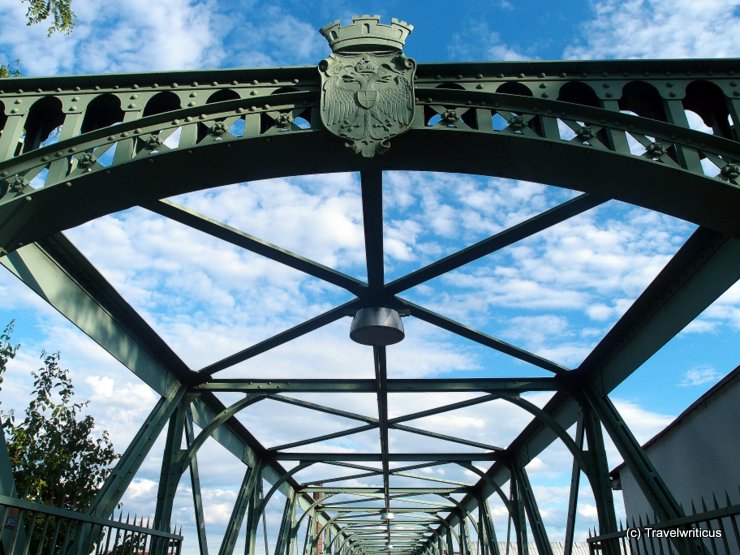
This photo shows a detail of the Rustensteg, a pedestrian bridge crossing the tracks leading to the Westbahnhof in Vienna. It saw its construction in 1901. From this bridge, pedestrians have a fine view of trains entering and leaving the railway station.