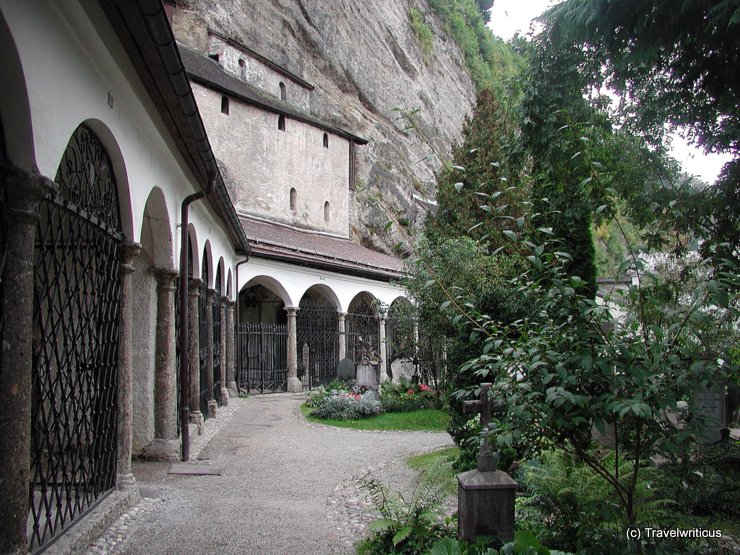
The cemetery of St. Peter (Petersfriedhof) is not only one of the oldest cemeteries of Salzburg but was also a set in the American movie ‘Sound of Music’. The small windows along the rock are part of the so-called catacombs.
Browse through your travel destination!
The cemetery of St. Peter (Petersfriedhof) is not only one of the oldest cemeteries of Salzburg but was also a set in the American movie ‘Sound of Music’. The small windows along the rock are part of the so-called catacombs.
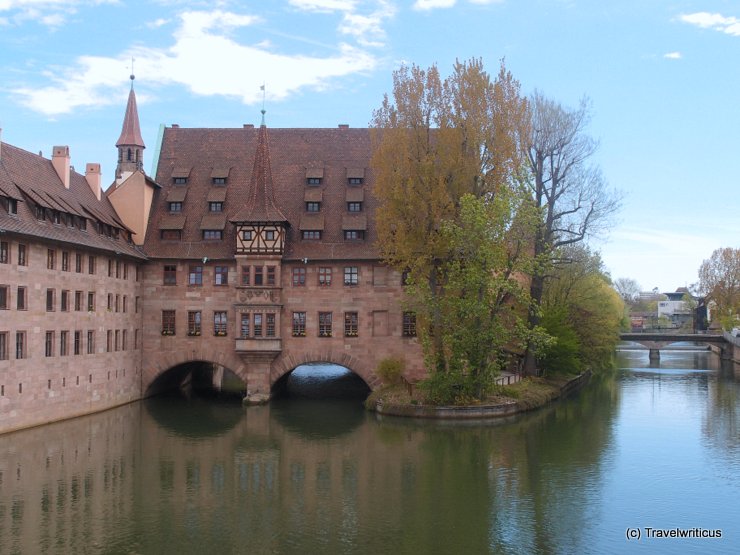
The Heilig-Geist-Spital is one of Nuremberg’s most iconic sights. The associated hospital church housed the Imperial Regalia for several centuries. Today, the depicted part of the spital accommodates a restaurant.
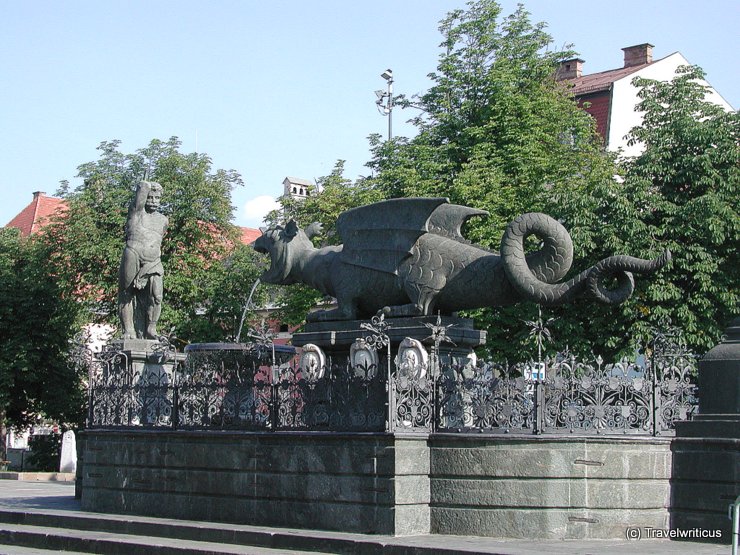
The Lindworm Fountain on the Neue Platz is the landmark of the Carinthian capital city Klagenfurt am Wörthersee. The sculpture dates back to the 16th century and refers to the city’s foundation legend.
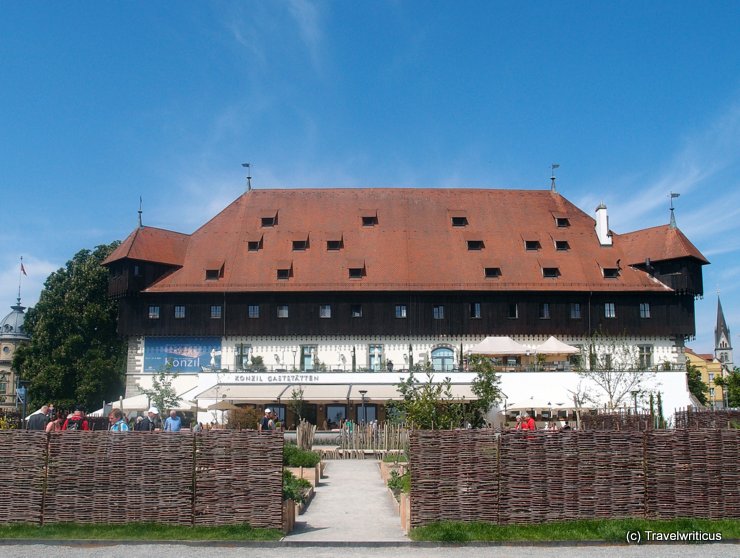
In this building, Pope Martin V saw its election in 1417. This event was significant during the Council of Constance (1414-1418). The name of this building still reminds us of this event: Council Building (Konzilgebäude).
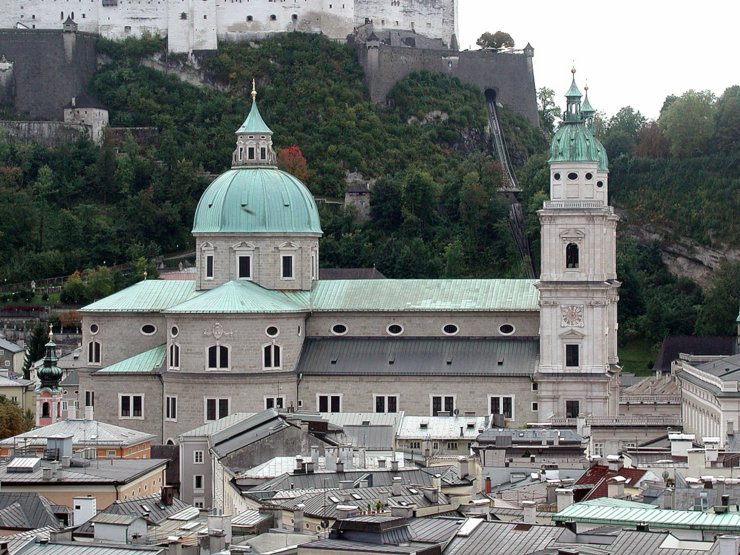
The Salzburg Cathedral (Dom zu Salzburg) saw its construction in the 17th century. In the background, you find the funicular up to Hohensalzburg Fortress. Interesting detail: From the Cathedral Museum (Dommuseum), you see the nave from above.
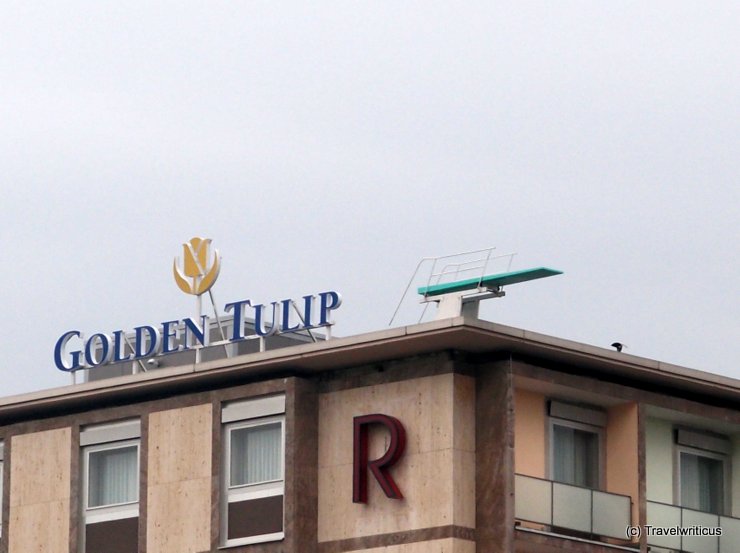
After leaving Kassel Central Station, you may see this odd diving platform on a hotel roof. The explanation for this strange view: It’s a piece of public art. The title of the artwork is “Arschbombe”. Its creator was Ralph Raabe.
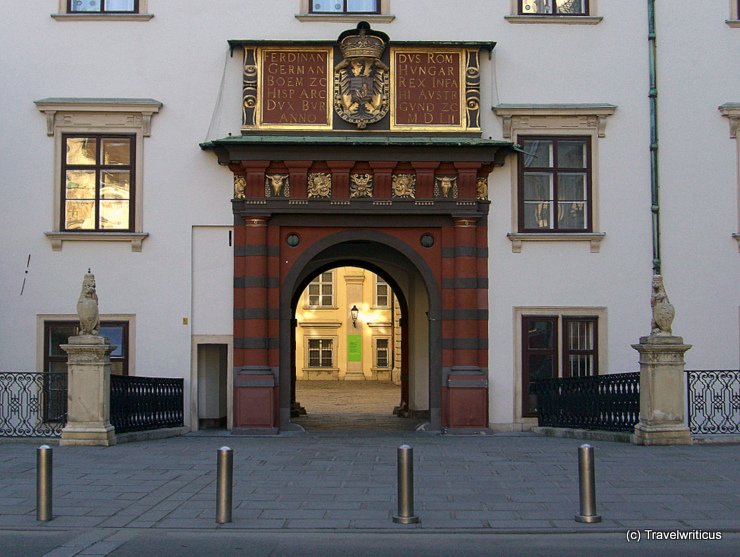
The Swiss Gate (Schweizertor) leads to the oldest part of the Hofburg. Behind this gate, you find the entrance to the Imperial Treasury (Kaiserliche Schatzkammer). The treasury houses crowns and jewels full of history, e.g. the regalia of the Holy Roman Empire.
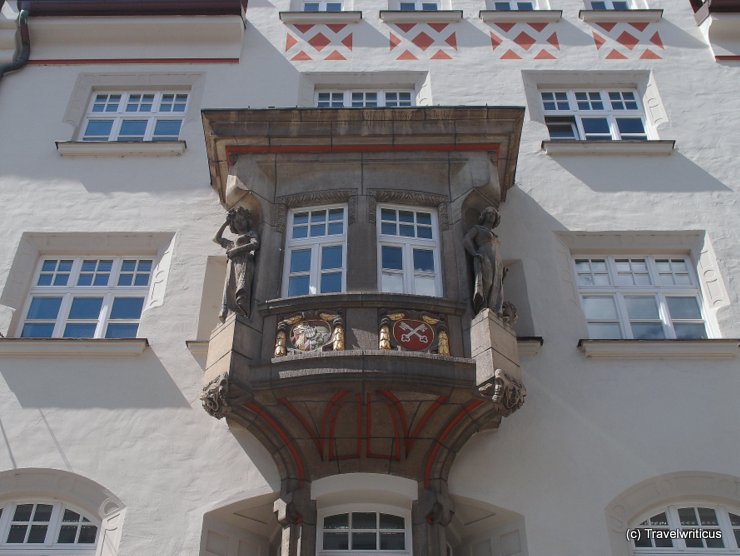
On my way from the railway station to the centre of Regensburg, I discovered the city’s emblem at an oriel window: Two white keys in a red field. The keys are the attribute of Saint Peter, the patron of Regensburg Cathedral.
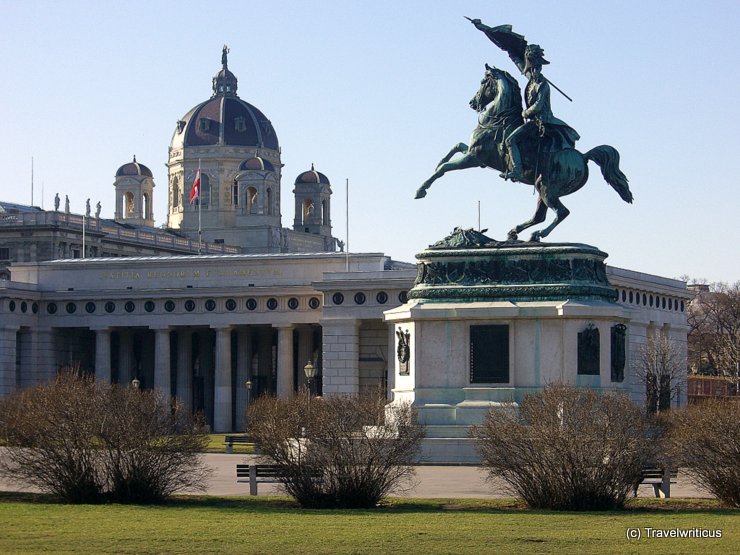
This equestrian statue was erected in 1860 to commemorate Archduke Charles of Austria, Duke of Teschen. The most intriguing fact about this statue is the horse’s pose. It stands with two legs only on the pedestal. The tail doesn’t support the construction.
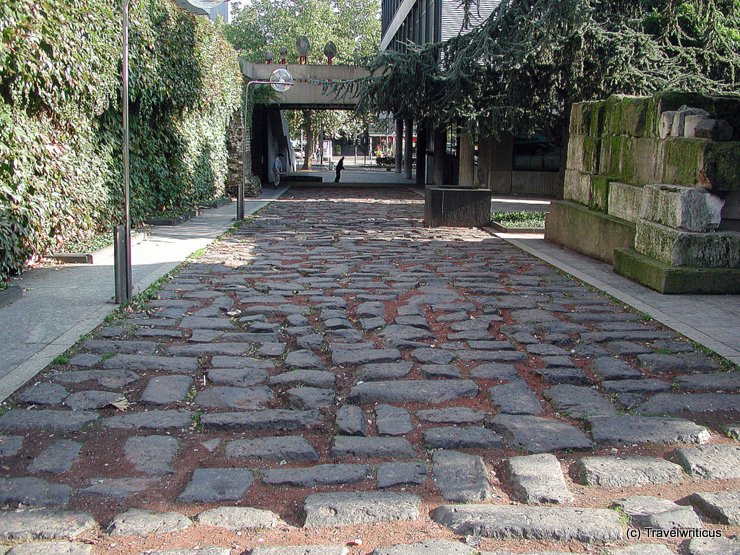
Near the Roman Museum, pedestrians see this reconstruction of an ancient street. The lane is known as Harbour Road, though it doesn’t lead to a port anymore. It isn’t an exact reconstruction of the former street, but the basalt stones are from Roman times.
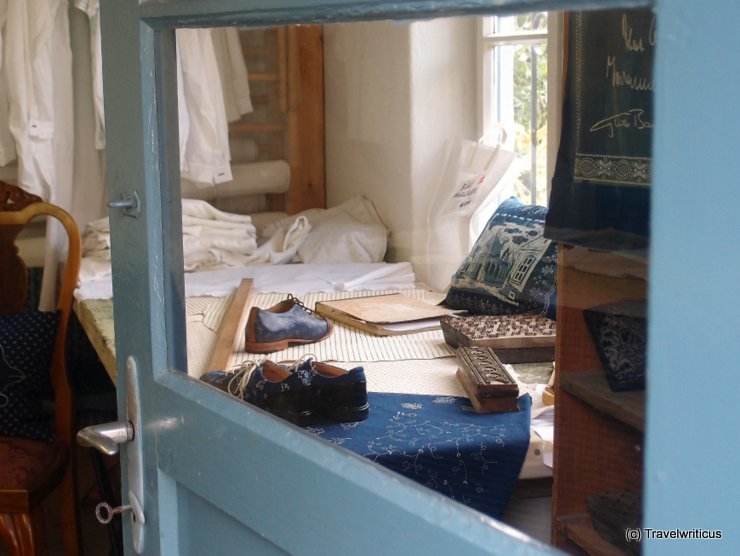
The Blaudruckerei Koó dates back to 1921. It is one of the last businesses in Europe to use the traditional technique of printing fabrics and dyeing them with indigo. Visitors to this company learn about the machines, materials, and patterns used in this technique.
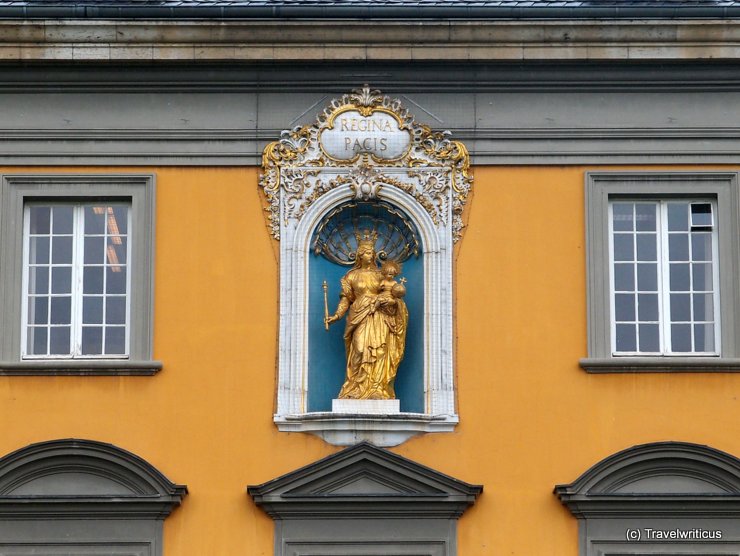
Wilhelm Rottermondt created this statue of the “Regina Pacis”. In English, this title translates to Our Lady Queen of Peace. You find this sculpture in a niche on the facade of the University of Bonn, also known as Rhenish Friedrich Wilhelm University of Bonn.