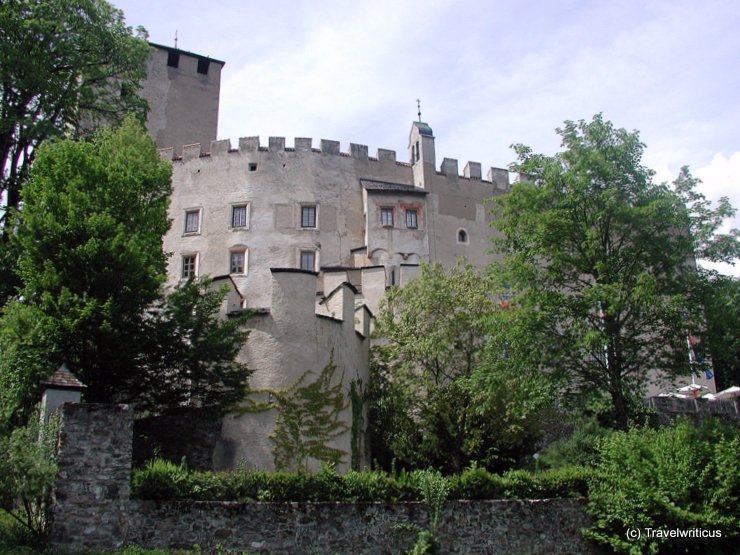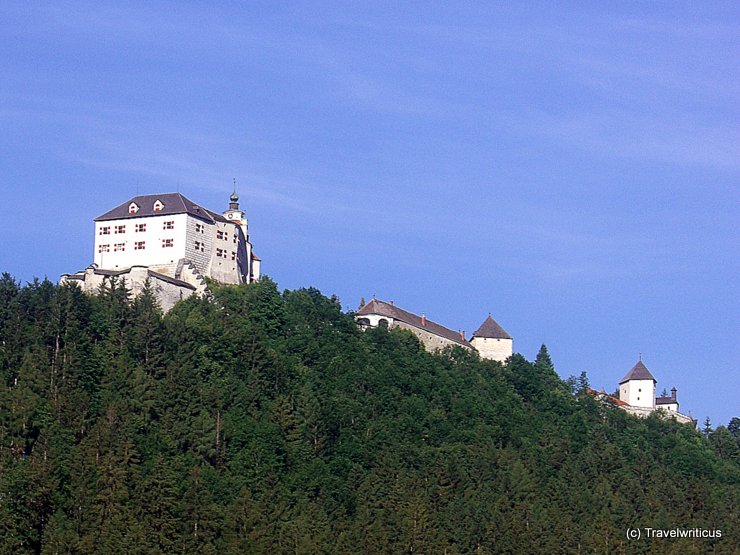
The name of the castle originates from the powerful Stubenberg family. Five members of this house occupied the office of governor (Landeshauptmann) in the Duchy of Styria.
Browse through your travel destination!

The name of the castle originates from the powerful Stubenberg family. Five members of this house occupied the office of governor (Landeshauptmann) in the Duchy of Styria.

This photo shows a view into the driver’s cabin of a German ICE T. In this kind of train, you had the chance to sit behind the driver – only separated by a glass door – and to watch the landscape in front of the train for many years.

The Empress Elisabeth Railway (Kaiserin-Elisabeth-Bahn) served the railroad between Vienna and Salzburg until 1884. Today, you still see a monument to Elisabeth of Austria (Sisi) in a small park at the Salzburg Central Station.

Friedenstein Castle (Schloss Friedenstein) was commissioned in the mid-17th century by Ernest I, Duke of Saxe-Gotha. It is notable for hosting the Ekhof-Theater, which still features the original Baroque machinery for changing the scenery.

The Fillgraderstiege is a public staircase in Vienna. It was built in the years 1905/1907 in Art Nouveau style. The designer of the staircase was Max Hegele. In a poll of art professors, it was named the fourth most beautiful staircase in Europe.

The Roman fort Biriciana, nowadays known as Kastell Weissenburg, was occupied by cavalry units during ancient times. The photo shows the reconstructed north gate (Porta decumana) of the fort area. In Roman times, this gate led to the Limes.

This ancient stone is immured in a church named Marienkirche in Maria Saal. The depiction shows the Capitoline Wolf (Lupa Capitolina). The piece is probably a relic of the Municipium Claudium Virunum, a former Roman place in Carinthia.

While travelling from Naumburg (Saale) to the visitor centre of the Nebra Sky Disk by bus, I got this view of the newly built Unstrut Viaduct. With a length of 2,688 m, it crosses the spacious Unstrut Valley.

The Zwiebelmusterhaus in Sank Pölten surprises with its wall decoration of 168 plates. The Zwiebelmuster (blue onion pattern) is a famous porcelain tableware pattern for dishware. It originates from the German manufacture of Meissen.

This building, generally known as Alte Verwaltung, was a work by architect Paul Knobbe. It served as the director’s office and administration building of the Zeche Zollern. Today, the building serves as a venue for events and weddings.

The church named Bergkirche (Hill Church) saw its construction in 1715. As the Austrian composer Joseph Haydn found his last rest in a mausoleum inside, the church is also known as Haydnkirche.

The Ozeanum is a public aquarium located in the historical harbour of Stralsund. It is part of the German Oceanographic Museum (Deutsches Meeresmuseum) and displays primarily sea life of the North Sea and the Baltic Sea.