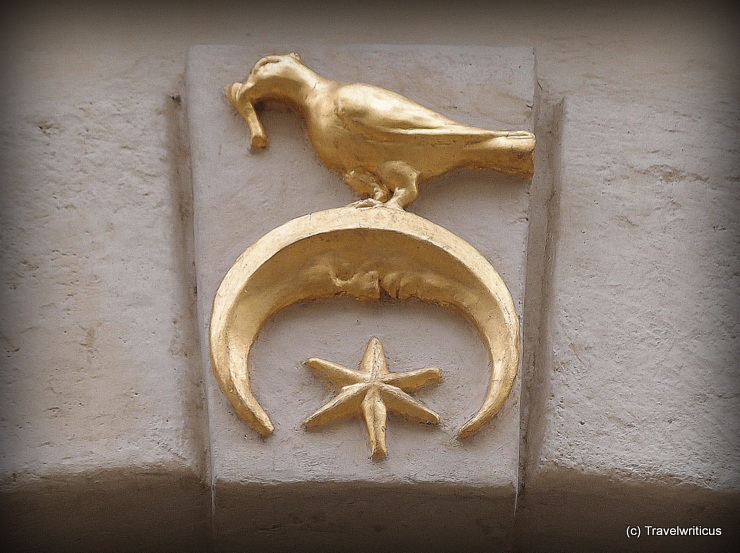
This house sign in a lane in Graz depicts a star and crescent combination. If you look carefully, you’ll see the moon is showing a face. You find this sign on a 17th-century portal at the address Schmiedgasse 20 in Graz.
Browse through your travel destination!
This house sign in a lane in Graz depicts a star and crescent combination. If you look carefully, you’ll see the moon is showing a face. You find this sign on a 17th-century portal at the address Schmiedgasse 20 in Graz.
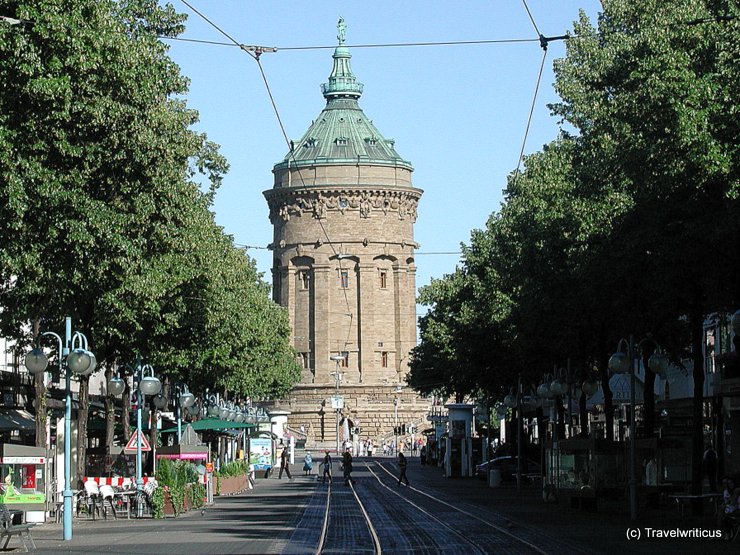
The water tower in Mannheim is the landmark of the Quadratestadt (Square City). You find it on Friedrichsplatz (Frederick Square). The tower was built according to plans by Gustav Halmhuber in 1886-1889.
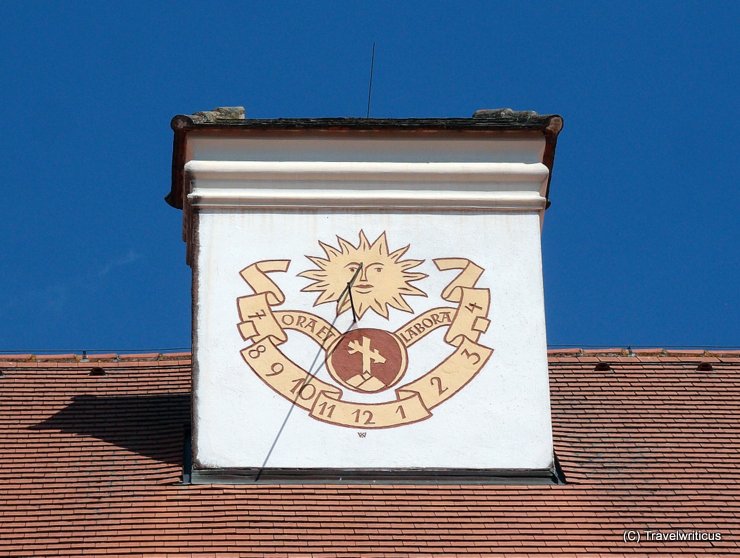
The inscription on this sundial indicates at which kind of monastery you can see it. “Ora et Labora” is the motto of the Benedictines. The depiction in the middle gives a hint to the place. You see this element in the coat of arms of Seitenstetten.
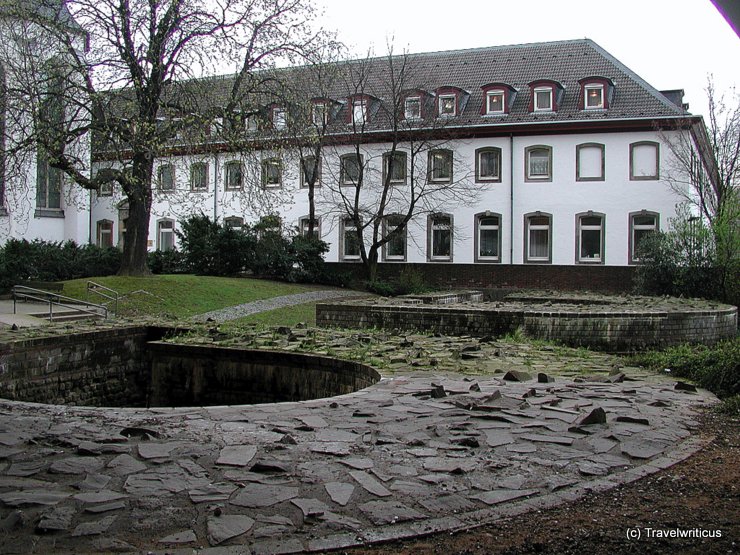
In Cologne (Köln), you can still find the remains of an ancient Roman fort. The name of the Köln-Deutz district originates from the name of the depicted fort called Divitia. During Roman times, these walls guarded an important Rhine bridge.
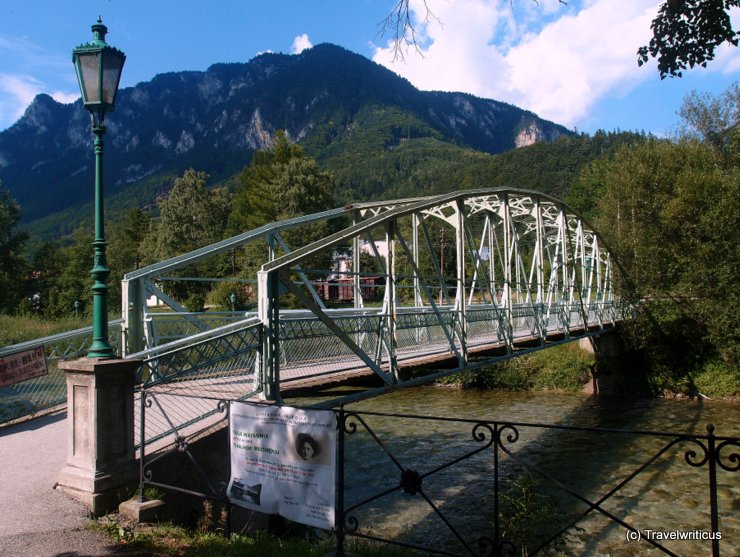
A bridge with a view! The footbridge dates back to 1902 and spans the river Schwarza in Reichenau an der Rax. Near the bridge, you find a station of the museum railway Payerbach-Hirschwang, also known as Höllentalbahn.
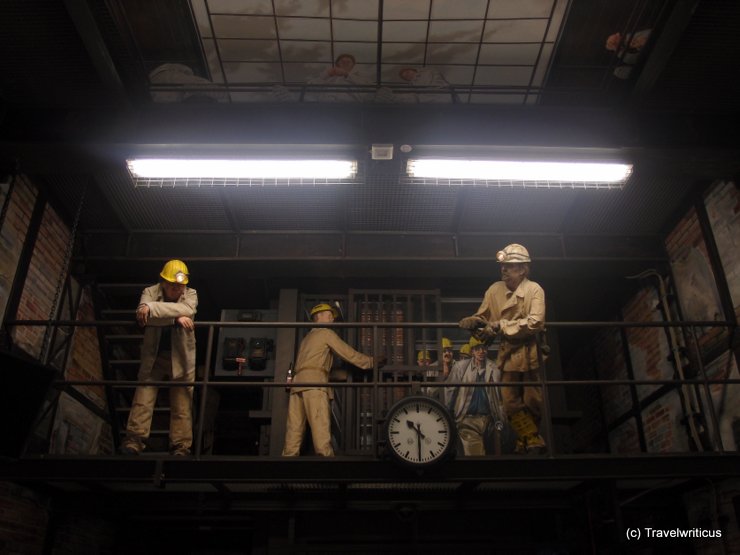
The Deutsche Bergbau-Museum (German Mining Museum) consists of a show mine and a collection of exhibits regarding mining. The photo above was taken at the elevator, bringing visitors down to the show mine.
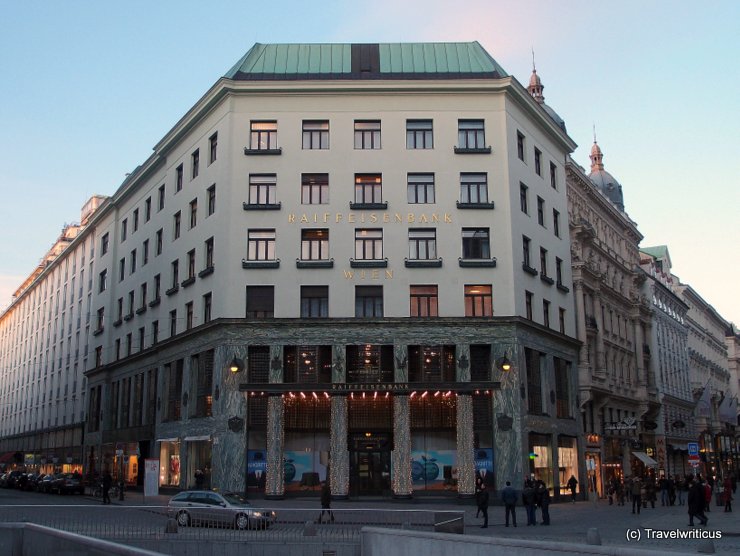
The Loos House (Looshaus) is considered a central work of the Wiener Moderne. The building designed by Adolf Loos saw its completion in 1910. Can you imagine why Viennese people call it “The House without Eyebrows”?
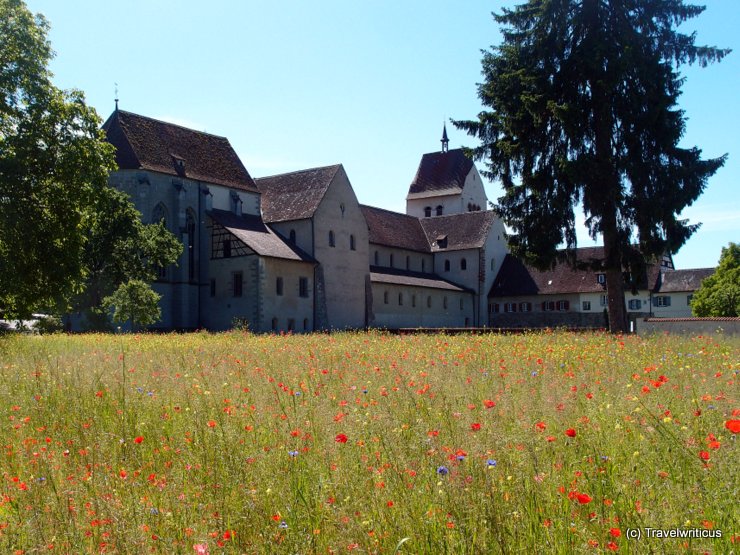
Reichenau Abbey was founded in 724 by Saint Pirmin. Later, the abbey became famous for the Reichenau School, producing lavishly illuminated manuscripts during the late 10th and early 11th centuries.
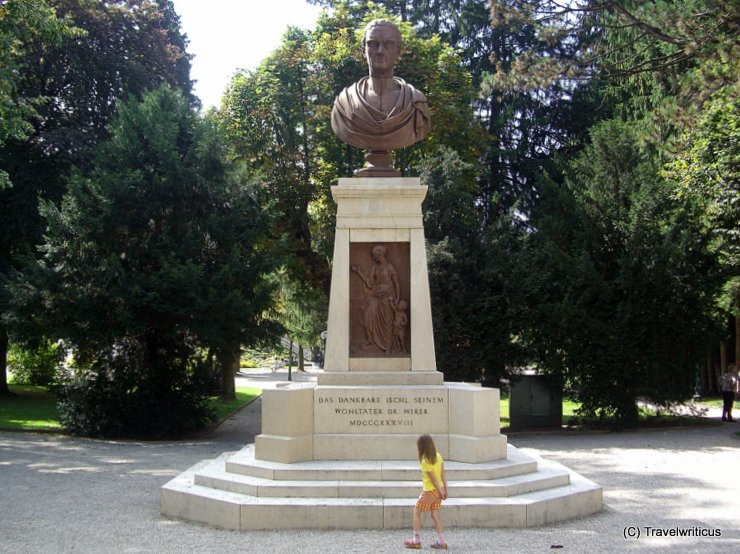
This monument commemorates Franz Wirer von Rettenbach. He is considered the founder of the first Austrian saline water health spa in Bad Ischl. You find his sculpture in the spa park of Bad Ischl.
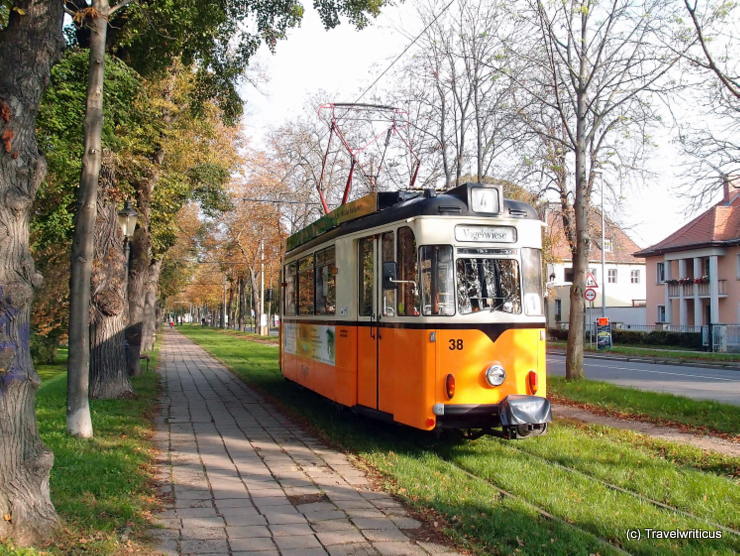
Naumburg (Saale) still uses GDR tramcars on its tourism tramline. An example is this “Gothawagen” T57. Its nickname refers to the manufacturer, the Gothaer Waggonfabrik in Gotha. T57 stands for 1957, its first year of production.
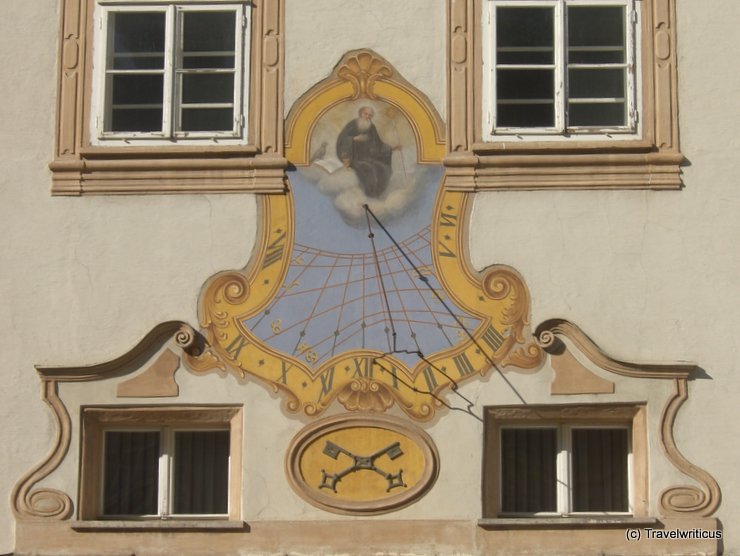
You find this sundial in a yard of St Peter’s Archabbey (Erzabtei St. Peter) in Salzburg. While looking at this fresco, two questions arise: Who is the bearded man, and what do the keys mean? The answer lies in the history of the abbey.
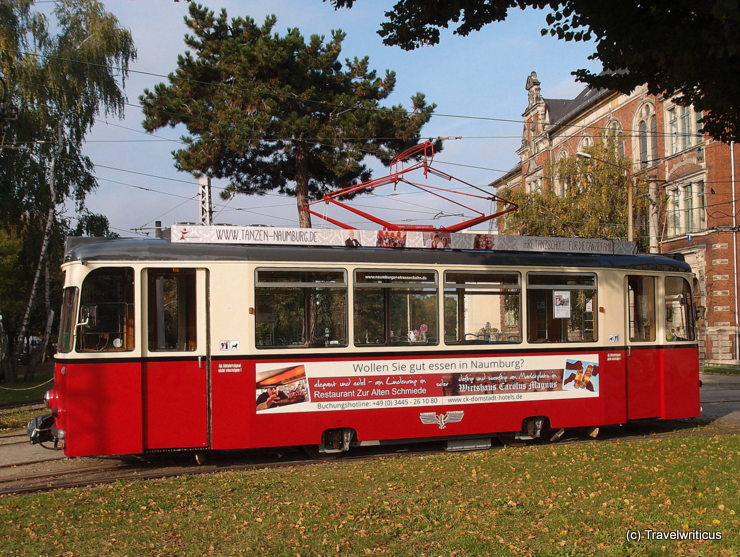
Naumburg Tramway in the German city of Naumburg (Saale) runs several old tramcars dating back to GDR times. One of them is this Tramcar Class 70/1. It saw its construction in 1973.