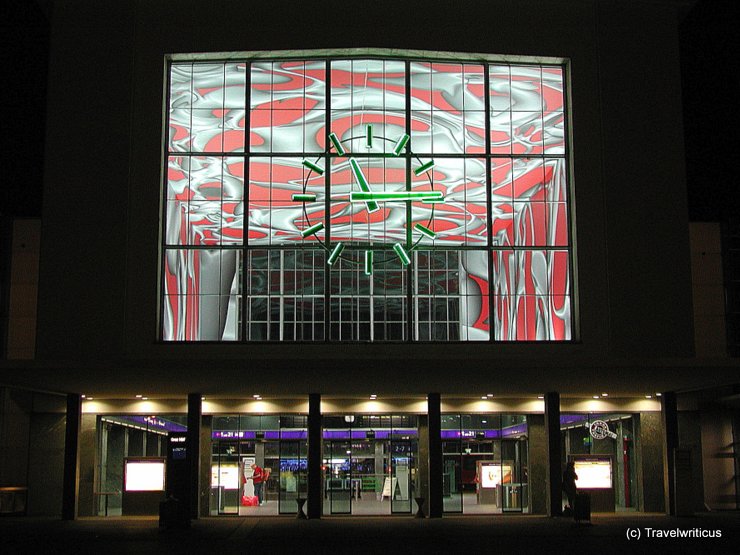
In 2003, the capital city of Styria got the title “European Capital of Culture”. In the same year, Graz Central Station saw a major renovation. Artist Peter Kogler was elected to decorate the entrance hall of the railway station.
Browse through your travel destination!
In 2003, the capital city of Styria got the title “European Capital of Culture”. In the same year, Graz Central Station saw a major renovation. Artist Peter Kogler was elected to decorate the entrance hall of the railway station.
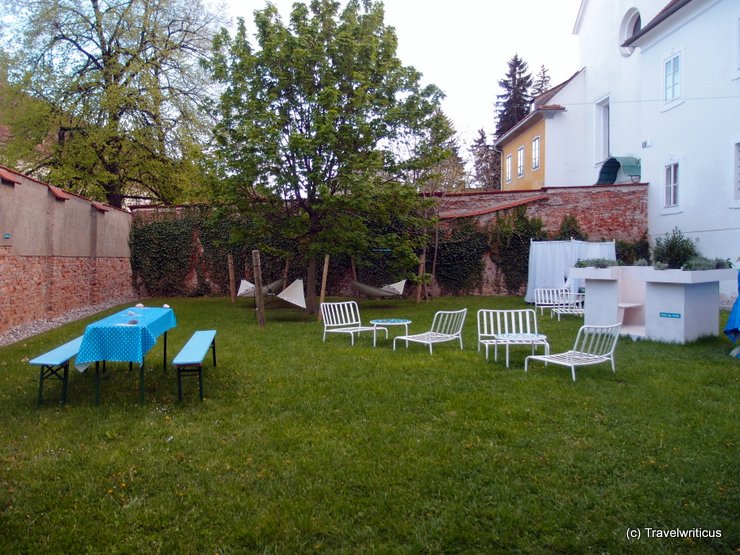
Now that I call a cosy museum. The photo shows the garden of the Folk Life Museum in Graz. Yes, there are hammocks below the trees! The museum tells about social and cultural changes up to the present.
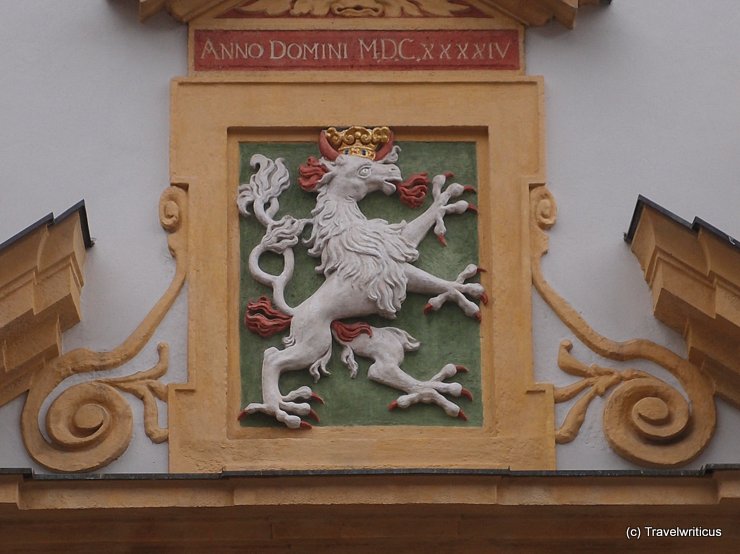
The coat of arms above the gate of the Styrian Armory raises questions. It looks like a Styrian Panther mixed with the detail of a Graz Panther. The red horns make it Styrian. The crown, on the other hand, makes it look like a Graz coat of arms.
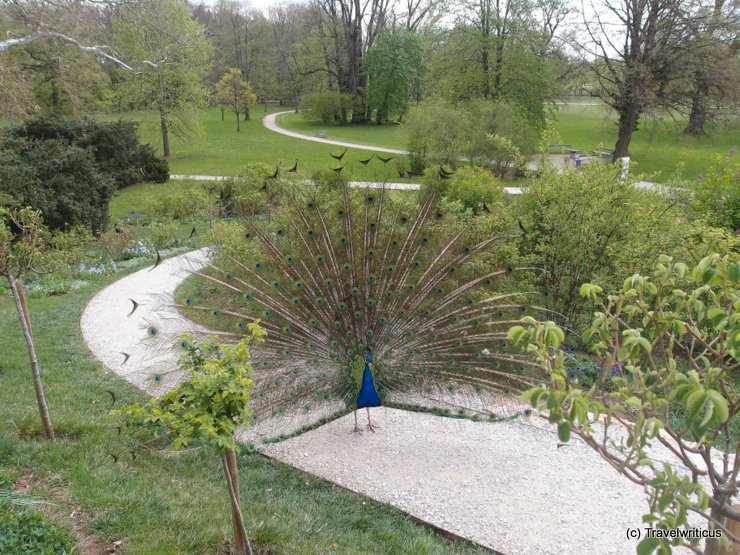
Visitors of Schloss Eggenberg find a bunch of peacocks on the castle grounds. Sometimes, one of these colourful animals blocks your way. In this pic, a peacock uses the path up to the rose mound to spread its feathers.
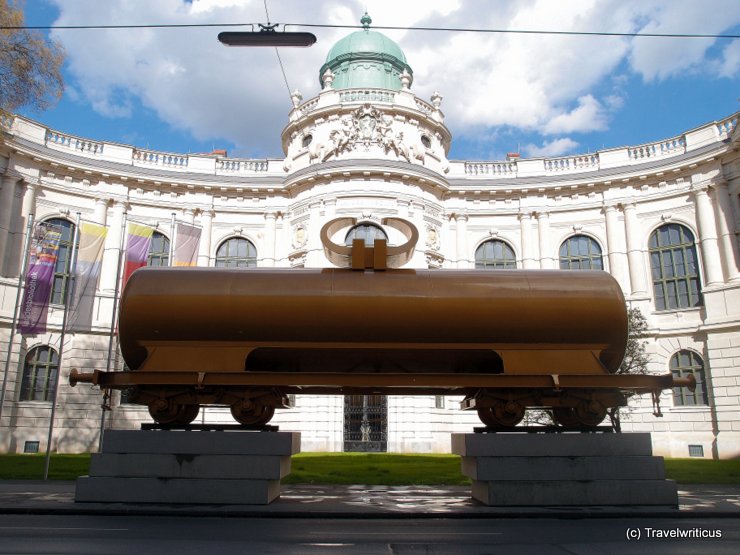
This artwork by Hans Hollein stood in front of the Neue Galerie in Graz for several weeks. The former tank wagon for petroleum is named “The Golden Calf”. I guess this refers to the golden calf in the bible and the importance of oil for mankind.
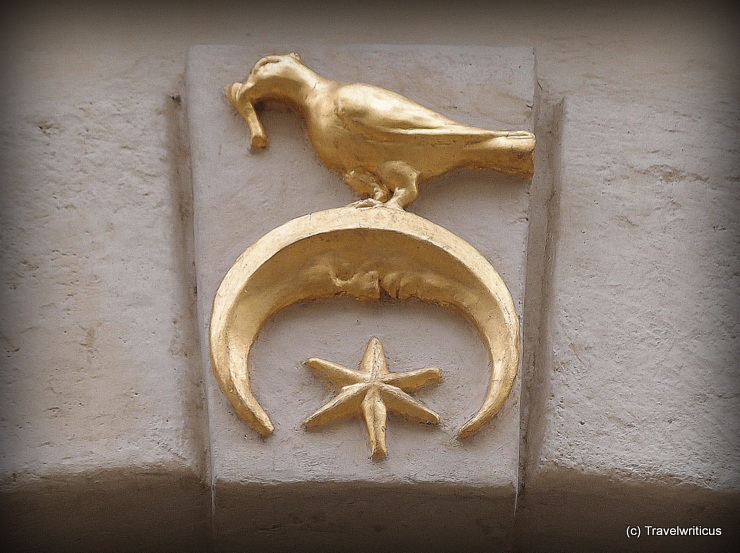
This house sign in a lane in Graz depicts a star and crescent combination. If you look carefully, you’ll see the moon is showing a face. You find this sign on a 17th-century portal at the address Schmiedgasse 20 in Graz.
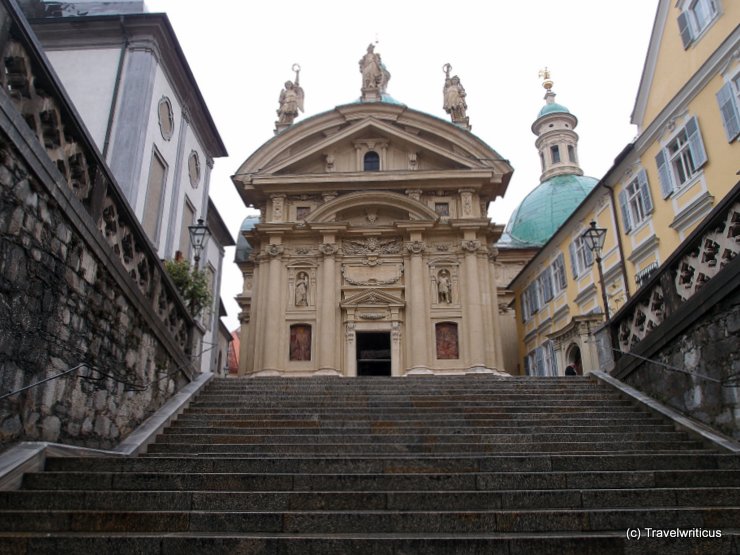
Even though Graz is an Austrian city, several parts look pretty Italian. An example of this impression is the Mausoleum of Ferdinand II. Its architect was the Italian Giovanni Pietro de Pomis.
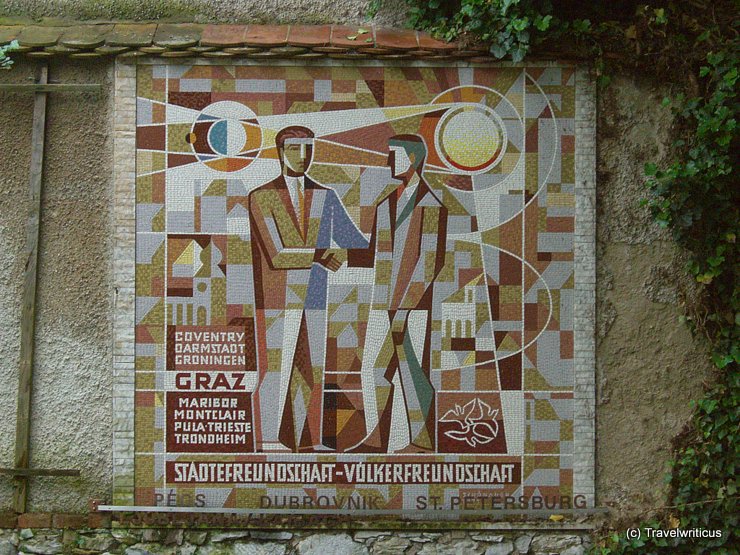
This mural tells about the Sister Cities of Graz. You find it near the Schloßberg Museum on top of the hill (Schloßberg) in the middle of the Styrian capital. Today, it isn’t up-to-date. For example, it doesn’t mention Ljubljana that joined this group in 2001.
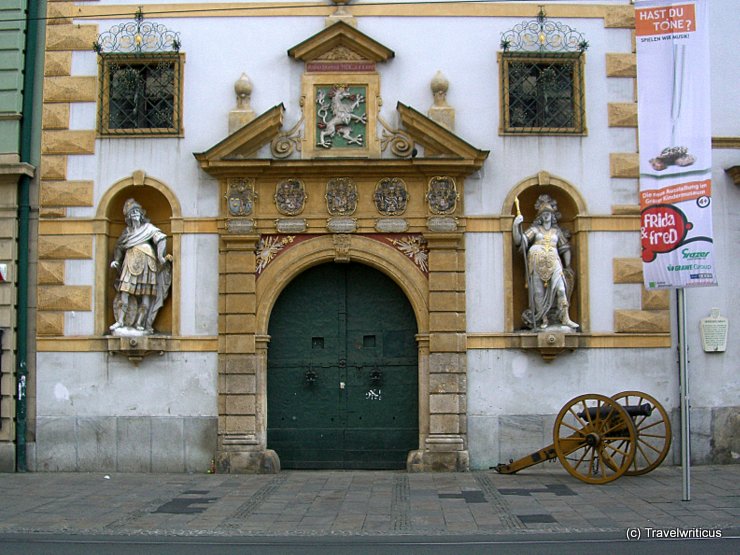
The Styrian Armoury (Steirische Landeszeughaus) in Graz is known for its extensive collection of weaponry and armour. The stock was intended for a defensive army against Ottoman and Hungarian troops. Today, it displays military craftsmanship and history in an authentic atmosphere.
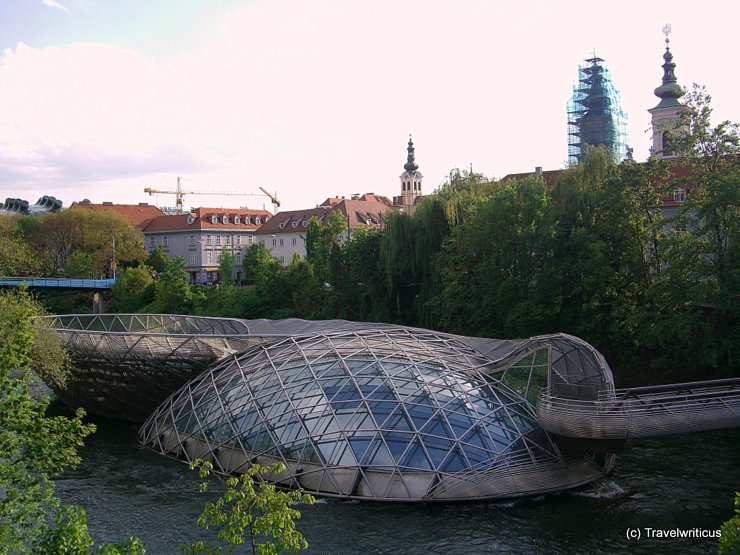
The Murinsel in Graz is a floating platform in the Mur River. US artist Vito Acconci designed this construction in 2003. Two footbridges connect it with both banks of the river. Inside the dome, visitors find a café where they can watch canoeists driving by.
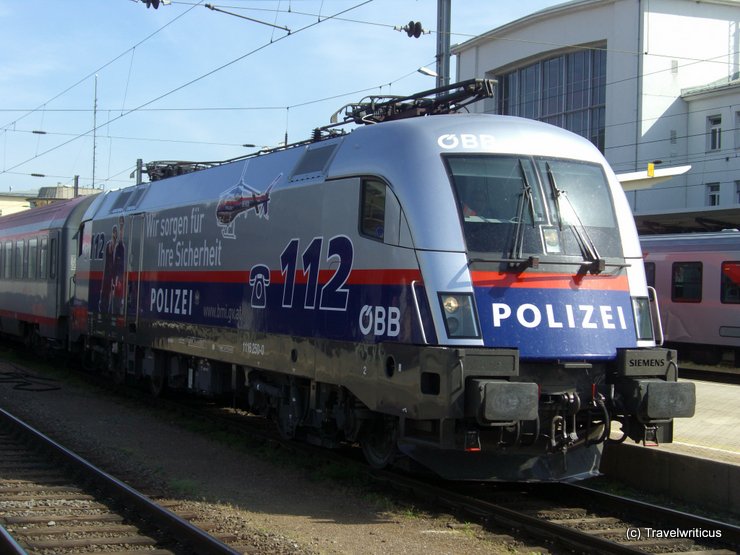
The Federal Austrian Railways (OBB) offer locomotive branding for companies and organisations. A fun example is this loco in the Styrian city of Graz, branded with the colours of the Austrian Federal Police (Österreichische Bundespolizei).
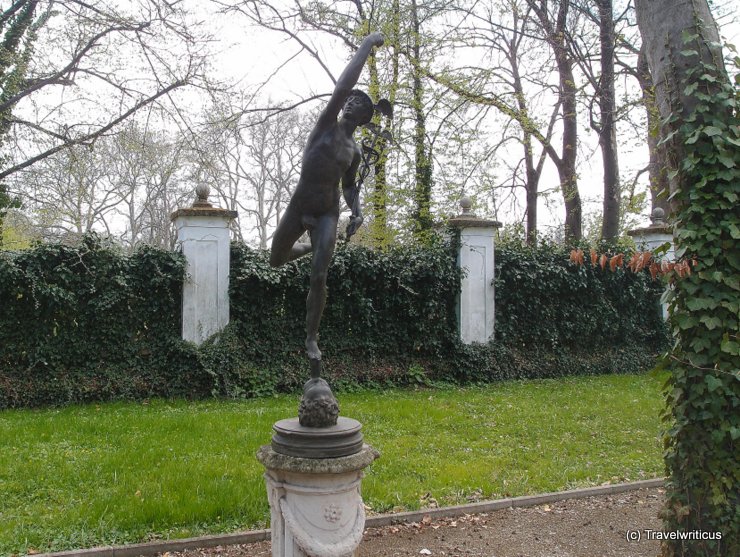
This statue of God Mercury stands in the Planetary Garden of Eggenberg Castle (Schloss Eggenberg) in Graz. The garden represents the planets with different plants and sculptures.